
Vaisesika theory of absence draws a type of distinction between simple absence (atyantabhava) and difference (anyonyabhava). Difference is the absence of a relation of identity between two things. Absence in Vaisheshika philosophy is not similar to the concept of non-existence. Vaisesika theory of absence states that it would be an absurdity to go in search of Hamlet in order to find out whether he really exists or not - his non-existence is not a merely contingent lack in the world of things. The absence of water on the moon, on the other hand, is a contingent and concrete fact; so too is the absence of colour in a person`s cheeks. For it is often the case that the absence of something somewhere is more salient than any fact about what is present there.
There is one relatively straightforward way to interpret the idea of absence. As per Vaisheshika philosophy, absences are things of a different type from any presence. Further, for various reasons, the Vaisesika theory does not consider this to be an adequate explanation of the category. One problem is that it makes absences more like relations as compared to things, and this does not keep to the spirit of the Vaisesika idea that absences are entities. In fact, absences do display much relation-like behaviour. The view of the early thinkers is that the absence of an absence is nothing but a presence; it is not admitted as a new absence for there would then be an infinite regress. According to the new school, however, the absence of an absence is a distinct absence, and there is no regress as the third absence is identical to the first. Further, as per the Vaisesika theory, absence is considered as a classical proposition and so, in particular, that an absence of an absence is identical to an absence. A double contradiction, however, is defined on inherence edges followed by a negation defined on absent qualifier edges and for that reason behaves non-classically.
The relation between an absence and its location is clearly not the same as the relation between a presence and its location. For it is clear that, when a person is absent from a room, his absence is not in the room in the same sense that the other things in the room are.
Vaisesika Theory of Absence
Vaisesika Theory of Absence is said to have a distinctive existence. According to the Vaisesika theory of absence, fictional characters, dream-objects and hallucinations are non-existent; they do not exist as it were by nature.
Recently updated articles in Indian Philosophy
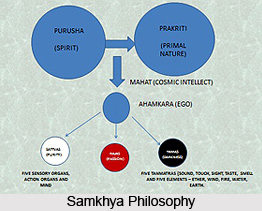
Samkhya Philosophy
Samkhya philosophy is one of India’s oldest intellectual traditions, explaining reality through the interplay of Puruṣha (pure consciousness) and Prak...
Maya, Prakriti in Hinduism
Maya or illusion is a very potent instrument of the Divine Prakriti, the Primal nature. In Hinduism one must be able to come out of Maya in order to a...

Samadhi in Hinduism
Samadhi is the result of meditation or that state of mind when there is an absence of all idea of individuality.
Samadhi in Buddhism
According to Buddhism, oen can only achieve samadhi through strict meditation and right concentration.
Abdul Rehman Jilani Dehlvi
Syed Abdul Rehman Jilani Dehlvi was a renowned Sufi saint of the Qadri Order in India.
Related articles in Indian Philosophy

Ajivika Philosophy
Ajivika philosophy is different from the mainstream religion

Indian Philosophy In The Vedic Period
Indian Philosophy in the Vedic Period was primarily based on the concepts of nature worship.
Achintya Bheda Abheda Philosophy
Achintya-Bheda-Abheda is a School of Vedanta that represents the philosophy of unimaginable one-ness and difference in relation to the power creation...
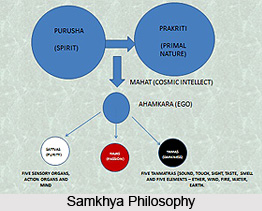
Samkhya Philosophy
Samkhya philosophy is one of India’s oldest intellectual traditions, explaining reality through the interplay of Puruṣha (pure consciousness) and Prak...
Charvaka Philosophy
The Charvaka Philosophy believes that only those things that can be perceived is the ultimate reality.