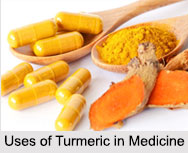
 Use of Turmeric in the sphere of home remedies as well naturopathy and of course, Ayurveda has been traced since ancient times. Turmeric is known to act as a mild digestive, serving also as an aromatic, a stimulant and a carminative. Turmeric is used in food and cooking not only for colouring and flavour, but also because it aids digestion by helping to decompose fats during the digestion process. It also has been proven useful for stomach problems. Turmeric is considered to possess antiseptic properties, making it expensively utilised to heal cuts, burns and bruises.
Bodies responding to seasonal changes together with influenza, coughs and running noses, are immediately administered with honey mixed with turmeric, or turmeric mixed in milk by Indian homemakers and mothers to soothe and cure. The roots are thumped hard and pressed to extract a juice that, when coalesced with water, is helpful in ear-aches and to cleanse the sinuses through nasal application. The astringent qualities of turmeric are also useful in instances of treating pulmonary tuberculosis, tuberculosis, bronchitis, colds and asthma, the root being lightly cooked and eaten.
Scientific researches confirm that regular use of turmeric can cure host of chronic diseases, amongst them, restraining the growth of various kinds of cancer. In the world of female diseases, especially who experience monthly menstrual cramps, using a turmeric extract or bitters twice daily for two weeks prior to menstruation is strongly counselled for alleviation. Usage of turmeric acts as an antispasmodic to soothe muscles and menstrual spasms.
Medicinal Use of Turmeric
 Uses of Turmeric have been tapped as a powerful medicine that has long been used in the Chinese and Indian systems of medicine as an anti-inflammatory agent to treat a wide variety of conditions, including flatulence, jaundice, menstrual difficulties, bloody urine, haemorrhage, toothache, bruises, chest pain and colic.
•Turmeric water is an indigenous Asian cosmetic applied to lend a golden glow to the complexion.
•In southern India, buttermilk spiced with turmeric is considered a digestive aid that helps curtail stomach ailments.
•Raw turmeric juice is used to treat hyper acidity and indigestion.
•Taken internally or used externally, turmeric acts as an anti-viral, anti-bacterial, anti-fungal, anti-parasitic and anthelmintic.
•Turmeric is a powerful anti-inflammatory and antiseptic, useful for bronchial asthma, chronic cough.
•Turmeric has an anti-coagulant action, keeping the blood thin. Turmeric prevents platelets from clustering within blood vessels, making it effective in the prevention of arteriosclerosis and its complications.
•Turmeric diminishes cholesterol levels by preventing and removing oxidised cholesterol.
•Use of turmeric performs a protective action upon intestinal flora. Curcuma is also quite beneficial in Crohn`s disease and ulcerative colitis.
•Turmeric is also useful in treating skin conditions such as eczema, psoriasis, fungal infections and athletes" foot.
•Turmeric is considered to be anti-cancerous agent.
•Turmeric accelerates the flow of bile and is beneficial in the prevention of gallstones.
•External application of turmeric is quite beneficial for sprains and swellings.
•Turmeric helps in stretching the ligaments and thus is useful for regular Hatha Yoga practitioners.
•Turmeric prevents the formation of gas, particularly when it is added to a high protein meal.
•Turmeric is an important herb in most Ayurvedic treatments of diabetes, as it lowers blood sugar and augments glucose metabolism.
•Turmeric allays inflammation of the tonsils, congestion in the throat and helps to clear the sinuses.
Indeed, the use of turmeric in medicine has gained so much significance that the Indian aboriginal version of curative has changed entirely under turmeric and its uses. Usage of turmeric by adding in small quantities essentially as a colouring agent has some additional health benefits besides the everyday ones.