
According to Agni Purana the different varieties of Drama are called the Nataka, the Prakaranam, the Dima, the Samavakara, the Prahasanam, the Vyoga, the Bhana, the Vithi, the Auka, the Trotaka, the Natika, the Sattakam, the Shilpakam, the Kama, the Lapa, the Durmallika, the Prathanam, the Bhanika, the Bhani, the Gosthi, the Hallishakam, the Natya, the Rasa, the Ullasaka, the Uilapakam, and the Prenkhanam. These varieties number twenty-seven in all. A drama is possessed of two sorts of motion, as the Samanya and the Vishesha.
The general Motion embraces the whole plot of the Drama, while the special movements are restricted to its special parts. After the prologue having been finished, the unity of time and place, the sentiment with their accessories and the Anubhavas (feelings), the play, or rendering of the work, the divisions and acts, should be included in the general movement of the Drama. The special motion (Vishesha-gati) should be confined only to its specific parts.
It has been said that the Drama fulfils the threefold interests of the human race. A prologue opens with one of the thirty-two sorts of introductory, such as the Nandimukhas, etc. It is the duty of the manager of the play to open the prologue either with a salutation unto the deities, or with a panegyric of the elders and preceptors, or with a benediction to kings, Brahmanas, and the cows.
Agni Purana mentions that the prologue in Rupakas opens with applause of the ancestry, the family, and the previous achievements of the poet, together with a narration of the object of the play, and the occasion which gives birth to it.
Historical incidents of a play are divided into two classes. The five Artha Prakritis of a Drama are the Vijara (the seed), Vindu (central point), the Pataka (episode), the Prakari (interlude), and the Karyaro (denouement). The five Chestas (motion) of a play, are the Prarambha, (beginning) the Prajatna, the Prapti, the Sadbhava, the Phalaprapti, and the Phala-Yoga. The five links or joints (Sandhis) of a Drama, are the Mukharn, (Prologue), the Prati-Mukham (Epilogue), the Garbhas (interlude during an act), the Vimarsha (a change in the successful progress of a dramatic plot, or that of a love story, through a curse, etc.), and the Nivarhanam.
Finally it has been said that the action of the Drama should be made to possess human interest, and to be replete with the joy and sorrow, struggle and suffering of the human race. Glimpses of heavenly regions, or super-natural incidents, may be introduced in the middle of a drama, without taking away anything from its merit.
Types of Drama
Different Types of Drama have been discussed in the Agni Purana. The adhyaya on different types of drama has also explained the essential components of a drama and also discussed the purpose of a proper drama.
Recently updated articles in Indian Puranas
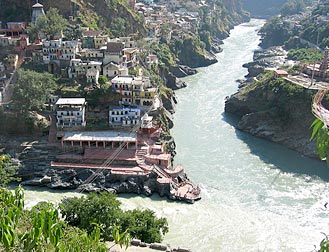
Mandakini, Holy River
Mandakini River is a significant Himalayan river in Uttarakhand, renowned for its ecological, cultural, and religious importance. Originating near the...
Kausika, Son of Vasudeva
Kausika is a minor figure in Hindu mythology and is identified in the Vishnu Purana as the only son of Vasudeva and his wife Vaishali. He is recognize...
Tandu, Attendant of Lord Shiva
Tandu is revered as the divine attendant of Lord Shiva and the foremost exponent of the Tandava dance. According to the Natya Shastra, he instructed S...
Niramitra, Mahabharata
Niramitra was a son of Nakula and Kareṇumati in the Mahabharata. A descendant of the Pandavas and the Kuru dynasty, he fought on the Pandava side duri...
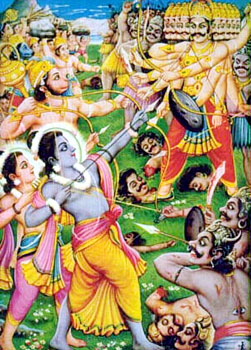
Mahodara, Ramayana
Mahodara was a prominent Rakshasa warrior, minister, and army chief who served under Rāvaṇa during the Battle of Lanka in the Ramayana. Celebrated for...
Related articles in Indian Puranas
Adhyayas in Agni Purana
Adhyayas in Agni Purana are all encompassing. The chapters have dealt with a variety of subjects related to human lives. A large number of chapters ha...
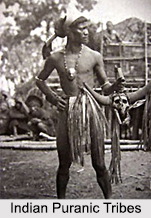
Indian Puranic Tribes
The existence of Indian Puranic tribes is often mixed with mythology and fiction that depict them as superhuman or sub.
Puranic Texts
Puranic Texts are vital according to Hindu, Jain or Buddhist religion; they describe the history of the Universe.

Puranic Shaivism
Puranic Shaivism established during the Gupta Dynasty. This puranic religion developed and expanded, and was accompanied by the development of Brahman...
Nilamata Purana
Nilamata Purana is a Kashmiri Purana that is referred by Kalhana. It is considered as one of the sources of ancient history of Kashmir.