
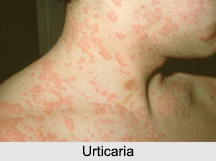
 Urticaria is a type of skin rash much striking for dark red, raised, scratchy bumps. It is also known as `Hives` which are frequently stimulated by allergic reactions. An allergic reaction takes place when the body`s immune system over-responds, or is hypersensitive to particles recognised as Allergens. This skin disease is also known as nettle rash, as the rash of hives resembles the sting of a nettle. The disease may be acute, chronic or recurrent and is deemed to be an allergic trigger like hay fever and asthma.
Urticaria
Urticaria is a skin condition commonly known as hives. It produces an itchy rash that tends to come and go and can last for a variable period of time.
Introduction
Urticaria is a type of skin rash much striking for dark red, raised, scratchy bumps. It is also known as `Hives` which are frequently stimulated by allergic reactions. An allergic reaction takes place when the body`s immune system over-responds, or is hypersensitive to particles recognised as Allergens. This skin disease is also known as nettle rash, as the rash of hives resembles the sting of a nettle. The disease may be acute, chronic or recurrent and is deemed to be an allergic trigger like hay fever and asthma.Types of Urticaria
Urticaria necessarily implies a skin condition that is characterised by the maturation of various types of exceedingly itchy and swollen red bumps or speckles on the skin. These speckles or `hives` may erupt unexpectedly as a result of the body`s undesirable response to specific allergens. The skin on any part of the body including the face, lips, tongue, throat or ears is very much vulnerable to this condition. The hives that consequently come along can vary in size and can last for only a few minutes moving up to several days. In such an appalling state, it needs to be mentioned that there exists umpteen and assorted types of Urticaria. Although the different types of hives are all interrelated, they do produce deviating symptoms. At times, an individual may suffer from more than one type of Urticaria. Described subsequently are descriptions for acute, chronic, drug-induced and physically induced Urticaria.
Acute Type of Urticaria : The acute type of Urticaria generally becomes apparent and marked a few minutes after coming into contact with the allergen. This reacting effect may last from a few hours to several weeks, but mostly less than six weeks. Characteristically, the hives are manifest only for a few days. Reactions as a consequence of food allergens typically cause the acute form of this skin complication, but for approximately half the cases, the cause is typically undetected for no apparent cure. Common foods that act as triggers comprise: shell fish, nuts, eggs, fish, acid derivatives and particular food dyes. Other allergens causing this type of acute Urticaria can be antibiotics, bee or wasp stings or skin contact with specific fragrances. This type of Urticaria can happen together with anaphylaxis - a severe allergic reaction, leading to difficulty in breathing and potential loss of life.
Chronic Type of Urticaria : Chronic Urticaria is exemplified by hives that become visible regularly or almost daily for at least six weeks or more. Visually, both acute and chronic forms of the disease exhibit similar characteristics. The problem that lies here is that the chronic form can persist for a long time, unlike the acute version of Urticaria. More severe types of Urticaria can last up to 20 or more years. An identifiable cause for the problem is sadly rarely found.
Drug-Induced Type of Urticaria : Drugs that have caused allergic reactions evidencing as Urticaria comprise: aspirin, penicillin, sulfonamides, anti-convulsants and anti-diabetic drugs such as suphonylurea. Drug-induced Urticaria has been known to affect upon in severe cardio-respiratory failure. The anti-diabetic sulphonylurea glimepiride (trade name Amaryl), in particular, has been authenticated to induce allergic reactions manifesting as Urticaria. Other such instances include dextroamphetamine and clotrimazole.
Physical Type of Urticaria (Dermographism) : Also medically referred to as Dermatographism or Dermographism, this kind of Urticaria is marked by the appearance of weals or welts on the skin as a result of itching, scratching, or firm stroking of the skin. This is the most common type of physical Urticaria. The skin reaction usually becomes evident soon after the itching and disappears within 30 minutes. Dermographism is a common form of chronic hives. It is also recognised as "skin writing". Dermatographism is the most common form of a subset of chronic hives, acknowledged as `physical hives`. It happens in some degree in approximately 5 percent of the population
This most common type of Urticaria stands in contrast to the linear reddening that does not itch witnessed in healthy people that are scratched. In most cases the cause is unknown, although it may be preceded by a viral infection, antibiotic therapy, or emotional upset. Dermographism is diagnosed by taking a tongue blade and drawing it over the skin of the arm or back. The hives should develop within 1 to 3 minutes. Unless the skin is highly sensitive and reacts continually, treatment is not needed. Taking antihistamines can reduce the response in cases that are annoying to the patient.
Pressure or Delayed Pressure Type of Urticaria : This type of Urticaria can occur right away, precisely after a pressure stimulus or as a deferred response to sustained pressure being enforced to the skin. In the deferred form, the hives only appear after approximately six hours from the initial application of pressure to the skin. Under normal circumstances, these hives are not the same as those witnessed with most Urticarias. Instead, the protrusion in the affected areas is typically more spread out. The hives may last from approximately 8 hours to three days. The source of the pressure on the skin can happen from tight fitted clothing, belts, clothing with tough straps, walking, leaning against an object, standing, sitting on a hard surface, etc. The areas of the body most commonly affected are the hands, feet, the trunk, the buttocks, legs and the face. Although this appears to be very similar to dermatographism, the cardinal difference is that the swelled skin areas do not become visible quickly and tend to last much longer. This form of the skin disease is however indeed rare.
Cholinergic or Stress (Adrenergic) Type of Urticaria : This form of Urticaria is fairly widespread and occurs after exercise, sweating, or any activity that leads to a warming of the core body temperature such as warm or hot baths or showers. The hives that are produced are typically smaller than the classic hives. In severe cases, hundreds of tiny red itchy spots appear on the skin with exercising, when the individual is warm or when the individual is much too stressed out. The red spots become manifest rather quickly and remain for approximately 60 to 90 minutes on average. It precisely becomes marked as multiple, small, 2 to 3 mm red hives on the upper trunk and arms, although it can occur from the neck to the thighs. Cholinergic type of Urticaria is known to cause itching, tingling, burning and heating-up of the skin.
It is believed that histamine is discharged in response to stimulation by the parasympathetic nervous system. Cholinergic Urticaria is diagnosed by historical measures and also multiplying the hives under certain conditions. Several times, the patient is asked to exercise by jogging instead of riding a stationary bike and the time it takes for hives to develop is noted down. Cholinergic Urticaria can be treated by delimiting the strenuous exercise. This type of Urticaria responds well to a medication named hydroxyzine, which serves as an antihistamine. However, the principal side effect of sleepiness is often not tolerated well. Standing under a shower of hot water may cause a release of histamine throughout the body, exhausting histamine stores and causing a 24-hour refractory period.
Cold Urticaria : The Cold type of Urticaria or hives are caused by exposure of the skin to extreme cold temperatures. In particular, the hives appear on the skin areas that have been endangered to cold, damp and windy conditions. It comes about in two forms. The rare form is hereditary and becomes evident as hives all over the body 9 to 18 hours after cold exposure. The common form of cold Urticaria demonstrates itself with the rapid onset of hives on the face, neck, or hands after exposure to cold. Cold Urticaria is common and lasts for an average of 5 to 6 years. The population mostly impressed upon is young adults, aged between 18 to 25 years. Many people with cold Urticaria also are stung by dermographism and cholinergic Urticaria.
Severe reactions can be witnessed with exposure to cold water. Swimming in cold water is the most commonplace cause of a severe reaction. This can cause a massive discharge of histamine ensuing in low blood pressure, fainting, shock and even loss of life. Cold Urticaria is diagnosed by dabbing an ice cube against the skin of the forearm for 1 to 5 minutes. A distinct hive should develop if a patient is down with cold Urticaria. This is different than the normal redness that can be viewed in people without cold Urticaria. Patients with cold Urticaria needs to learn to protect themselves from a hasty drop in body temperature. Regular antihistamines are however not generally much efficacious. The particular antihistamine, cyproheptadine (Periactin) has been found to be of much usefulness. The tricyclic antidepressant doxepin has also been found to be an effective blocking agent of histamine discharge. Finally, a medication named ketotifen, which keeps mast cells from discharging histamine, has also been employed with widespread success.
Heat Urticaria : This rare form of Urticaria is triggered by the merciless application of heat on the skin. Hives begin to germinate within 2 to 5 minutes on the area of the skin that was exposed to heat. The hives however, generally do not last more than an hour.
Solar Urticaria : This is an exceptional form of the disease and is stimulated on areas of the skin that have mostly been exposed to the sun. The skin condition becomes evident within minutes of the sun vulnerability. Although, after the individual is no longer exposed to the sun, the condition starts to weaken out within a few minutes to a few hours and hardly ever lasts longer than 24 hours. Solar Urticaria is classified into 6 different types, depending upon the wavelength of light involved. Since glass absorbs light with a wavelength of 320 nanometre and below, people suffering from solar Urticaria in response to wavelengths of less than 320 nanometre are protected by glass.
Water (Aquagenic) : This type of Urticaria is also termed as rare and occurs upon contact with water. The response is not temperature dependent and the skin appears similar to cholinergic form of the disease. The appearance of hives is within 1 to 15 minutes of contact with the water and can last from 10 minutes to two hours. The hives that last for 10 to 120 minutes, do not seem to be stimulated by histamine discharge like the other physical hives. Most researchers believe that this condition is actually most delicate skin sensitivity to additives in the water such as chlorine. Water Urticaria is diagnosed by dabbing tap water and distilled water to the skin and observing the gradual response. Aquagenic type of Urticaria is treated with a cream named as capsaicin (Zostrix), that is administered to the chafed skin. This is the same treatment utilised for shingles. Antihistamines are of questionable benefit in this instance, since histamine is not the conducive factor in water Urticaria.
Vibratory angioedema : This is indeed a rare form of hives that develops in reply to contact with vibration. Angioedema is an intense and more painful form of hives. In vibratory angioedema, symptoms develop within 2 to 5 minutes after contact with vibration and dissolve after approximately 1 hour. Patients with this disorder do not suffer from dermographism or pressure Urticaria. Vibratory angioedema is diagnosed by administering a laboratory vortex to the forearm for 4 minutes. Speedy swelling of the whole forearm extending into the upper arm is also noted down later. The principal treatment of vibratory angioedema is avoidance of vibratory stimulants. Antihistamines have also been proven helpful.
Exercise-induced anaphylaxis : This type of Urticaria is a condition that was first distinguished in 1980. People down with this condition experience hives, itchiness, shortage of breath and low blood pressure 5 to 30 minutes after the inception of exercise. These symptoms can progress to shock and even sudden demise. Jogging is the most common type of exercise that causes exercise-induced anaphylaxis. People with exercise-induced anaphylaxis do not get these symptoms after a hot shower, fever, or with fretfulness. This marked element indeed severalises exercise-induced anaphylaxis from cholinergic Urticaria.
Exercise-induced anaphylaxis sometimes comes about only when someone exercises within 30 minutes of eating particular foods such as wheat and shellfish. For these individuals, exercising alone or eating the injuring food without exercising, produces no symptoms. Such type of Urticaria can be diagnosed by having the patient exercise and then observing the symptoms that germinate. This method must be utilised with caution and only in such a circumstance with the appropriate resuscitative measures ready at hand. Exercise-induced anaphylaxis can be differentiated from cholinergic Urticaria by the hot water immersion test. In this test, the patient is immersed in water at 43 degrees Celsius. Someone with exercise-induced anaphylaxis will not develop hives, while a person with cholinergic Urticaria will develop the characteristic small hives, especially on the neck and chest.
The immediate symptoms of this uncanny type of Urticaria are treated with antihistamines, epinephrine and airway support. Taking antihistamines prior to exercise may be effective. A medication referred to as ketotifen, is acknowledged to stabilise mast cells and prevents histamine release and has been effective in treating this hives disorder. Avoiding exercise or foods that cause the mentioned symptoms, is very important. In particular circumstances, tolerance can be brought on by regular exercise, but this must be under secure medical supervision.
Acute Type of Urticaria : The acute type of Urticaria generally becomes apparent and marked a few minutes after coming into contact with the allergen. This reacting effect may last from a few hours to several weeks, but mostly less than six weeks. Characteristically, the hives are manifest only for a few days. Reactions as a consequence of food allergens typically cause the acute form of this skin complication, but for approximately half the cases, the cause is typically undetected for no apparent cure. Common foods that act as triggers comprise: shell fish, nuts, eggs, fish, acid derivatives and particular food dyes. Other allergens causing this type of acute Urticaria can be antibiotics, bee or wasp stings or skin contact with specific fragrances. This type of Urticaria can happen together with anaphylaxis - a severe allergic reaction, leading to difficulty in breathing and potential loss of life.
Chronic Type of Urticaria : Chronic Urticaria is exemplified by hives that become visible regularly or almost daily for at least six weeks or more. Visually, both acute and chronic forms of the disease exhibit similar characteristics. The problem that lies here is that the chronic form can persist for a long time, unlike the acute version of Urticaria. More severe types of Urticaria can last up to 20 or more years. An identifiable cause for the problem is sadly rarely found.
Drug-Induced Type of Urticaria : Drugs that have caused allergic reactions evidencing as Urticaria comprise: aspirin, penicillin, sulfonamides, anti-convulsants and anti-diabetic drugs such as suphonylurea. Drug-induced Urticaria has been known to affect upon in severe cardio-respiratory failure. The anti-diabetic sulphonylurea glimepiride (trade name Amaryl), in particular, has been authenticated to induce allergic reactions manifesting as Urticaria. Other such instances include dextroamphetamine and clotrimazole.
Physical Type of Urticaria (Dermographism) : Also medically referred to as Dermatographism or Dermographism, this kind of Urticaria is marked by the appearance of weals or welts on the skin as a result of itching, scratching, or firm stroking of the skin. This is the most common type of physical Urticaria. The skin reaction usually becomes evident soon after the itching and disappears within 30 minutes. Dermographism is a common form of chronic hives. It is also recognised as "skin writing". Dermatographism is the most common form of a subset of chronic hives, acknowledged as `physical hives`. It happens in some degree in approximately 5 percent of the population
This most common type of Urticaria stands in contrast to the linear reddening that does not itch witnessed in healthy people that are scratched. In most cases the cause is unknown, although it may be preceded by a viral infection, antibiotic therapy, or emotional upset. Dermographism is diagnosed by taking a tongue blade and drawing it over the skin of the arm or back. The hives should develop within 1 to 3 minutes. Unless the skin is highly sensitive and reacts continually, treatment is not needed. Taking antihistamines can reduce the response in cases that are annoying to the patient.
Pressure or Delayed Pressure Type of Urticaria : This type of Urticaria can occur right away, precisely after a pressure stimulus or as a deferred response to sustained pressure being enforced to the skin. In the deferred form, the hives only appear after approximately six hours from the initial application of pressure to the skin. Under normal circumstances, these hives are not the same as those witnessed with most Urticarias. Instead, the protrusion in the affected areas is typically more spread out. The hives may last from approximately 8 hours to three days. The source of the pressure on the skin can happen from tight fitted clothing, belts, clothing with tough straps, walking, leaning against an object, standing, sitting on a hard surface, etc. The areas of the body most commonly affected are the hands, feet, the trunk, the buttocks, legs and the face. Although this appears to be very similar to dermatographism, the cardinal difference is that the swelled skin areas do not become visible quickly and tend to last much longer. This form of the skin disease is however indeed rare.
Cholinergic or Stress (Adrenergic) Type of Urticaria : This form of Urticaria is fairly widespread and occurs after exercise, sweating, or any activity that leads to a warming of the core body temperature such as warm or hot baths or showers. The hives that are produced are typically smaller than the classic hives. In severe cases, hundreds of tiny red itchy spots appear on the skin with exercising, when the individual is warm or when the individual is much too stressed out. The red spots become manifest rather quickly and remain for approximately 60 to 90 minutes on average. It precisely becomes marked as multiple, small, 2 to 3 mm red hives on the upper trunk and arms, although it can occur from the neck to the thighs. Cholinergic type of Urticaria is known to cause itching, tingling, burning and heating-up of the skin.
It is believed that histamine is discharged in response to stimulation by the parasympathetic nervous system. Cholinergic Urticaria is diagnosed by historical measures and also multiplying the hives under certain conditions. Several times, the patient is asked to exercise by jogging instead of riding a stationary bike and the time it takes for hives to develop is noted down. Cholinergic Urticaria can be treated by delimiting the strenuous exercise. This type of Urticaria responds well to a medication named hydroxyzine, which serves as an antihistamine. However, the principal side effect of sleepiness is often not tolerated well. Standing under a shower of hot water may cause a release of histamine throughout the body, exhausting histamine stores and causing a 24-hour refractory period.
Cold Urticaria : The Cold type of Urticaria or hives are caused by exposure of the skin to extreme cold temperatures. In particular, the hives appear on the skin areas that have been endangered to cold, damp and windy conditions. It comes about in two forms. The rare form is hereditary and becomes evident as hives all over the body 9 to 18 hours after cold exposure. The common form of cold Urticaria demonstrates itself with the rapid onset of hives on the face, neck, or hands after exposure to cold. Cold Urticaria is common and lasts for an average of 5 to 6 years. The population mostly impressed upon is young adults, aged between 18 to 25 years. Many people with cold Urticaria also are stung by dermographism and cholinergic Urticaria.
Severe reactions can be witnessed with exposure to cold water. Swimming in cold water is the most commonplace cause of a severe reaction. This can cause a massive discharge of histamine ensuing in low blood pressure, fainting, shock and even loss of life. Cold Urticaria is diagnosed by dabbing an ice cube against the skin of the forearm for 1 to 5 minutes. A distinct hive should develop if a patient is down with cold Urticaria. This is different than the normal redness that can be viewed in people without cold Urticaria. Patients with cold Urticaria needs to learn to protect themselves from a hasty drop in body temperature. Regular antihistamines are however not generally much efficacious. The particular antihistamine, cyproheptadine (Periactin) has been found to be of much usefulness. The tricyclic antidepressant doxepin has also been found to be an effective blocking agent of histamine discharge. Finally, a medication named ketotifen, which keeps mast cells from discharging histamine, has also been employed with widespread success.
Heat Urticaria : This rare form of Urticaria is triggered by the merciless application of heat on the skin. Hives begin to germinate within 2 to 5 minutes on the area of the skin that was exposed to heat. The hives however, generally do not last more than an hour.
Solar Urticaria : This is an exceptional form of the disease and is stimulated on areas of the skin that have mostly been exposed to the sun. The skin condition becomes evident within minutes of the sun vulnerability. Although, after the individual is no longer exposed to the sun, the condition starts to weaken out within a few minutes to a few hours and hardly ever lasts longer than 24 hours. Solar Urticaria is classified into 6 different types, depending upon the wavelength of light involved. Since glass absorbs light with a wavelength of 320 nanometre and below, people suffering from solar Urticaria in response to wavelengths of less than 320 nanometre are protected by glass.
Water (Aquagenic) : This type of Urticaria is also termed as rare and occurs upon contact with water. The response is not temperature dependent and the skin appears similar to cholinergic form of the disease. The appearance of hives is within 1 to 15 minutes of contact with the water and can last from 10 minutes to two hours. The hives that last for 10 to 120 minutes, do not seem to be stimulated by histamine discharge like the other physical hives. Most researchers believe that this condition is actually most delicate skin sensitivity to additives in the water such as chlorine. Water Urticaria is diagnosed by dabbing tap water and distilled water to the skin and observing the gradual response. Aquagenic type of Urticaria is treated with a cream named as capsaicin (Zostrix), that is administered to the chafed skin. This is the same treatment utilised for shingles. Antihistamines are of questionable benefit in this instance, since histamine is not the conducive factor in water Urticaria.
Vibratory angioedema : This is indeed a rare form of hives that develops in reply to contact with vibration. Angioedema is an intense and more painful form of hives. In vibratory angioedema, symptoms develop within 2 to 5 minutes after contact with vibration and dissolve after approximately 1 hour. Patients with this disorder do not suffer from dermographism or pressure Urticaria. Vibratory angioedema is diagnosed by administering a laboratory vortex to the forearm for 4 minutes. Speedy swelling of the whole forearm extending into the upper arm is also noted down later. The principal treatment of vibratory angioedema is avoidance of vibratory stimulants. Antihistamines have also been proven helpful.
Exercise-induced anaphylaxis : This type of Urticaria is a condition that was first distinguished in 1980. People down with this condition experience hives, itchiness, shortage of breath and low blood pressure 5 to 30 minutes after the inception of exercise. These symptoms can progress to shock and even sudden demise. Jogging is the most common type of exercise that causes exercise-induced anaphylaxis. People with exercise-induced anaphylaxis do not get these symptoms after a hot shower, fever, or with fretfulness. This marked element indeed severalises exercise-induced anaphylaxis from cholinergic Urticaria.
Exercise-induced anaphylaxis sometimes comes about only when someone exercises within 30 minutes of eating particular foods such as wheat and shellfish. For these individuals, exercising alone or eating the injuring food without exercising, produces no symptoms. Such type of Urticaria can be diagnosed by having the patient exercise and then observing the symptoms that germinate. This method must be utilised with caution and only in such a circumstance with the appropriate resuscitative measures ready at hand. Exercise-induced anaphylaxis can be differentiated from cholinergic Urticaria by the hot water immersion test. In this test, the patient is immersed in water at 43 degrees Celsius. Someone with exercise-induced anaphylaxis will not develop hives, while a person with cholinergic Urticaria will develop the characteristic small hives, especially on the neck and chest.
The immediate symptoms of this uncanny type of Urticaria are treated with antihistamines, epinephrine and airway support. Taking antihistamines prior to exercise may be effective. A medication referred to as ketotifen, is acknowledged to stabilise mast cells and prevents histamine release and has been effective in treating this hives disorder. Avoiding exercise or foods that cause the mentioned symptoms, is very important. In particular circumstances, tolerance can be brought on by regular exercise, but this must be under secure medical supervision.
Causes of Urticaria
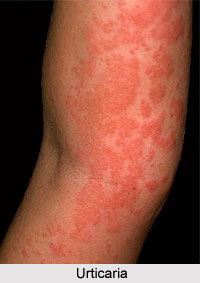 Urticaria or hives are fundamentally produced by histamine and other compounds discharged from cells referred to as `mast cells`, which are a normal part of skin. Histamine (a biogenic amine involved in local immune responses, as well as regulating physiological function in the gut and acting as a neurotransmitter) stimulates fluid to trickle from the local blood vessels, leading to inflammation on the skin. Urticaria is regarded an almost everyday disease, erupting out from several causes. Although they can be nettlesome most of the times, they generally settle down on their own over a period of weeks and are hardly ever medically sombre. Some hives are caused by allergies to such things as food, medication and insect stings, but the bulky majority of instances are not allergic and no exact cause for them is ever found. Although sufferers may find it baffling not to know what has caused their Urticaria, tacticses like modifying one`s diet, soap, detergent and makeup, are usually not helpful in preventing hives and for the most part are highly unnecessary. In extraordinary instances (in some hereditary, in others, caused by bee stings or drug allergy), Urticaria and Angioedema are accompanied by stupor and difficulty in breathing. This is termed as anaphylaxis in the medical world. Commonplace hives may be widespread and perturbing to look at, but the vast majority of cases do not lead to life-threatening complications.
Besides the above mentioned ones, there does exist several other fatal causes of Urticaria. As a foremost point, it may ensue from digestive disorders like mechanical irritation in the digestive tract or toxemia. Urticaria may be caused by drugs like aspirin, penicillin, serum, quinine, ipecac, turpentine and morphine. Certain foods often cause hives to spread mercilessly amongst susceptible individuals. These specified foods include strawberries, tomatoes, cucumbers, mushrooms, oatmeal, wheat, nuts, fish, eggs, chocolate, cheese, butter and sausage. The bites of bed-bugs, wasps, bees, mosquitoes, fleas and particular kinds of caterpillars also pose a chance to produce the disease. Use of delicate and private products such as deodorant, perfume and talcum powder, cosmetic products, animal derivatives and similar synthetic substances are also known to induce this disorder. Irritations of the uterus or correlated structures can also cause the Urticaria disease. However, mental disturbances and psychological perturbations that can result into emotional excitement are very much conducive to heightening the cause of hives.
Chronic medical conditions or severe instances of illnesses or allergens can cause chronic Urticaria and some folks are "healed" by resolving things that are erroneous with their body. However, it needs to be noted that the list mentioned as under includes causes for short term Urticaria only. If not endangered to the allergen on a regular basis, numerous causes can be eradicated in the cases of chronic hives. The known causes of chronic Urticaria range from being the regular commonplace ones of infection, to the major emergency ones, happening in isolated cases. Infections are often held responsible as one of the causes of Urticaria. Chronic bacterial infections (e.g. sinus, dental, chest, gallbladder, urinary tract, eye), sinusitis, otitis (eyes), bacterial, dental abscess (bad root canals etc.), Campylobacter enteritis, fungal infections (dermatophytosis, candidiasis (yeast), tinea), viral infections (hepatitis B prodromal reaction, infectious mononucleosis, coxsackie, cytomegalovirus, Epstein-Barr, hepatitis), protozoal and helminth infections (intestinal worms, malaria), cholecystitis, pneumonitis, cystitis, vaginitis and other infections -viral, parasitic, fungal, or bacterial are held responsible.
Diseases like Systemic lupus erythematosus, hyperthyroidism, autoimmune thyroid disease, Hashimoto`s disease, carcinomas, lymphomas, rheumatic fever, juvenile rheumatoid arthritis (Still`s disease), leukemia, leuko-cytoclastic vasculitis, vasculitis, polycythemia vera (acne Urticaria-Urticarial papule surmounted by a vesicle), lymphoma, collagen vascular disease hepatitis have also been proved as the specific causes of Urticaria. Too much of stress and tension also leads to adrenergic Urticaria.
The Allergens that might cause Urticaria can be additionally segregated into a separate category, which can further be classified into:
• Foods : Fish, shellfish/seafood, nuts, eggs, chocolate, strawberries, berries, tomatoes, pork, cow`s milk, cheese, wheat, yeast, bananas (latex), grapes, soy, wheat. Some food items that comprise high levels of histamine, conducive to further aggravating causes of Urticaria are: strawberries, tomatoes, shrimp, lobster, cheese, spinach, eggplant.
• cosmetic/bath Additives : Numerous additives that can be considered the fatal adversaries to the causes of Urticaria, mostly end up both in food and bath products. Salicylates, dyes such as tartrazine, benzoates, penicillin, Aspartame (NutraSweet) probably does not cause hives. Sulfites, cosmetics, douches, ear or eye drops, insulin, Micenthol (cigarettes, toothpaste, iced tea, hand cream, lozenges, candy), Tartrazine (vitamins, birth control pills, antibiotics, TDC yellow), Trichomonas, dyes, hair spray, nail polish, mouthwasht, perfumes, hand cream, soap, insect repellent are just some of the everyday commonplace agents causing Urticaria.
• Nonimmunologic Contact Urticaria : Plants (nettles), animals (caterpillars, jellyfish), medications (cinnamic aldehyde, compound 48/80, dimethyl sulfoxide)
• Organic substances : Preservatives, latex, hymenoptera venom.
• Immunologic or Uncertain Mechanism Contact Urticaria : Ammonium persulfate used in hair bleaches, chemicals, foods, textiles, wood, saliva, cosmetics, perfumes, bacitracin.
• Contactants : Wool, silk, substance in the occupational environment, potatoes.
• Inhalants : Pollens, mold spores, animal dander, house dust, aerosols, volatile chemicals.
• Drugs and Chemicals : Penicillin, aspirin, sulfonamides and drugs that cause a non-immunologic release of histamine (e.g. morphine, codeine, polymyxin, dextran, curare, quinine). Salicylates, Indomethacin and other nonsteroidal anti-inflammatory drugs (NSAIDS) such as ibuprofen and aspirin, opiates, cephalosporin, radio-contrast material, penicillin (medication, milk, bleu cheese), sulfonamides, sodium benzoate verily make up as the cause of Urticaria and hives. Some drugs can cause direct mast cell degranulation such as: opiates, vancomycin (Vancocin), aspirin, radio-contrast media, dextran, muscle relaxants, bile salts, NSAIDs.
Besides these regular mentioned ones, which act as veritable agents to the cause of Urticaria and hives, there does seriously exist some of the other clinical infectious causes to this skin reddening disease. The skin lacerations of Urticarial disease are medically acknowledged to be caused by an inflammatory reaction in the skin, stimulating outflow of capillaries in the dermis and resulting in an oedema that persists until the interstitial fluid is soaked up into the surrounding cells. Urticaria are caused by the discharge of histamine and other mediators of swelling and irritation (cytokines) from cells in the skin. This procedure of progression can be the outcome of an allergic or non-allergic reaction, standing at variance in the `eliciting mechanism` of histamine discharge.
Symptoms of Urticaria
 The symptoms of Urticaria are red and white patches coming out on the skin, accompanied by burning, intense itching and stinging. Rubbing and scratching usually only aggravates the hives. The outbreak of Urticaria is sudden and the disease may affect either a part or whole of the body. Other symptoms which accompany hives comprise fever, digestive disturbances and prostration.
Treatments of Urticaria
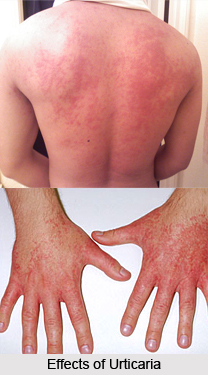 Urticaria can happen anywhere on the body, such as the trunk, arms and legs. Of those individuals who suffer from chronic hives, some 80 percent are counted to be idiopathic, the medical term which implies that no cause, allergic or otherwise, can be ever detected. However, treatment of Urticaria does tend to always debar such harsh effects, with medical professionals striving for the best.
One trademark of Urticaria is its tendency to alter size speedily and to move around, vanishing from one place and reappearing in other places of the body, often within just a few hours. Individual hives usually last 2 to 24 hours. An outbreak that looks striking, even appalling; first thing in the morning can be completely gone by noon, only to be back with full force later in the day. Therefore, it is always advised that even if one does not have evidence of hives atop the skin, it is best to show the doctor for examination purposes. The doctor will best know exactly how to establish the diagnosis based upon the history of one`s symptoms; as such, treatment of Urticaria and hives is very much necessary under all circumstances. At times, it is helpful to bring by a photograph of what the itchy rash looked like at its worst, in order to perfect and effective treatment of Urticaria.
A swelling and inflammation that might happen rather deeper in the skin and also poses every chance of accompanying hives, is referred to as angioedema. This may be witnessed on the hands and feet, as well as on mucous membranes (with swelling of the lips or eyes that can be as dramatic as it is brief). The goal of treating most cases of ordinary hives is to alleviate those symptoms as the condition melts away by itself. The most commonly used oral treatments for Urticaria are antihistamines, which help counterbalance the effects of the histamine leaked by mast cells. The principal side effect of antihistamines is however drowsiness. Several antihistamines are available without prescription as over-the-counter-drugs, such as diphenhydramine (Benadryl), had in doses of 25 milligrams and chlorpheniramine (Chlor-Trimeton), taken in a dose of 4 milligrams. These can be taken up to thrice a day, but because these medications can cause drowsiness, they are most often counselled to be taken during bedtime. Those who have them at other times should be especially careful and remain alert for adverse effects.
Loratadine, another effective cure for treatment of Urticaria (Claritin, 10 milligrams), is available over-the-counter and is less likely to stimulate drowsiness. Also approved for over-the-counter use is cetirizine (Zyrtec, 10 milligrams), which is moderately sedative in its impression. Some antihistamines come compacted with decongestant medication (Claritin-D, Zyrtec-D). The decongestant component is not however necessary to treat hives. Antihistamines that require a prescription include hydroxyzine (Atarax, Vistaril) and cyproheptadine, both of which tend to pretty much induce drowsiness. Prescribed antihistamines that stimulate humble sedation are fexofenadine (Allegra) and levocetirizine (Xyzal). At times, physicians combine these with other types of antihistamines referred to as `H2 blockers`, such as ranitidine (Zantac) and cimetidine (Tagamet). However, besides these mentioned treating and remedial measures for Urticaria and hives, physicians always choose upon individualising treatment plans to suit specific patients and amend them depending upon the clinical response.
Oral dispensing of steroids (prednisone, Medrol) can help severe cases of hives, at times looked upon as the only way out for treatment of Urticaria. However, such consumption of steroids must be observed on a short-term basis, as their usefulness is limited by the fact that many cases of hives last too long for steroid use to be extended unharmed. Other treatments have been used for Urticaria as well, including montelukast (Singulair), ultraviolet radiation, anti-fungal antibiotics, agents that restrain and held back the immune system and tricyclic antidepressants (amitriptyline, Elavil, Endep, nortriptyline, Pamelor, Aventyl, doxepin Sinequan, Adapin). Substantiation to support the benefit of such treatments in Urticaria and hives is although meagre. In ordinary instances, they are rarely needed.
Topical therapies for hives include creams and lotions which aid to numb nerve endings diminish itchiness and irritation. Some ingredients which can indeed accomplish this, much mandatory for treatment of Urticaria comprise camphor, menthol, diphenhydramine and pramoxine. Many of these topical preparations require no prescription at all, which is the further beauty for such application of remedies upon hives. Cortisone-containing creams (steroids), even strong ones requiring a prescription, are not very helpful in controlling the prickle of hives.
Finding an effective treatment for chronic Urticaria and hives can indeed be intriguing. In instances, wherein the trigger has been identified - such as an after-effect to a certain food, medication or physical stimulus - treatment primarily involves to avoid the trigger. If the chronic hives have been induced by an underlying health condition, they may improve when this very `underlying` condition is given a remedy. The symptoms of Urticaria can be treated effectively in most people with over-the-counter or prescription medications as generally are recommended time and again. Some of these everyday counselled medications for treatment of Urticaria might just pose a chance, which may not be suitable if one is pregnant, is perturbed with heart disease or is taking other medications such as the antibiotic erythromycin or the anti-fungal medication ketoconazole. If a non-sedating antihistamine does not work, the doctor might recommend taking a different type of antihistamine. These antihistamines, which can make one to be riddled with drowsiness, include Hydroxyzine (Atarax, Vistaril) and Diphenhydramine (Benadryl, others).
Other Medications : If antihistamines alone does not relieve one`s symptoms to the treatment of Urticaria and hives, other possible treatments include:
Oral Corticosteroids: Oral corticosteroids such as prednisone can aid in reducing inflammation, redness and itching - but are only used for short term for severe hives or angioedema, because they can cause serious side effects.
Tricyclic Antidepressants: Instances of this category include amitriptyline, nortriptyline and doxepin. These medications possess antihistamine properties and can help alleviate itching.
Epinephrine: For a severe attack of hives or angioedema, one might need an emergency injection of adrenaline (epinephrine) and a visit to the emergency room for clinical purposes. If one is down with repeated attacks, despite treatment, the doctor may prescribe and instruct how to use the adrenaline (EpiPen). He needs to carry this medication at all times for use in emergency situations for treatment of Urticaria and hives.
Naturopathic and Ayurvedic Treatment : Besides the strict allopathic and clinical treatment of Urticaria and hives, there exist some effective and long-lasting grand-motherly remedial measures for hives, more sophisticatedly stated as naturopathy in the medical domain. Indeed, the field of Ayurveda is also very much known to thoroughly exploit the natural ingredients for its curing outcomes. Treatment of Urticaria in Ayurveda demands a thorough understanding of naturopathy and it`s basic in the first place.
Naturopathy for Urticaria and its treating measures might incorporate within its bound:
• It is firstly advised to adopt an all-fruit diet for the beginning 5 days and to administer a warm water enema. He is recommended to drink liberal quantities of hot water. With gradual advancement of time, the patient needs to get onto a well-balanced diet with accentuation on raw vegetables and fresh fruits. As a warning measure, the patient is severely asked to stay away from all foods that are difficult to digest.
• Salt provides relief in Urticaria with digestive disorders. Approximately, 12 grams of salt should be dissolved in water and drank in recurrent periods. Later, upon having this salt water, the throat needs to be tickled to stimulate vomiting. It brings in relief and cures eruption.
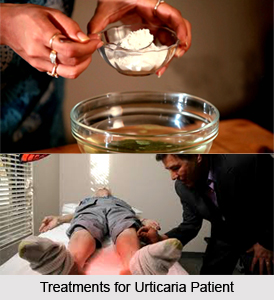 • Utilising rose water in vinegar helps assuage severe itching in hives. As an efficacious treatment measure for Urticaria, he is counselled to mix approximately 35 millilitres of rose water with 25 millilitres of vinegar and dab it to the affected parts.
• Turmeric is an invaluable home remedy possessing antiseptic properties. As such, the patient is asked to blend 2 teaspoon of turmeric powder in water and take it at regular intervals for relaxing senses.
• Mint relieves itching in Urticaria. Due to its acknowledged properties, approximately 7 grams of mint and 25 grams of brown sugar has been recommended to be boiled and drunk.
• Naturopathic treatment for Urticaria details down intake and basking in fresh air and sunlight, quite essential and mandatory for gradual long-lasting relief.
• Lastly, he is strictly asked not to expose the already suffering skin to cold weather and cold water, which is sure to result in adverse effects.
Home treatment and remedial measures for Urticaria and hives exist in the dozen, with several of the household utilised items generally surfacing as most effective, when all else seems to fail. However, prior to the commencement of any such curing agents and their application, it is basically very important to identify the root cause of allergic reaction. Once he becomes aware of the triggering agent, it becomes very easy to wrestle with the almost won battle.
Some of the household treatments of Urticaria can comprise : Urticaria can be treated at home applying various methods. Tough these methods ensure gradual healing but there are no chances of side effects.
Urticaria treatment by utilising cool compression: By applying a cool compression, it is known very much to help and also provide some alleviation from the pain and itch.
Urticaria treatment by utilising calamine lotion: By applying a calamine lotion all through the affected parts, it can grant one much relief from the irritating feeling.
Urticaria treatment by utilising milk of magnesia: Dabbing milk of magnesia on the lesions has been long recognised to furnish some relief and liberation from pain. As milk of magnesia is an alkaline solution, it helps in removing the nettlesome itchy sensation.
Urticaria treatment by utilising herbal tea: It is mostly witnessed that when one is down with hives and it`s massive botheration, he is generally stressed out and too much concerned with the skin. As such, the patient tends to loose one`s sense of calmness and the nerves are quite vulnerable. As such, pacifying the nerves is one of the most crucial things to do, as stress makes the matter worse. Drinking peppermint or passionflower tea is known to bring about remarkable effects. As an alternative, one can also try chamomile, valerian and catnip, which also soothes the tensed and taut nerves.
Urticaria treatment by utilising cornstarch: To stop the continuous sensation of itching, the patient is advised to get 1/2 a tub filled with warm water, add 1/2 cup cornstarch and 1/2 cup baking soda to the remaining ingredients. Later, soaking oneself at least once a day in this blended water can bring in a lot of difference.
Urticaria treatment by utilising aloe vera gel: Applying aloe vera gel or vitamin E oil to the hives affected area at least twice a day can benefit the patient a lot, identified as one of the most efficient home treatments of Urticaria.
Urticaria treatment by utilising nettles: Drinking nettle tea which needs to be prepared by 2 tsp. powdered stinging nettles and dollops of added honey or lemon to add flavour, is also known to bring about long lasting good effect upon hives.
Urticaria treatment by utilising cayenne pepper: Consuming cayenne pepper capsules have been exhaustively recommended to help the faster healing procedure of hives. As an alternative home remedial measure to Urticaria, one can also have vitamin C, vitamin E or zinc for quicker relief.
In order to effectively exploit the methods of treatment of Urticaria and hives, one is always asked to stay away from allergen triggering foods. A diet for hives needs to be a perfect one, which should not contain food items like eggs, strawberries, berries, peanuts, nuts, chocolates, cheese, tomatoes, soy products, shellfish and many more. In order to identify various other foods that might again trigger off the allergies to the utmost, he is also recommended to find out those foodstuffs that one is allergic to and thereafter, avoid having it.
Acupressure and its various mysterious and yet relaxing measures that are utilised for treating Urticaria and hives, have been in prominence since a long period of time, precisely in India. Acupressure treatment of Urticaria demands massaging the trapezius points of the affected body parts, exactly those areas from where one can find some relief. This trapezius muscle can be found in the exact upper back area, between the neck and shoulder. By rendering vital pressure further, it may clear the red and white ringed patches of the body.
Homeopathic treatment of Urticaria and hives is another domain that perhaps can bring about the most combined format of relief, by utilising both medicinal as well natural remedies for curing on a long-tern basis. Commonly referred to as Chaapa-ki in native Hindi hives, just like with any other nettlesome disease, homeopathy practically has a solution to everything it keeps its hands on. Homeopathy, as such, possesses an exceedingly promising role in the treatment of chronic Urticaria and hives. The long term results with homeopathic medicines are pretty encouraging and sustainable, mostly keeping the patient contended and happy.
Although homeopathic treatment for Urticaria is time consuming and not very immediate like its allopathic counterpart, a patient can indeed gradually reach a stage where this problem can be exterminated from the root. Two likely medicines that are mostly ranked at the top, for treating Urticaria from its foundation are Sulphur and Astacus Fluviatilis. Sulphur is an extremely crucial homeopathic medicine for treating chronic and obstinate hives however, as a warning measurement, it needs to be remembered that Sulphur can act as a `double edged sword` and must be used only under strict directions of the homeopathic physician. Apis mel (manufactured from the bee sting) is another homeopathic medicine that is often employed with tremendous success in homeopathy for treating chronic as well as acute forms of Urticaria. Apis mel is also known to be effective in treating Urticaria where angio-oedema (swelling) is also very much apparent.
Recently updated articles in Naturopathy in India

Effect of Magnets on Human Body
Magnets have a stimulating effect on various body systems such as digestive, urinary, respiratory. Magnet has its affect on blood and hence it influen...
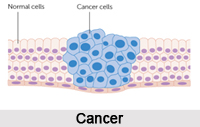
Cancer, Disease
Cancer is a malignant in which a group of cells display uncontrolled growth.
Principles of Massage
Principles of Massage are consisted of proper intricacies and sequence.
Foot Massage
Foot Massage is an extremely healing and effective therapy in Ayurveda, which can eliminate several problems in the entire body.
Eye Massage
Eye Massage helps to make the eyes cool and calm making the muscles stronger.
Related articles in Naturopathy in India
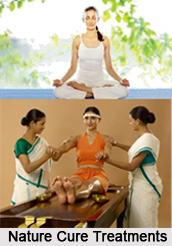
Nature Cure Treatments
Nature Cure Treatments comprise the use of natural elements and healthy lifestyle for healing various ailments and staying fit.

Water Therapy
Water therapy is an alternative therapeutic method that cures many diseases.

Magnetized Oils
Magnetized Oils are prepared either on the North Pole or the South Pole.