
Tikkanna was one of the greatest poets of Telugu literature. He was one of the `Kavi-Traya` or the `Trio of poets` of Telugu literature. He was the second of those trios, while the first one was Nannaya and the third Errana. He was born in Nellore Andhra Pradesh in a Saivaite Brahmin family. Tikkanna was also known as Vikrama Simhapuri and lived in Paturu, a small village about 10 km from Nellore.
The earliest work of Tikkanna was the `Nirvacbnnottara Ramayafiamu`. But the greatest work of Tikkanna in Telugu literature was to assist in the completion of the great Telugu epic `Mababbaratamn`. This was left half done by another well-known poet Nannaya for approximately two centuries, before Tikkanna took it up.
Tikkanna started writing the remaining part of the Telugu Mahabharata from the `Virata Parva` chapter. Nannaya left it after writing it up to Vana Parva. Tikkanna was considered to be a great intellectual, who completed the translation of the rest of the fifteen sections called parvas in the `Chatnpu` form of poetry and dedicated the work to Lord Hari-Hara. The stagecraft knowledge of Tikkanna helped him in translating the `Udyoga Parva` in this epic and his realistic style makes this work a classic, which is very vibrant.
In the Telugu version of Mahabharata, the Draupadi and Kichaka episode was written by Tikkanna. The originality in these parts portrayed by him made it very famous among the Telugu people. It is a general belief that Tikkanna was more a dramatist and Nannaya was leaned towards poetry. The `Vana Parva` of the Telugu Ramayana was completed by another contemporary of him Tikkanna named Errana.
Tikkanna blended the `Marga` and `Desi` traditions in his works. The `Dasakumara-Charita` was dedicated to Tikkanna by its writer Mulaghatika Ketana. Tikkanna, being a follower of the Advaita tradition of philosophy, tried to unify the Hindus of his time by propagating the Hari Hara cult. Tikkanna tried to bring together the Saivite and non-Saivite schools of Telugu poets who were then involved in religious fanaticism. During the 13th century AD, Tikkanna was appointed as a minister to one of the smaller kings in the Andhra country. Tikkanna worked towards preventing the imminent Muslim invasion in South India as he was trying for the political unity of Andhra country.
Tikkanna
Tikkanna was a great Telugu poet, and was the second of the `Kavi-Traya` of Telugu literature.
Recently updated articles in Indian Literature
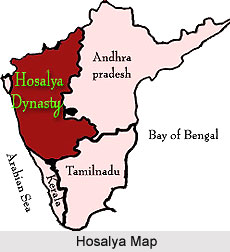
Gadyakarnamrita
Gadyakarnamrita is a 13th-century Sanskrit literary work written mainly in prose. It describes the ninety-day battle at Srirangam between the Hoysala...
Women Writers in Malayalam Literature
Women writers in Malayalam literature have worked incessantly to make a place for their literary works. In the earlier periods, they were completely o...
Comrade Kirillov, Novel by Raja Rao
Comrade Kirillov, a distinctive creation of Raja Rao, is presented as a brief yet incisive novelette that offers an ironic portrayal of the self-contr...
The Foreigner, Novel by Arun Joshi
“The Foreigner” is a book authored by Arun Joshi and published by Vision. It is an illustrious creation in the entire career of Arun Joshi, the famous...
Short Story in Telugu Literature
Short Story in twentieth century Telugu Literature was extremely popular and growing in and developing in a major way. Their popularity was greatly fa...
Related articles in Indian Literature
Mythological Themes in Indian Literature
Mythological themes in Indian literature have been integral to every ancient and contemporary writer and their path to f
Literature During Gupta Age
It is during the Gupta Age literature in the form of poetry, epos and drama gained a colossal importance.
Literature of Aravidu Dynasty
Sanskrit and Telugu were the popular literary medium of communication during Aravidu dynasty.
Munshi Premchand
Munshi Premchand was a legendary Indian writer notable for his modern Hindustani literature. A writer of a very high caliber, Premchand`s writings hav...
Sanskrit Poets
The names of some of the Sanskrit Poets are Bharavi, Devarshi Ramanath Shastri, Jayadeva and Srinivas Rath.