
Three temperaments of Tantra speak of the main dispositions of men. These character divisions are based on various modifications of the guna. The analogous exponential classifications of men as material, psychical and spiritual, match the three guna of the Sankhya-darshana.
Pashu Bhava
In pashu the rajo-guna operates on tamas that generates dark features like error, drowsiness and laziness. However a jiva of this type may prove superior to a jiva of the next sort. The former is bound by matter, lacks illumination. There is a possibility that the latter may abuse the greater freedom he has won. There are several kinds of pashu, some more and some less Tamasik than others. Others approach and merge into the vira class gradually. The term pashu comes from the root pash, which means "to bind." The pashu is the man who is bound by the bonds pity, ignorance, fear, shame, hatred, family, custom and caste.
Pashu is the worldly man, in unawareness and oppression as contrast to the yogi and the tattva-jnani. Three divisions of pashsu are sakala, Pratyakala and Vijnana kevala. Sakal are bound by the three pasha - anu, bheda, karma. The three impurities are anava-mala, maya-mala and Karmma-mala. Pratayakala are bound by the first and last, and Vijnana-kevala are those bound by anava-mala. He who frees himself of anu becomes Shiva himself. Devi bears the pasha and is the cause of them. Men of this class are described in Tantra by exterior traits. According to Kubjika Tantra those who belong to pashu-bhava does not touch a yantra, nor make japa of mantra in the night time. He lacks faith in guru. He distinguishes one Deva from another. He talks ill of others. Even the Nitya Tantra describes the traits of pashu.
Vira Bhava
As far as vira-bhava is concerned, rajas works on sattva independently towards the production of acts in which sorrow belongs to. Vira also has several types.
Divya Bhava
Divya Bhava is the highest class of man in which rajas works on sattva-guna. According to Nitya Tantra among all the bhava divya is the best, the vira is the next best and the pashu is the lowest. It is also believed that devata-bhava must be awakened through vira-bhava. The Kubjika Tantra mentions the marks of the divya. He also gives charity daily. He has strong belief in Veda, Shastra, guru and Deva. He worships Pitri and Deva as well as performs all the daily rites. He is well versed in Mantra. He speaks truth always as well as avoids the company of those who criticize the Devata. He worships thrice daily and meditates upon his guru. He regards women as his guru.
Three Temperaments of Tantra
Three temperaments of Tantra are pashu bhava, vira bhava, and divya bhava. These are the three dispositions of men.
Recently updated articles in Indian Literature
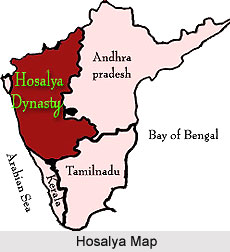
Gadyakarnamrita
Gadyakarnamrita is a 13th-century Sanskrit literary work written mainly in prose. It describes the ninety-day battle at Srirangam between the Hoysala...
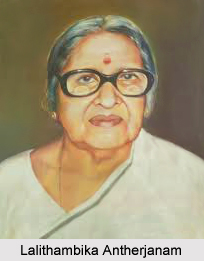
Women Writers in Malayalam Literature
Women writers in Malayalam literature have worked incessantly to make a place for their literary works. In the earlier periods, they were completely o...
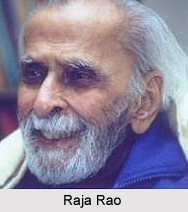
Comrade Kirillov, Novel by Raja Rao
Comrade Kirillov, a distinctive creation of Raja Rao, is presented as a brief yet incisive novelette that offers an ironic portrayal of the self-contr...
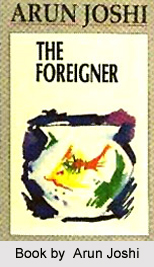
The Foreigner, Novel by Arun Joshi
“The Foreigner” is a book authored by Arun Joshi and published by Vision. It is an illustrious creation in the entire career of Arun Joshi, the famous...
Short Story in Telugu Literature
Short Story in twentieth century Telugu Literature was extremely popular and growing in and developing in a major way. Their popularity was greatly fa...
Related articles in Indian Literature
Mythological Themes in Indian Literature
Mythological themes in Indian literature have been integral to every ancient and contemporary writer and their path to f
Literature During Gupta Age
It is during the Gupta Age literature in the form of poetry, epos and drama gained a colossal importance.
Literature of Aravidu Dynasty
Sanskrit and Telugu were the popular literary medium of communication during Aravidu dynasty.
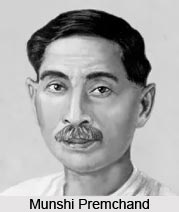
Munshi Premchand
Munshi Premchand was a legendary Indian writer notable for his modern Hindustani literature. A writer of a very high caliber, Premchand`s writings hav...
Sanskrit Poets
The names of some of the Sanskrit Poets are Bharavi, Devarshi Ramanath Shastri, Jayadeva and Srinivas Rath.