 The category branded as Indian literature virtually encompasses the whole of India and its every single aspect, both symbolically as well as realistically. And this certainly is not an overstatement or hyperbole, as writers beginning from the prehistoric age have tried to mirror their society, their times at large, a work to which they have also been successful. Indeed, the thought themes in Indian literature broadly hold within itself a magnificent yet clandestine vision, if viewed in an open angle. To state more precisely, it is generally seen that writers are of the habit to leave their piece of work with an open ending, i.e. , leaving his/her readers to judge the conclusion according to their own wish and understanding. And this where lies that much hidden `success` of the writer, who is forever bound under societal norms when he/she is writing for the present generation. Before beginning with a novel, poetry, short story or play, a writer always has to bear in mind the previous happening in his community and consequences that might occur after the work is published. Hence, the writer never as such can move out from his society and publish an out-of-this-world creation; if such phenomenon ever comes into being, the writer, most likely is to be branded a `social outcaste` or made `incommunicado`. Thus, themes in Indian literature always have to be created keeping in mind the ongoing Indian society or the people associated with it.
Now, when elaborated further on this very subject, i.e., Indian literature and its predominating themes, it can be found that a writer, be it of any capability cannot move out form the long-established themes of humanity, like romance, society, tragedy, comedy, adventure, war, or the ancient ones like mythological or epical. Since the ancient Indus Valley Civilization, it has been documented in historical annals that man had favoured to express themselves by speech or letter in the basic overriding conscious emotions stated just above. As such, the ancient Hindu society in India had always favoured and liked to base their writing on mythology and umpteen other legends and folklore, which perhaps was taken to a likeness by ladies and gentlemen both from the mass and the class. As such, mythological themes in Indian literature was the first to capture and enchant Indian readers, dealing with kings, queens, palaces, demons, gorgons, vision of heaven or hell, the Almighty, battles and ultimate winning, also including themes like `never never land` and every sort of non-living thing being animated into a living being. Indeed, these mythological stories had so very appealed and captivated Indian minds, that none of the succeeding generations has ever been able to come out of this everlasting `hypnotic` effect.
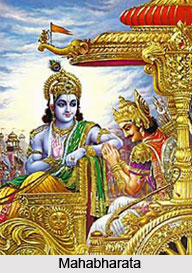
Another vital modified version of mythological theme in Indian literature was the rather sophisticated development of epics in Sanskrit literature that was ushered in the Vedic Age. Epic themes in Indian literature began its journey with the two legendary magnum creations Ramayana and Mahabharata, influences and citations of which are still employed by contemporary Indian writers. Thinking in terms of such colossal dimensions called for expert Hindu Sanskrit scholars like sages Valmiki and Vyasa, who were the venerated writers of Ramayana and Mahabharata respectively. In societies that were yet to see modern light of day, these luminaries were capable to take India and Indians towards that modernistic section, that present critics refer to as much ahead of times. Indeed, maximum of later Sanskrit classical literature was based on these two epics, taking themes in Indian literature towards a genre by itself.
Romantic themes in Indian literature was soon to follow the ancient Hindu society, jumping from staunch Hinduism and its priests and borrowing to some extent from west, precisely from its European counterpart. Romance as is known in strict terms in present Indian scenario was far from what was see in those times. Romance necessarily entailed virtually every aspect of life dealing with war, battles, crusades, chivalry, gallantry, relationships with heroic adventure and its knights wooing the princess etc and not only a love affair between a male and a female. Writers were successful to represent every kind of backdrop and link it with romanticism, which just as usual, is espoused by modern Indian regional or English writings. Indeed, contemporary Indian literature has derived out a sophisticated version of romantic theme in Indian literature, dealing again with convoluted versions of social backgrounds and yet falling in place with a perfect balance.
In all these variety of literary genres, it can be witnessed that authorship is mysteriously and productively in line with societal norms, permanently portraying one or the other type of societal variation that has changed with age. Themes in Indian literature during Vedic Age, themes in Indian literature during Classical Age, themes in Indian literature during Medieval Age differs grossly with themes in Indian literature for the contemporary age. As such, social themes in Indian literature, be it in any kind of literal category, wholly falls in place with the structure organisation that humanity dwells in.
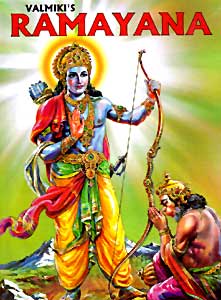 Epic themes in Indian literature basically defines and assays to portray the out and out influence and sway that the ancient literatures had on the subsequent humanity and that which is still going on. The Epic Age can basically be attributed to the times beginning from 1500 B.C. and culminating in 1200 A.D. Hence, before analysing the influence of epic themes in Indian literature, it is first necessary to comprehend the times of Epic India and its culture and customs. This was the very period that is verily titled Golden Age in India, with proliferation, affluence and richness redefining its subjects and populace. The Mauryan Empire was, during the Epic Age, at its helm, with equality and unity in diversity being manifested throughout their territorial reign. When concerned with literature, this was the very genre that had perhaps grown rapidly the most, with Sanskrit literature, commencing from Vedic Sanskrit, had come down in the illustrious line to Classical Sanskrit. However, the two great epics in Hinduism, the predominant religion during that time in the country, Ramayana and Mahabharata had already been scripted, gradually gaining its stronghold with time and its magnificence. The Puranas (also known as the Itihasas), another subsidiary form of epic literature, had also been penned, arresting general attention time and again.
 This is precisely the process by which the subsequent Indian population has been blessed with several great narratives based upon Vyasa and Valmiki. Even if only the land south of the Vindhyas is observed, there survives God`s plenty in Indian literature based on epic themes. Marathi literature exudes a pride of its own by the Sisupala Vadh of Bhaskarabhatta Borikar and Murti Prakasa of Keshavraj Suri. Telugu literature surfaces completely in the 11th century with Nannayya`s translation of the Mahabharata. He could however accomplish only the Adi and Sabha Parvas, though. Tikkanna and Yerrapragada had arrived later to finish the pending work. As for Ramayana, there are nearly two hundred and fifty versions existing today, beginning with Gona Budha Reddy`s Ranganatha Ramayana. The trans-creation of the epic by the poetess Molla (16th century) is also justly legendary by its own right. She was the daughter of a potter of Gopavaram, a village close by to Nellore. This was the golden period in medieval literature when some of the finest works in Telugu were compiled.
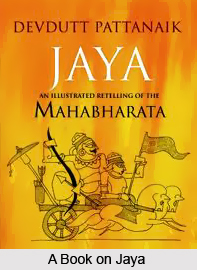 Mythology in Indian context is perhaps the most utilised and most admired for every generation and genre. History bears proof to every fact that Indians from every age, time and place and dynasty have expressed their ardent desire to be enriched and knowledgeable in myths, mythology, legends and folklore. Irrespective of belonging to the contemporary age or being placed in erstwhile era, Indian mythology and its umpteen sections have rested their permanent influence on Indian literature as a whole, which by their own right, can be considered a literary genre itself. Mythology in the Indian context is kind of an all-encompassing and all-inclusive subject, to which everybody wants to be a part of. The traditional, customary and highly esteemed view point of the grandmother-styled art of story-telling has been evolving with time since time immemorial, and this can never be an overstatement. Mythology and their Himalayan twists, turns, thrills, the evil act of a villain-like gorgon and the ultimate triumph of good over evil by the knight in shining armour, together with his rescued kingdom and his beautiful princess, have forever influenced Indian writers, beginning from the Vedic Age. As such, mythological themes in Indian literature are just another common aspect, governing one`s daily life and passion for reading.
 infamous and manipulative game of dice and its consequences owing to sheer greed, makes these episodes stand out manifestly in present Indian context of strife or antagonism with each other. Ramayana too elaborates about lust for kingdom and power and a wife`s devotion to her husband, or a brother`s passionate respect for his elder ones, in the formation of Rama, Sita, Lakshmana or the demon Ravana and his ambition have been hugely celebrated in verse and poetic language, making the writers almost legend and myth-like themselves.
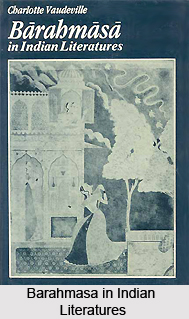 Indeed, Hindu myths and folklore during these Vedic and Classical times are so very saturated with supernatural chronicles, that mythological themes in Indian literature seems only a banality when speaking about these ages and the men living in it; literature by ancient writers were perhaps incomplete and could never be envisioned without invoking God, the Almighty, their wrath and conversations and lastly, the demons, their evil-doings and their curse on humanity. Literary praises, extolments or the concept of invoking was such that it is also believed that these medieval writers were blessed enough to have directly encountered the Almighty`s venerated blessings and divinity in person. Hindu literature also abounds in other variations in mythological influences, with weapons and weaponry arresting a considerable position. Each prince or king is described to have been endowed with the Omnipotent`s special benediction to possess that out-of-this-world tool to fight his adversary. For instance, Arjuna from Mahabharata was known to have been blessed by Lord Brahma Himself, to be gifted with Brahma`s peculiar weapon. The demon king of Lanka, Ravana in Ramayana is also believed to have been blessed by Lord Shiva Himself, lending the king with unusual powers. Coming down to Classical Age, a rather later period in Hindu literature, Vaishnava literature, with the influence of Lord Krishna under Chaitanya Mahaprabhu and his followers have retold umpteen tales of chivalry, romance, moments of annoyance and love games within Krishna and his love interest Radha. The four Vedas themselves: Rig Veda, Yajur Veda, Sama Veda and Atharva Veda, are also known to contain umpteen tales of heroism, bravery, bloodshed, invasions and valorous deeds, that surely only are possible in mythical books, lending additional finery to mythological themes in Indian literature.
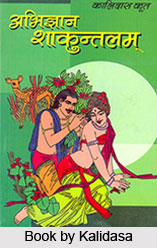 Romance in Indian literature is as old and perhaps as commonplace as Indian history or advent of human civilisation. Since the birth of proper humanity and their establishment of a structured society, man has known and acknowledged romance in their lives, that was integrally linked with verbalisation and scripting of literary quotations. As is known from historical annals, literature in India, during its very initiation, was essentially oral and delivered by the word of mouth. The Vedic trend of gurukul and the guru-shishya process was the primary initiator of this trend, which entailed a young boy travel to his guru`s home and be imparted religious education by his teacher in each occasion. This gurukul mode had, in turn gifted the students to become enlightened in historical romances, although orally. However, in this oral manner, the maximum of these invaluable creations were realised to be lost in time, forever resting in oblivion. Be it tales of religion, adventure, thrill, tragedy, comedy, play, poetry or romance under any form, it gradually dawned on man to pen down these literatures in manuscript, beginning a new era in Indian literary traditions.
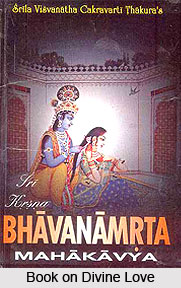 Indeed Kalidasa`s each single creation can be termed as epitomisation of romance and lovelorn lasses and lads, passing through the phase of losing love and further winning it back. The litterateur`s subtle, implicit yet blatant expression dedicated to love and romance, the pathos and drama hidden within each line, is further heightened by Kalidasa`s usage of magnificent overlapping of prose and verse. His Ritusamhara, or even Meghaduta wondrously portrays the romance in seasonal changes and its essential characteristics and its effect upon a lover and his lady in arms. Then again romance is thoroughly established in works of ?hudraka, Bhasa, Asvaghosa, who have religiously sought to emphasise romance in literary works. Romantic theme in Indian literature is also evidenced in the fabled and fairy-tale works like Sanskritic Panchatantra and Hitopadesha, which do contain umpteen tales targeted for the younger and child population, considered a huge hit for all generations that have matured henceforth.
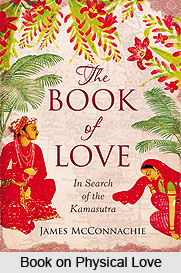 For instance, Tagore`s Gora, Sarat Chandra Chattopadhay`s Parineeta, Tarashankar Bandyopadhay`s Dhatri Devata, or Madhusudan Dutt`s Meghnadbadh Kavya, each incredibly enunciates romance in a different genre, setting, time and place. In comparative later times from Indian Independence, Bengali author Ashutosh Mukhopadhay has successfully been able to capture every single Bengali mind, beginning from the young and ending in grey hairs. Then again, Hindi literature is yet another area, wherein romantic theme rules supreme for Indian literature and its advancement.