
Tapasya by Arjuna was undertaken at the advice of Ved Vyas, whom the Pandavas meet in the forest toward the beginning of their exile. Dharma sends Arjuna to obtain Shiva`s Pasupata weapon by performing tapasya. Arjuna`s advance toward Mount Kailasha is punctuated by a series of tests and temptations that grow in number and charm as the story develops. In the Sanskrit epic, it is only Arjuna`s father, Indra, who takes the form of a Brahman ascetic to test his resolve, questioning how he can pursue tapas while carrying weapons. Similarly on a tradition apparently introduced by the Kavya poet Bharavi in his Kiratarjuniya Indra has first sent a band of Apsarasas namely Urvasi, Rambha, Menaka, and Tilottama to distract Arjuna, but the hero is unmoved.
As in the dramas about Arjuna`s additional marriages, these episodes involving his asceticism hold a number of reminders of his affinities with Lord Shiva. The latter is also seduced by Mohini in various South Indian myths. Like Shiva when Parvati seeks his affections, Arjuna won`t even open his "eye" to look at the beautiful Apsarasas.
As Arjuna climbs the tapas tree, at each step he pauses for songs and prayers to Shiva. Once he reaches the top, he sits cross-legged a true pillar saint on a small platform. There he holds his hands in prayer above his head. In this fashion, he completes his tapas, a feat that it is said he could not have accomplished on the ground.
Arjuna then slowly descends the tapasu maram, exchanging threats and insults with the lowly hunter, the two arguing over whose arrow struck first. Finally, he reaches the ground and they challenge each other as to who can hurl the other the farthest. At last Arjuna loses the fight, and Lord Shiva flings him as far as the sky. When Arjuna returns, however, the Hunter and Huntress have suddenly disappeared, and Arjuna is blessed with a vision of two new actors impersonating Shiva and Parvati in their "own form", supposedly riding the bull Nandi. Shiva then explains why he shot the boar, and he bids Arjuna to request a boon for completing his tapas. Arjuna asks for the Pasupata weapon, and Shiva bestows it upon him: a striking scene, for during the long moment of exchange Arjuna and Shiva handle the bow Gandiva and the Pasupata, Shiva`s doomsday weapon is simultaneously represented by an arrow. With this weapon, says Shiva, Arjuna will win the Bharata war.
Tapasya by Arjuna
Tapasya by Arjuna was undertaken under the advice of Vyasa. The epic says that Arjuna was sent for the tapasya by Yudhisthira so that he could obtain the Pasupata weapon of Lord Shiva.
Recently updated articles in Indian Puranas
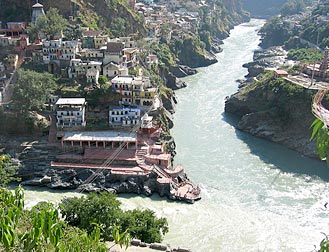
Mandakini, Holy River
Mandakini River is a significant Himalayan river in Uttarakhand, renowned for its ecological, cultural, and religious importance. Originating near the...
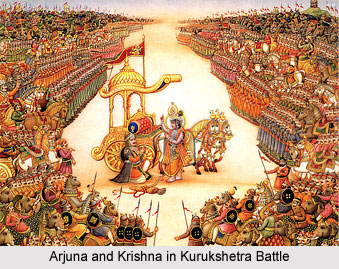
Kausika, Son of Vasudeva
Kausika is a minor figure in Hindu mythology and is identified in the Vishnu Purana as the only son of Vasudeva and his wife Vaishali. He is recognize...
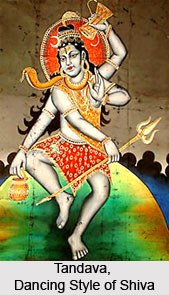
Tandu, Attendant of Lord Shiva
Tandu is revered as the divine attendant of Lord Shiva and the foremost exponent of the Tandava dance. According to the Natya Shastra, he instructed S...
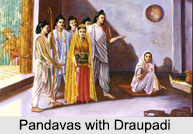
Niramitra, Mahabharata
Niramitra was a son of Nakula and Kareṇumati in the Mahabharata. A descendant of the Pandavas and the Kuru dynasty, he fought on the Pandava side duri...
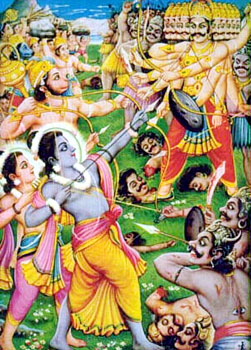
Mahodara, Ramayana
Mahodara was a prominent Rakshasa warrior, minister, and army chief who served under Rāvaṇa during the Battle of Lanka in the Ramayana. Celebrated for...
Related articles in Indian Puranas

Adhyayas in Agni Purana
Adhyayas in Agni Purana are all encompassing. The chapters have dealt with a variety of subjects related to human lives. A large number of chapters ha...
Indian Puranic Tribes
The existence of Indian Puranic tribes is often mixed with mythology and fiction that depict them as superhuman or sub.

Puranic Texts
Puranic Texts are vital according to Hindu, Jain or Buddhist religion; they describe the history of the Universe.

Puranic Shaivism
Puranic Shaivism established during the Gupta Dynasty. This puranic religion developed and expanded, and was accompanied by the development of Brahman...
Nilamata Purana
Nilamata Purana is a Kashmiri Purana that is referred by Kalhana. It is considered as one of the sources of ancient history of Kashmir.