
Tamasa is the youngest form of Rajasthani theatre. The literal meaning of `tamasa` is entertainment. It was invented by the Bhatt family hailing from Telengana in Andhra Pradesh. They were known as Kirtankars or Kirtan singers there and came to Jaipur along with Kanwar Ram Singh. He was the son of Mirza Raja Jai Singh, who as a Mughal commander in the reign of Aurangzeb. Many confuse the origin of Rajasthani Tamasa with that of the Tamasha of Maharashtra, but this is a fallacy.
Maharaja Ram Singh II of Jaipur was a great patron of music and theatre. He founded the Gunijan Khana where musicians and dancers were permanently employed. In 1876 he built Ram Prakash Theatre, on the lines of the Victorian auditoria constructed in those days all over India, and established a company like those of the Parsi theatre. This used to tour Jaipur regularly. The Bhatts, singers at the Gunijan Khana, were assigned to the Ram Prakash company. In the later part of Ram Singh`s life and especially after his death, the theatre virtually came to an end and the company was disbanded. It was then that the Bhatts, who were enamoured by Parsi theatre. This adopted that style of performance and started putting up plays in Brahmapuri, where they lived, and at Amber in Jaipur district.
The texts of Tamasa are almost all from Parsi theatre, such as Hir-Ranjha i.e. `Hir and Ranjha`, Gopichand, and Laila-Majnu i.e. `Laila and Majnu`. There is also the same mixture of prose and poetry in the dialogue, spoken or sung in the Parsi style. The only difference is the language. This Rajasthani language has the flavour of the dialect spoken in Jaipur. Yet the influence of Parsi theatre is so great that a lot of Urdu is judiciously mixed with the Rajasthani. The music has a classical touch, and shows take place in the open and in the round.
Tamasa performances are not very frequent. Young members of the Bhatt family who are involved in urban theatre have started writing new Tamasa plays with modern content. It is an interesting experiment and a genuine effort at continuity, yet the danger is that most of the younger generation has not learnt music professionally and very few can sing. Without the music it will be very difficult to keep the tradition of Tamasa alive.
Tamasa
Tamasa, the youngest form of Rajasthani theatre, was invented by the Bhatt family from Andhra Pradesh.
Recently updated articles in Indian Drama & Theatre
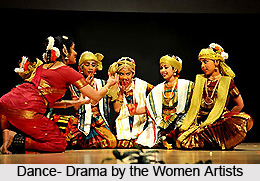
Amateur Theatre
Development of Amateur Theatre has been responsible for useful innovations in theatre culture of Karnataka.
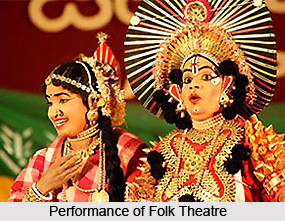
Surendranath Ghosh
Surendranath Ghosh or Dani Babu was a Bengali thespian active during the mid-20th century. He was mostly known for his contributions to Bengal’s moder...
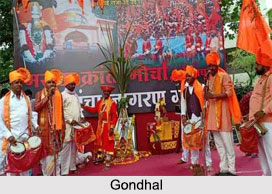
Gondhal Dance
Gondhal is a religious folk dance of Maharashtra. It is performed on special days like when there is a newborn in a family or marriage. Dedicated to g...

Pravritti in Natyashastra
Pravritti in Natyashastra refers to specific human behaviour varying from region to region. There are four types of Pravritti namely, dakshinatya, ava...
Padma Bhushan Awardees (2010-2019)
Padma Bhushan Awardees (2010-2019)
Related articles in Indian Drama & Theatre
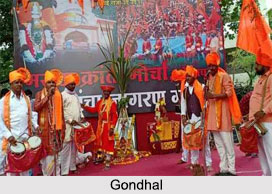
Gondhal Dance
Gondhal is a religious folk dance of Maharashtra. It is performed on special days like when there is a newborn in a family or marriage. Dedicated to g...
Tamasha Folk Dance
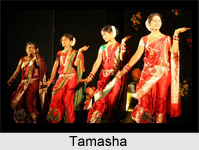
Tamasha is a folk art, which includes the love songs, which are traditional lavanis and dance along with the music.
Sringara Rasa
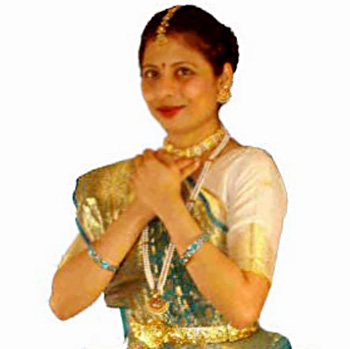
Sringara Rasa is mentioned in Natyashastra as one of the important rasas. The Sthayi bhava in Sringara rasa is Rati or love.
Bhavai - Folk Theatre of Gujarat
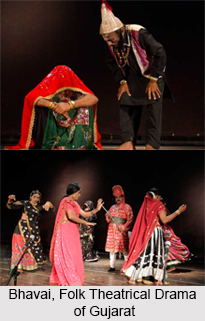
Bhavai is a popular folk theatre form of Gujarat that belongs to the tradition of theatre of entertainment.
Kariyila Folk Dance
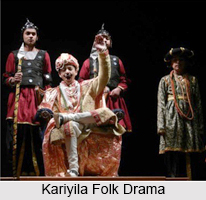
Kariyila is one of the most appealing and popular folk drama forms of Himachal Pradesh, portraying social satire with the accompaniment of folk dance...