 Svabhava is the inherent nature. The concept Svabhava is frequently encountered in Advaita Vedanta. The true nature of a thing which forms an essential part of its composition is Svabhava. Svabhava has been divided into Svabhava Hetu, Svabhava Pratibandha and Svabhava Veda.
Svabhava has been divided into various types. They are as follows:
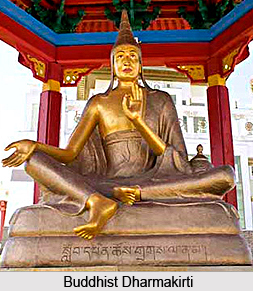
Svabhava-Hetu: This is a conclusion developed by the Buddhist Dharmakirti in which the logical reason shares the nature of the property to be proved or the prove shares the reason.
Svabhava-Pratibandha: This means natural regularity. This is the key feature of a valid logical inference which is the invariant association between the logical reason and that which has to be established. According to the Buddhist Dharmakirti, the invariant association must be definite by a natural regularity.
Dharmakirti`s theory of natural regularity attempts to emphasize some forms of inseparable connection in the absence of objective universals. The connection is either between cause and effect or a case of shared nature. This essential relation is what he calls the Svabhava-pratibandha. This principle is applied in characteristically Buddhist arguments particularly.
Svabhava-Vada: This means philosophical naturalism. The theory is that the cosmos is not produced and self-perpetuating. It is sustained by the mechanical operations of basic substances and their essential properties which are regulated by laws of nature.
In the Bhagavad Gita Svabhava is described as a distinguishing quality. Mahayana Buddhism denies existence of such a Svabhava within any being.
This article is a stub. You can enrich by adding more information to it. Send your Write Up to content@indianetzone.com