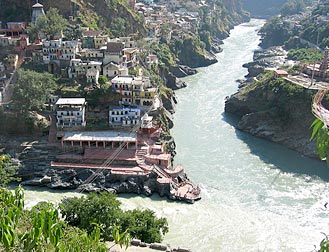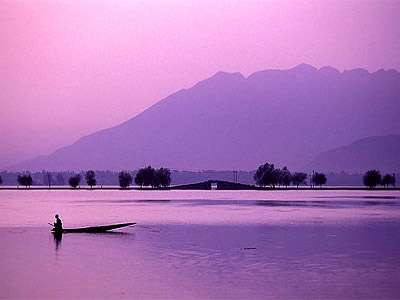
The stories on tirthas in Narada Purana says about Ganga, on Kasi, Purushottamkshetra, Tryambakesvara Kshetra, Gokarnna, Lakshmanachala, Govardhana Mountain, on Siddhanatha Kshetra and few others. Here the incidents mentioned give us an idea about the importance of these places of pilgrimage and various incidents behind it being well known.
After Bahu"s death, his widows took shelter with sage Aurva. The younger was pregnant; the elder one was envious of her and poisoned her to death. Due to Sage Aurva blessings a son with poison was born to her, who was named Sagara. On coming to know the past history of his father, he decided to take revenge against the kings. He destroyed the enemies. Sagara married the daughters of king Virabhadra - Kesini and Sumati. Kesini gave birth to a son named Asamanja and Sumati to sixty thousand sons. The gods approached Kapila as they could not with stand the torture of these sons. Later on, Amsuman, the grandson of Sagara, was blessed by Kapila muni that his ancestors would attain salvation, when Bhagiratha would make Ganga flow on the earth. The grandson of Amsuman, Bhagiratha meditated on Narayana and Paramesvara and brought down Ganga.
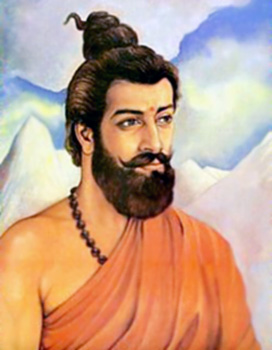
One day, the king Saudasa was hunting. A raksasa and his wife in the guise of tigers were roaming in the forest. Saudasa took aim at the tigress and shot it dead. The raksasa vowed to take revenge. Saudasa returned to his palace heart broken. When the king performed an Asvamedhayajna, the raksasa, disguised as Vasistha, came to him and asked him to prepare some non-vegetarian food. The raksasa again assumed the form of a cook, and approached the king and managed to prepare food with human flesh. When the real sage Vashishta was offered that food he cursed the king to be born as a demon. Very soon Vashishta came to know by his heavenly insight all that had taken place. He told that the holy water of Ganga would help him gain his original form. Saudasa repented for his rudeness, poured the water on his own feet. His feet was burnt and turned dark and he was known as Kalmasapada. Saudasa, turned into a demon while wandering in the forest one day, caught hold of a sage who was sitting with his wife and ate him. So, she cursed Saudasa to die the moment he enjoyed amorous pleasures. She also cursed him to continue as demon for long. Saudasa also cursed her in return to become a raksasi as he got angry over the second curse. Once while wandering in the forest Saudasa and the Brahmin"s wife met a Brahmarakshasa called Somadatta. He was transformed into Brahmaraksasa due to the disregard shown to his teacher Gautama while performing Siva-worship. The raksasas were prevented and kept away from their attempt to hurt Ganga, and also began to realise their past. Ganga freed the raksasas of their dreadful form by sprinkling the Ganga water on them. The Brahmin woman with her child secured liberation. Saudasa returned to his palace and ruled his country with all enjoyments excepting aesthetic pleasures. He secured a son through Vashishta and achieved freedom.
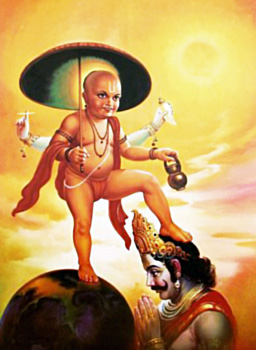
Bali, the grandson of Prahlada, defeated gods and attained the status of Indra by executing numerous Asvamedha yajnas. The gods made their stay on earth in the guise of human beings. Seeing the sad plight of the gods their mother Aditi performed penance in order to please Vishnu. Vishnu appeared before her and promised that he would take birth as her son and abide by her wishes. Some time later; Vishnu was born as Vamana, the son of Kashyapa and Aditi. One day, he approached the demon king Bali. He demanded Bali for a piece of land, for performing penance. With pleasure Bali took the water pot in his hand in order to offer the land to Vamana. But he, by his divine power came to know that Sukra blocked the water flow, and with a tip of darbha grass turned into Brahmastra with the mantra took away one eye of Sukra. Then assuming his celestial form Vishnu measured the three worlds by his two steps. As no space was left for his third step he pushed Bali into Patala as a prisoner for the not fulfilling his demands. He restored the gods in the paradise and returned to Vaikuntha.
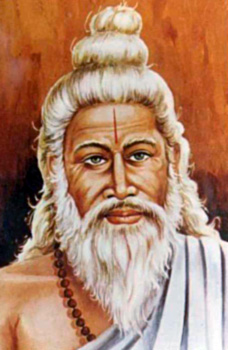
An incident related to Kasi has been unfolded here. Vishnu"s residence was Kasi. Once Lord Shiva went to meet Lord Brahma. The latter was keenly reciting the Veda. Shiva cut off the fifth face of Brahma with his nail as it looked arrogant. However, he was unable to separate Brahma`s skull from his hand. Shiva asked Vishnu for help as the sin of Brahma hatya made him anxious. Shiva made a pilgrimage, visited holy places and washed his hand in the holy tanks as per the advice of Vishnu. When he begged for alms at Badarikasrama Siva caught Vishnu"s hand while he was offering and it was pricked by his trishul. Blood flowed from Vishnu"s hand in three different flows. His sin of Brahmahatya was eased when he entered the Vishnu temple at Kasi.
King Indradyumna, devotee of Vishnu, selected Purusottamaksetra as a place for worshipping Vishnu. He raised a temple there by performing Aivamedhayajna. He could not decide whether an image of Purusottama should be made with rock, wood or minerals. While he was asleep he was instructed by Vishnu to cut off a tree from the sea-shore and make an image of Purosottama out of it. The next morning, he went to the sea-shore and cut down the tree. In the guise of Brahmin, Lord Vishnu and Vishwakarma reached there. Lord Vishwakarma made images of Krishna, Rama and Subhadra respectively. On an auspicious day the king made those images holy, and by worshipping them attained final salvation.
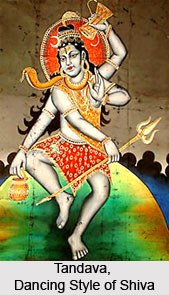
There occurred a drought in sage Gautama"s hermitage on the banks of Godavari. People went to Gautama and requested for food. He caused the Ganga to flow there and, producing grains. When that calamity was over, people returned to their places and Gautama continued his penance. Shiva came there, Gautama requested Siva to make him his ardent devotee and also that Shiva should remain there for ever. Siva hence settled there and the mountain became famed by the name Tryambaka. Sage Jaimini, disciple of Vyasa, visited Pundara-kapura with his students. They made an earthen Shivalinga and worshipped it. Siva appeared before them and offered boons to the sage. He requested Siva to show him tandava with his group. Siva did his tandava when Jaimini began to praise him, chanting Vedapada-Sivastuti. Thereafter, Jaimini became a member of the group of Shiva"s attendants.
There is an auspicious place called Gokarna, on western sea shore. It was submerged under water, when the earth was dug up by the sons of Sagara and the residence was shifted to the Mt. Sahya. They approached Parasurama at the Mt. Mahendra and requesting him to help them in regaining Gokarna. Parasurama went to Varuna. As wished by Parasurama, Varuna gave back Gokarna not initially but after facing his punishment. The sages occupied the place again and attained salvation. Siva and Parvati settled there with their group realising the significance of their place.
In past kalpa, Govardhana, a Brahmin, meditated upon Vishnu in Vrindavan. When offered him boons, he requested Vishnu to keep him under his feet. Then Vishnu stood upon his back, and when he could not keep Vishnu down he requested lord to be there for ever. When Vishnu took incarnation as Lord Krishna, he honoured Mt. Govardhana through worship by himself.
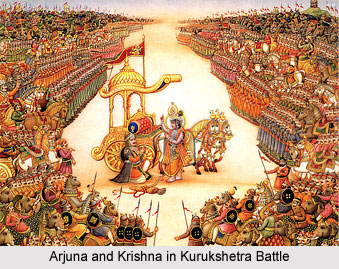
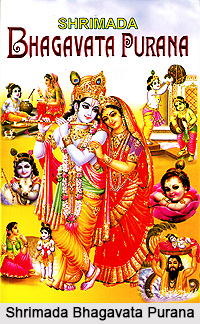
Then there is a story of Lord Krishna, residing in Gokula who would take incarnation as the son of Vasudeva and would go to Nanda through fear of Kansa. There he would destroy the demons like Putana and Vatsa .He would kill some other demons and would destroy the ego of Lord Brahma, Indra, Lord Varuna, the sons of Kubera and others. In Mathura, he would break the bow and would kill the elephant Kuvalaygpida, the athletes and also his uncle Kansa. He would release his parents after that from prison. Subsequently he would stay at Dwaraka. He would marry Rukmini, Satyabhama and sixteen thousand other maidens after destroying Bhaurna. He would also kill Paundraka, Sisupala, and many warriors in the battle of the Kauravas and the Pandavas. He would also make the Yadavas squabble among themselves which would lead to complete devastation. He would go to Vaikuntha with his followers in the end.
The stories connected with Tirthas ends with a story on Puskara Island. There was a Brahmin residing in Puskara Island. A son was born to him. He threw the child into the sea and the child was swallowed by a fish. The child was safe in the stomach of that fish for a long period due to his good deeds in his previous birth.
One day, Lord Shiva with Parvati came to Mt. Lokaloka. He began to teach philosophical knowledge to Parvati. She could not follow them completely. Unexpectedly a fish jumped upon the peak of that mountain and a Brahmin child came out from its stomach. The child narrated to Parvati the instructions it heard from Shiva. Shiva accepted him as his son and in order to keep the world happy allowed him to move as he wished.

 Each story in Narada Purana has a common message that of achieving spirit emancipation and ways of doing so. The religious stories are mainly related to planetary kings. It talks about various birth incarnations trailed by philosophical and dharma stories thereby leading to legends related to some pilgrimages. Thereafter comes the tales of vratas and biography of Suka
 A yajna was performed in Gautamasrama where all the Gods, Brahmanas, kings and demons had assembled. Gautama worshipped Lord Shankara in the linga on the Mt.Tryambaka; all those who were present celebrated it. Sankaratma, a devotee of Siva and the disciple of Gautama, came there and began to dance like a mad man. He ate some food from Gautama`s plate, and while taking meals, passed urine inside the room. So, Gautama placed him on the proper seat and continued his meals. Sankaratma approached Vasaparvan and started dancing. Vasaparvan cut off his head as he was furious seeing his deeds. Gautama suddenly felt heart-broken and died. Many others, present there, followed the same fate. Shiva reached Gautamasrama along with Brahma and Vishnu and revived Gautama. At Gautama`s request, Siva put a fraction of his own soul into Sankaratman`s body to make him immortal. Thereafter Sankaratma was called Hanuman. In the evening he went to the bank of a river and took the Shivalinga for offering bath, when he found it to be without pitha. Being scared he praised Shiva by reciting Rudra-mantra. He smashed it on the ground when he did not notice Shiva in front of him. Virabhadra had come there and on seeing the Shiva linga without its pitha instigated the destruction of world. The sages chanted Veda mantras to please Siva and he appeared before them. Hanuman paid tribute to Siva and he was sent to serve Ram Chandra.
 The solar king Bahu was very haughty by character. On being defeated by his enemies, he retired to the forest with his two wives, and died there. His pregnant younger wife, wished to follow her departed husband by committing Sati, was prevented from doing so by sage Aurva. Due to the power of his austerities, sage Aurva also freed the king Bahu from all the sins and helped him seek emancipation.
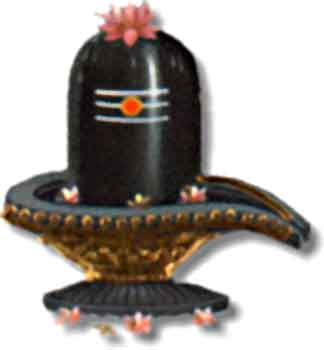 The stories of vratas revolve around its specialty and its fruition after its observance. The vratas include Ekadashi vrata, Dvadashi tithi, and Purnamasi tithi and so on. The observance of these vratas brings punya that is far in excess of any punya that can be obtained from the performance of famous yajnas.
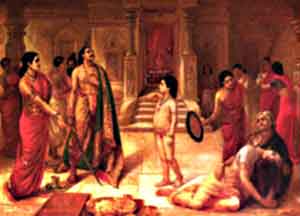 On the banks of Narmada River, Bhadrasila, son of Galava, a Brahmana, worshipped Vishnu from his childhood. He also preached the greatness of Lord Vishnu and Ekadashi vrata. One day, asked by his father, he narrated the story of his previous birth thus:
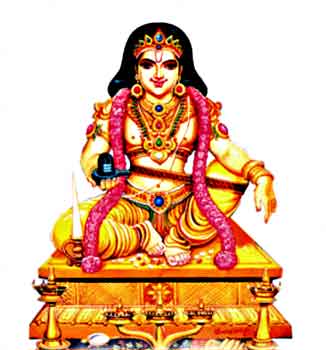 Philosophical stories in Narada Purana speak about Bhagavata Laksanas, knowledge of Paramatman, on Advaitajhana, on Moksadhatma, and on Vishnu bhakti. Here it has been reiterated that liberation of soul is the ultimate form of moksha. One of the stories is that of Sage Mrikandu. He meditated for the appearance of Lord Vishnu. Vishnu being pleased gave him a boon that he would be born as his son. Mrikandu married a virtuous woman who gave birth to a child who was named Markendaya. Markandeya mastered all Vedas. He worshipped Vishnu who appeared before him and blessed him that he would compose a Purana and finally attain salvation.
 Bharata also told the king a story. Many years ago Brahma had a son called Ribhu. He was well read and his disciple was Nidagha, son of Pulastya. Both Ribhu and Nidagha lived in the banks of river Devika near the city called Viranagara. One day, Ribhu paid a visit to Nidagha. He had offered his preceptor food. After taking the food Nidagha asked him whether he was satisfied with the food. Ribhu replied that there was no matter of satisfaction or dissatisfaction in eating the food, because, he does not distinguish anything. He told him that as per advaitta"s principle atman is everywhere so no use asking such baseless questions. Nidagha thereafter said that his illusions have been cleared. Except this atman there is nothing in this world and all of us are parts of the same atman.