
Slit drums are hollow percussion instruments, usually made of bambee or wood. It is so called because it is made from a hollowed out object, and the starting point of this process is frequently a slit which is not closed up again after the work is completed.
Slit drums come in many shapes and sizes. Most slit drums have three slits, cut into the shape of an `H`, as is seen in Mexico. By making the outer wall of uneven thickness, different notes can be produced. If, as is usual, the resultant tongues are different lengths or thicknesses, the drum will produce 2 different pitches. The ends of a slit drum are closed so that the shell becomes the resonating chamber for the sound vibrations created when the tongues are struck, usually with a mallet. The resonating chamber increases the volume of the sound produced by the tongue and presents the sound through an open port. If the resonating chamber is the correct size for the pitch being produced by the tongue, which means it has the correct volume of airspace to complete 1 full sound wave for that particular pitch, the instrument will be more efficient and louder. X-shaped slit drums are found in Java.
The slit drum is played in two different ways. Small drums are struck on the outside with a stick, and large drums are scraped on the inside. For better resonance, they can be elevated off the ground. Very large drums are partially buried in the ground for stability.
Slit drums are found in Asia, America, Africa and Oceania. The largest slit drums are found in Assam, India, whether they arc assembled separately piece by piece in different buildings. The people from the Naga tribe built and carved a 50ft long slit drum. The drum was so important; they made a special dwelling to house it.
Slit Drums
Slit drums are percussion instruments which are hollow in shape; the largest slit drums have been found in India.
Recently updated articles in Music in India
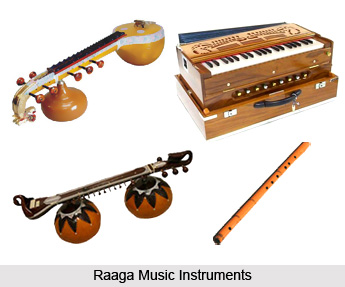
Classification of Raagas in Carnatic Music
Classification of Raagas in Carnatic music is based on scale type, devised as a system for raagas that existed as well as those that were in the proce...
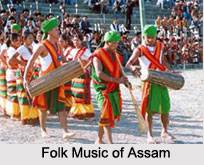
Folk Music of Assam
Folk Music of Assam reflects the outdoor and indoor life of the folk people and it does not follow any strict rule of composition and performance. Fol...
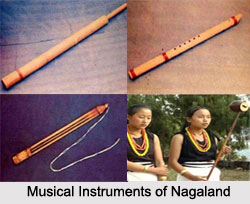
Musical Instruments of Nagaland
Musical Instruments of Nagaland reflect its rich tribal heritage and deep cultural roots. Crafted from natural materials like bamboo, wood, and animal...

Rasa, Hindustani Music
Rasa is an important part of Hindustani Music. Here the creative experience of the artist i.e. musician and the aesthetic response of the connoisseurs...
Kshetrajna, Telugu Poet and Composer
Kshetrajna (1600 - 1680) was a creative Telugu poet and composer of Carnatic music. He composed several padams and keertanas.
Related articles in Music in India
Kriti Carnatic Music
Kriti refers to one of the most widely used genres of Carnatic music. It originated from the kirtanas of the bhaktas, i.e., musicians who expressed th...
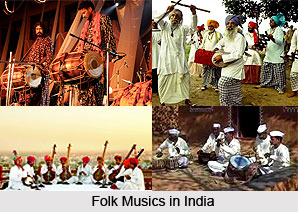
Indian Folk Music
Indian Folk Music is full of rustic charm. The appeal of Indian folk music lies in the simplicity of its style and lyrics. Most of the folk songs are...
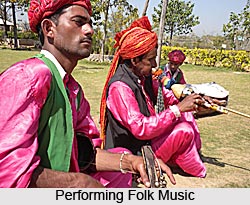
Haryanvi Music
Haryanvi music is the folk music of the state of Haryana and is sung in western Uttar Pradesh along with the neighbouring districts of Rajasthan and P...
Carnatic Music
Carnatic music, also known as `Karnataka Sangitam`, is one of the two styles of Indian classical music.