 Narada describes Siksha in detail laying down rules for the Vedic and classical Sanskrit chanting with correct cadences and articulation. Art of music, singing and other associated sciences have also been exemplified here. Mantra recited with appropriate intonations is beneficial, otherwise, it would destroy performer of the sacrifice as in the case of the mistaken-intonation.
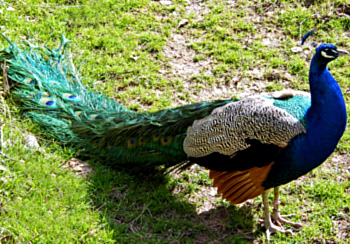
Svaras are classified into high, lower and mediocre types. The saptasvaras have classification of seven types. Narada explains the sounds of peacock, cows, and cuckoo.
While describing music, Narada says that the term `Gandharva` stands for singing of songs simultaneously with musical instruments being played. Narada catalogues the ten traits of song. The defects of a song have also been talked about. He explains about musical instruments Veena and Venu.
A detailed account of the metre has additionally been given. Though Narada states that the time taken for a flash of the eyes is called matra; he includes that according to some it is the time taken in pronouncing the letters.
Narada suggests some decrees and an organized life to be monitored in a broad-spectrum.
A person should learn Vedas early in the morning meditating between the equinox in autumn and spring. He may continue mantra recitation as his wish after chanting the first seven mantras. While this time he must consume only Triphala powder mixed with salt for digestion, knowledge and lucid pronunciation. He should breathe in smoke and have honey too. For securing a clear and sweet voice and attractive teeth, one should use the slick of a mango or wood-apple. Few essential required while learning Veda includes clear voice, self control, attention, sound approach and few more to be stated.
Narada`s approach appears entirely unusual. For example, he lays down rules for the pronunciation of Vedic and classical Sanskrit.
`Kalpa` in the Narada Purana is divided into Veda, Samhita, Angirasa, Santi and Nakshatra Kalpas. The Veda Kalpa describes that by reciting Vedas how can certain rituals be performed. Samhita Kalpa is about the deities, the chandas and the rasis of mantras. Angirasa Kalpa refers to the six karmas related to witchcraft. Santi Kalpa, describes the rites to ward off the evils for terrestrial, celestial and atmospheric calamities. Nakshatra Kalpa relates to the stars.
Narada depicts the Griha Kalpa contained in the Naksatra Kalpa. He says that voice arose from Brahma`s throat, which is considered to be auspicious. Further, mentions the magnitude of earth purification. Subsequently it is followed by description of worship of Ganesha.
As a result it can be said that Siksha in Narada Purana basically dealt with pronunciation, accent music and its instruments. The divinity of svaras has also been enumerated.