
The great Purana that is the Agni Purana has also discussed in detail some of the Dwasadhi Vrata. One of the Dwadashi Vrata which has discussed prominently in the Agni Purana is the Shravana Dwadashi Vrata. It has been said that the Shravana Dwadashi Vrata should be performed on the day of the twelfth phase of the moon`s increase in the month of Bhadra. By observing a fast on the occasion of such a Dwadashi, marked by the asterism Shravana, a man performs the greatest of all the Vratas. The full merit of the observance of such a Vrata, would be derived, by bathing at the confluence of running streams.
It has been said that by making gifts on the occasion of the conjunction of the Mercury and the asterism Shravana, a man acquires the greatest merit that can be derived from gifts. Though otherwise forbidden, a man should observe a fast on the occasion of the Shravana Dwadashi, and take his meals on the morrow (Trayodashi), by reciting a small prayer. Performance of the Homa ceremony is a part of the Shravana Dwadashi Vrata.
Agni Purana narrates that after performing of the Homa ceremony all body parts of the God should be worshipped and should be offered obeisance. In the next step articles fried in clarified butter, as well as pitchers, full of curd, should be offered to the deity. A vigil should be kept up in the night, and the performer of the Vrata should bathe at a confluence of the rivers, on the day following. The god should be worshipped with flowers and perfumes, and the observer of the vow should recite the following prayer, by offering a handful of flowers to the deity.
The Mantra which is used in the performance of the Vrata says, "I make obeisance to thee, oh thou protector of the universe (Govinda), who art but another manifestation of the Mercury and the asterism Shravana in conjunction. Destroy all my sins, and bless me with the enjoyment of all sorts of comforts. Be pleased with me, oh janardana, every moment of my existence. The dwarf-manifestation of Vishhu is the counsellor and the giver of all articles of gift; it is the dwarf manifestation of Vishnu that takes gifts at my hands, and makes me the happy possessor of all things. Again and again I make obeisance to him."
Finally the adhyaya ends saying that the Brahmanas should be feasted and remunerations should be given to them, whereupon the observer of the vow would break his fast.
Shravana Dwadashi Vrata
Shravana Dwadashi Vrata as described in the Agni Purana is performed in the month of Bhadra. Proper performance of the Vrata brings about all sorts of enjoyment and joys into the life of an individual.
Recently updated articles in Indian Puranas
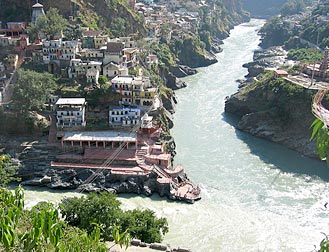
Mandakini, Holy River
Mandakini River is a significant Himalayan river in Uttarakhand, renowned for its ecological, cultural, and religious importance. Originating near the...
Kausika, Son of Vasudeva
Kausika is a minor figure in Hindu mythology and is identified in the Vishnu Purana as the only son of Vasudeva and his wife Vaishali. He is recognize...
Tandu, Attendant of Lord Shiva
Tandu is revered as the divine attendant of Lord Shiva and the foremost exponent of the Tandava dance. According to the Natya Shastra, he instructed S...
Niramitra, Mahabharata
Niramitra was a son of Nakula and Kareṇumati in the Mahabharata. A descendant of the Pandavas and the Kuru dynasty, he fought on the Pandava side duri...
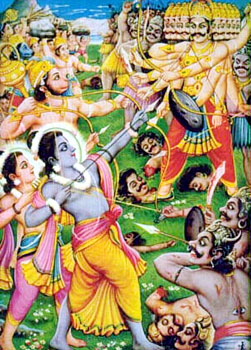
Mahodara, Ramayana
Mahodara was a prominent Rakshasa warrior, minister, and army chief who served under Rāvaṇa during the Battle of Lanka in the Ramayana. Celebrated for...
Related articles in Indian Puranas
Adhyayas in Agni Purana
Adhyayas in Agni Purana are all encompassing. The chapters have dealt with a variety of subjects related to human lives. A large number of chapters ha...
Indian Puranic Tribes
The existence of Indian Puranic tribes is often mixed with mythology and fiction that depict them as superhuman or sub.
Puranic Texts
Puranic Texts are vital according to Hindu, Jain or Buddhist religion; they describe the history of the Universe.

Puranic Shaivism
Puranic Shaivism established during the Gupta Dynasty. This puranic religion developed and expanded, and was accompanied by the development of Brahman...

Nilamata Purana
Nilamata Purana is a Kashmiri Purana that is referred by Kalhana. It is considered as one of the sources of ancient history of Kashmir.