 In Shabda Pramana, ignorance does not form or maintain a relationship with knowledge, it is eliminated. Shabda may be the testimony of reliable persons or Vedic scriptural language or the Agamas recognised as authorities by the non-Vedic or Tantric religious cults. Language is an instrument of knowledge in its own right by all philosophical schools excepting the Buddhists and Vaiseshika. According to the Nyaya School a person is a reliable authority, when they are not faulty, have no intention to mislead, neither drunk nor confused and when their senses are normally working.
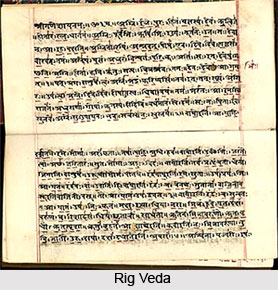
The mainstream orthodox ritualists and Vedantins believe that the relation between a Sanskrit word in the Vedas and the object that it means is innate, natural and eternal. According to both schools, the Vedic scriptures are unauthored. Vedic language is a source of knowledge about whatever lies beyond the range of sensory perception.
The permanent relation obtains between general terms for kinds of things and particular entities. In the context of a sentence words refer to individuals. Proper names are treated in general terms. The Ritualists think that authority is restricted to statements commanding actions. Vedantins believe that statements where facts are asserted in the Vedas about God, the soul and its destiny are authoritative. The Nyaya School believes that the Vedic scriptures are an instrument of knowledge as God is their reliable author. The existence of God is established by inference. Buddhists deny an innate relation between word and object. The belief that words have a power to express their objects automatically is also denied by Buddhists. If they had, then people would not need to learn languages. The Buddhists dismiss the intrinsic reliability of indication as one can never know whether another person is being honest just by listening to it. Linguistic understanding involves some thought process as it is included with inference.
This article is a stub. You can enrich by adding more information to it. Send your Write Up to content@indianetzone.com