
Satyabhamabai Pandharpurkar was a Marathi artist of lavani. Lavani is the amorous songs in Tamasha. She was born in Sangli district. She did not receive any formal education. She showed an aptitude for music at an early age of 10-year-old. At her early age she was made to join a lavani group led by Godavaribai Punekar, her first teacher. She later learnt dance, qawwali, and ghazal as well.
Her gurus in lavani singing included Narayanrao Utpat, Dnyanoba Utpat, Dadba Vairagkar, Machchindra Utpat, Vithoba Eitwadkar, and Rambhau Utpat. She returned after four years with Punekar`s group but, after staying with family members who tried to exploit her talent, escaped to Punekar Mandal, where she found several Shahiri lavanis of the Peshwa period. The time was late eighteenth century. She internalized the musical and performatory conventions. Marrying Shri Shinde at the age of 20, she established her own sangitbari i.e. one of Tamasha`s two varieties troupe in Pune. Beginning in the diwankhana or private hall manner, she adopted baithakicha or `seated style` later as her staple. Her lavani career spans more than five decades, her last performance on 2 May 1992 at the Yashwantrao Pratishthan, Pune. She received numerous awards from the Maharashtra Government and Sangeet Natak Akademi for her singular service to lavani, and participated as a resource person in traditional lavani training programmes for young girls.
This article is a stub. You can enrich by adding more information to it. Send your Write Up to content@indianetzone.com
Satyabhamabai Pandharpurkar
Satyabhamabai Pandharpurkar was a renowned Marathi artist of lavani.
Recently updated articles in Indian Drama & Theatre
Amateur Theatre
Development of Amateur Theatre has been responsible for useful innovations in theatre culture of Karnataka.
Surendranath Ghosh
Surendranath Ghosh or Dani Babu was a Bengali thespian active during the mid-20th century. He was mostly known for his contributions to Bengal’s moder...
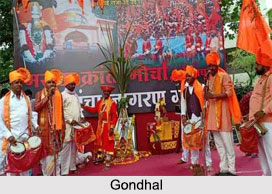
Gondhal Dance
Gondhal is a religious folk dance of Maharashtra. It is performed on special days like when there is a newborn in a family or marriage. Dedicated to g...

Pravritti in Natyashastra
Pravritti in Natyashastra refers to specific human behaviour varying from region to region. There are four types of Pravritti namely, dakshinatya, ava...
Padma Bhushan Awardees (2010-2019)
Padma Bhushan Awardees (2010-2019)
Related articles in Indian Drama & Theatre
Gondhal Dance
Gondhal is a religious folk dance of Maharashtra. It is performed on special days like when there is a newborn in a family or marriage. Dedicated to g...
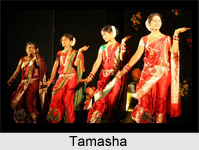
Tamasha Folk Dance
Tamasha is a folk art, which includes the love songs, which are traditional lavanis and dance along with the music.
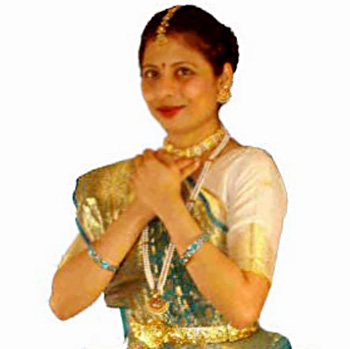
Sringara Rasa
Sringara Rasa is mentioned in Natyashastra as one of the important rasas. The Sthayi bhava in Sringara rasa is Rati or love.
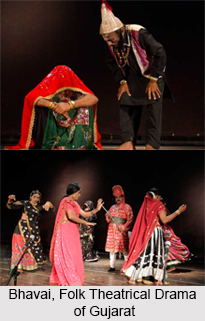
Bhavai - Folk Theatre of Gujarat
Bhavai is a popular folk theatre form of Gujarat that belongs to the tradition of theatre of entertainment.
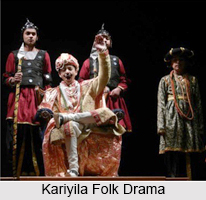
Kariyila Folk Dance
Kariyila is one of the most appealing and popular folk drama forms of Himachal Pradesh, portraying social satire with the accompaniment of folk dance...