
Saktas believe the soul is one with God Shiva. Emphasis is given to the feminine manifest by which the masculine un-manifest is ultimately reached. The divine mother, Sakti, is mediatrix, bestowing this advaitic moksha on those who worship her. Moksha is complete identification with the transcendent Lord Shiva, achieved when the kundalini shakti power is raised through teh sushumna current of the spine to the top of the head to unite with Shiva. Alternatively, Moksha may be conceived of as union with Devi, or with Brahman. The spiritual practices in saktism are similar to those in saivism, though there is more emphasis in saktism on God`s power as opposed to being, on mantras and yantras, and on embracing apparent opposites; male-female, absolute-relative, pleasure-pain, cause-effect, mind-body. Shamanistic Shaktism employs magic, trance medium-ship, fire-walking and animal sacrifice of healing, fertility, prophecy and power. "Left hand" tantric rites transcend traditional ethical codes.
The growing Sakta influence in the Ahom period have had influenced the Assamese literature. The later Ahom kings adopted Sakta religion and developed the Sakta outlook on life, which was in accord with the militant and epicurean ideals of the ruling class. For this reason and on account of the impact of new urban cultural currents, the influence of Vaishnava poetry began to decline and a new Sakta literature came to be written.
In imitation of the Vaishnava Bargits the Sakta poets created in Assamese a body of hymns which are even now sung as prayer-psalms. Some of these hymns were said to have been composed by the Ahom kings Rudra Singha and Siva Singha. These Sakta hymns, though impressive in alliteration and metrical perfection, suffer from a certain monotony of theme and phraseology coupled with want of personal feeling. Side by side with these lyrics flourished during these period descriptive verses on Sakta goddesses such as Durga, Kali, Sitala, which are even today chanted in their worship and adoration. The court poets were encouraged by the Ahom kings to render Sakta scriptures into Assamese. Ananta Acharya was commissioned by King Siva Singha to write Ananda Lahari. The book begins with a hymn to the Goddess Durga, who has been described as the primordial cause of the universe. It goes on to describe how, in her infinite mercy, she assumes form to please her devotees, and then it dwells on the beauties of her form, adding descriptions of Kailasa and Lord Shiva. There are devotional hymns to the goddess, and the poem closes with a eulogy of the royal consort, Queen Phuleswari. Rucinath translated Chandi into easy flowing verse. There is another Assamese version of Chandi by Madhusudan Misra. Both the poems are descriptive and lack literary beauty. They are, however, popular as vehicles of religious sentiment, and so read and recited by thousands of Sakta devotees` generation after generation. Though these works fall far short of Vaishnavite poetry in diction, imagery and narrative skill, one comes across passages of metaphysical profundity. Particularly significant of the period is a corpus of panegyric poems composed by poets attached to the courts of kings, ministers and noblemen, lauding their patrons` heroism, victories, munificence and magnanimity. The Ahom kings and nobles were generous in digging tanks, building roads and erecting temples, and in this connection many dedicatory verses glorifying their piety and charity were composed. These court poets were masters both of Sanskrit and of Assamese. Naturally, in the pras`astis or panegyrics, the poets used a specific diction abounding in sonorous and metaphorical Sanskrit expressions presupposing knowledge of Pauranik mythology and legends.
Sakta Influence on Assamese Literature during Ahom Rule
Sakta influence on Assamese Literature during Ahom Rule depicts the wayward direction of the Assam literary domain and the d‚cor of the Vaishnava cult.
Recently updated articles in Indian Literature
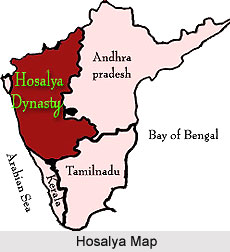
Gadyakarnamrita
Gadyakarnamrita is a 13th-century Sanskrit literary work written mainly in prose. It describes the ninety-day battle at Srirangam between the Hoysala...
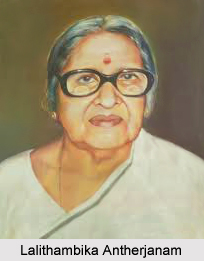
Women Writers in Malayalam Literature
Women writers in Malayalam literature have worked incessantly to make a place for their literary works. In the earlier periods, they were completely o...
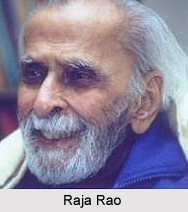
Comrade Kirillov, Novel by Raja Rao
Comrade Kirillov, a distinctive creation of Raja Rao, is presented as a brief yet incisive novelette that offers an ironic portrayal of the self-contr...
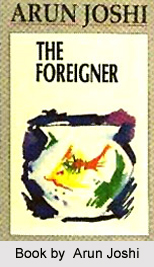
The Foreigner, Novel by Arun Joshi
“The Foreigner” is a book authored by Arun Joshi and published by Vision. It is an illustrious creation in the entire career of Arun Joshi, the famous...
Short Story in Telugu Literature
Short Story in twentieth century Telugu Literature was extremely popular and growing in and developing in a major way. Their popularity was greatly fa...
Related articles in Indian Literature
Mythological Themes in Indian Literature
Mythological themes in Indian literature have been integral to every ancient and contemporary writer and their path to f
Literature During Gupta Age
It is during the Gupta Age literature in the form of poetry, epos and drama gained a colossal importance.
Literature of Aravidu Dynasty
Sanskrit and Telugu were the popular literary medium of communication during Aravidu dynasty.
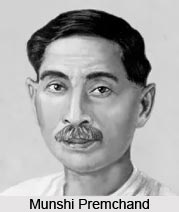
Munshi Premchand
Munshi Premchand was a legendary Indian writer notable for his modern Hindustani literature. A writer of a very high caliber, Premchand`s writings hav...
Sanskrit Poets
The names of some of the Sanskrit Poets are Bharavi, Devarshi Ramanath Shastri, Jayadeva and Srinivas Rath.