
Among the Bhinjia Tribes, the most civilised Dand- Bhinjias of the south are orthodox Hindus. They worship their deity by the name of Vindhu-basini which means the dweller in the Vindhyas. This deity is considered as the istadevata or the patron goddess of the tribes. They also pray and revere Lord Jagannath. They also pray to other village deities like Chadri devi and Gram-sri. Sacrifices of goats are also given to the deities but for the former it is customary to sacrifice a black goat. The pahariya Bhinjas on the other hand revere deities like Devi, Sing- Bonga or the sun god, Nind- Bonga or the moon and Mahadeo. These deities are worshipped by the Baiga- Pahan, Bhinjia priests and also by his assistants called as Dewar; the main is conducted by the Dewar while the Baiga- Pahan acts as a consulting priest who decides what sacrifice should be done. Brahmans are engaged for worshipping of greater gods and for propitiation of the deceased ones who are called mua.
Among the Bhinjias the dead are either burned or buried. In case of burying the grave is dug deep and a heap of stones are placed on top of the grave along with thorny bushes to keep away animals. Those who can afford to burn their deceased ones collect the ashes of the dead and cast them into the Ganges at Varanasi. After the death of a person the ceremony of Shradh is also performed occasionally.
Apart from these the Bhinjias also celebrate other festivals like Phagua in February, the Sarhul in April, the China Parab or the festival of sowing feast in the month of June or July, the Karma in October, or the Arwa or Kharway in the month of November
Among the Bhinjias inheritance of property is governed by the tribal customs of their community. Sons inherit the property of family and the eldest son is bestowed with the right of worshipping the ancestral gods. Girls do not inherit the property of the family.
The Bhinjias have a representative assembly that comprises of members from each household. The president of the community is known as kartaha. His office is succeeded by his son. For sorting out any problem the members first debate among themselves and later the president after hearing them gives his final verdict.
Religion of Binjhia Tribe
Religion of Binjhia Tribe caters to the worship of many Hindu deities that represent their village, community and various customs.
Recently updated articles in Tribes of India
Arakh Tribe
Arakh Tribe is one of the ancient tribes located in several parts of central India. Their origin dates back to the Tughlaq era. Arakh tribe appears to...
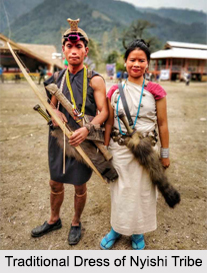
Traditional Dress of Nyishi Tribe
Traditional Dress of Nyishi Tribe is worn during festivals and social gathering. Men wear a cane helmet surmounted with the beak of the great Indian H...
Pasi Community
Pasi is an aboriginal race of India and are mainly distributed over the northern region of the country. The traditional occupation of Pasi is the extr...

Bhojas
Bhojas have been described as a very important tribe in the Aitareya Brahmana. Historical records have said that the Bhojas were settled towards the s...
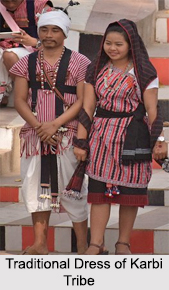
Traditional Dress of Karbi Tribe
Traditional Dress of Karbi Tribe can be easily recognized by the artistic designs inherited from their forefathers. Karbis have their own traditional...
Related articles in Tribes of India
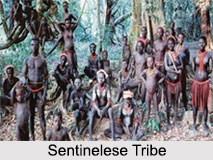
Sentinelese Tribe
Sentinelese tribal community is one of the most isolated and secluded tribes that are found in the whole world.
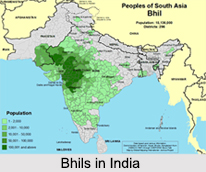
Bhil Tribe
The people of the Bhil tribe are the most widely distributed tribal groups in India.
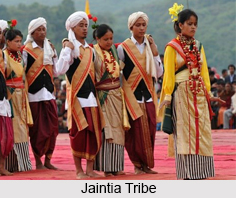
Jaintia Tribe
Jaintia Tribes are located in the Jaintia Hills of Meghalaya. They are also called the Pnars. They are famous for weaving of carpet, making of musical...
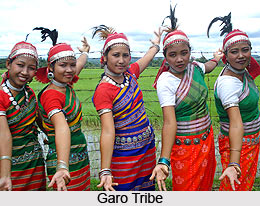
Garo Tribes
Garo Tribes are one of the matrilineal tribes of North-East India who reside in the Garo hills of Meghalaya. Historically, the tribe originated in Tib...
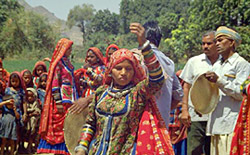
Garasia Tribe
The Garasia tribal community holds a significant position within Indian culture, renowned for their distinctive way of life and rich cultural heritage...