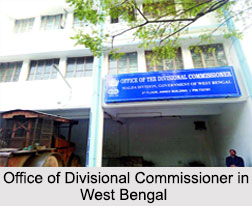
 Regional administration in India, also known as divisional administration refers to a form of governance that comes between state level administration and district level administration. A local body is responsible for regional administration. For administrative convenience, various departments divide the entire state into a number of regions (or divisions) and maintain regional headquarters in each region. For instance, the Police Department of a state has Deputy Inspector-General, at regional level. Similarly, the Department of Irrigation has superintending engineers, each of whom is in charge of executive engineers of his region. It may happen in some cases that the boundary of the region may coincide with the Divisional Commissioner`s division. The Forest Department divides the state into ranges, which take into consideration its own specific requirements.
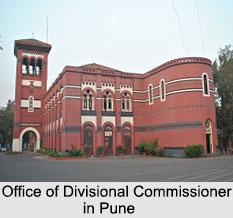 There are some departments which are not represented at the regional level. Whether a department needs an organizational set-up at the regional level or not depends mainly on two factors. These factors are the size of the state and the workload of the department.
Regional Administration in India by a Regional Officer
The most important Regional Officer is known to be the Divisional Commissioner. Regional Officer, in general, supervises and inspects the work of the district functionaries of his department and coordinates their work at the regional level. He is the boss of district functionaries at the regional level. He provides technical guidance to the district level officers and keeps himself in active touch with the functioning of the Panchayati Raj institution. He sets standards and undertakes frequent visits and inspections to keep himself in touch with the working of his department, demands periodic reports and returns, issues necessary instructions and directives, organizes periodic conferences for the district level functionaries of his department, identifies problems and difficulties experienced in the field and provides appropriate solutions etc. He also needs to relieve his Head of Department of less important work pertaining to the region under his jurisdiction.
This article is a stub. You can enrich by adding more information to it. Send your Write Up to content@indianetzone.com