
Rama Saraswati was an eminent figure of Assamese Vaishnava literature. During this time the court of the King Naranarayana (1533-84) was like a university where men of great learning gathered. Among such men, the most well-known are Sankardeva, Rama Saraswati and Anantakandali all of whom received royal patronage for their works. The poet was asked by King Naranarayana to "make verse rendering of the Mahabharata, the seven books of the Ramayana and the eighteen Puranas for popular edification" (Darang-Raja-Varnsavali). Thus it was under royal patronage that Rama Saraswati occupied himself with the monumental task of rendering the Sanskrit Mahabharata into Assamese. With the translation of the Mahabharata, the body of Assamese poetical literature got enriched. The central theme of the same is not so much the encounter of the Kauravas and the Pandavas or the conflict between virtues and vices. In fact, in the best tradition of Vaishnava literature, it is the projection of Krishna`s personality. There are episodes in Rama Saraswati`s Mahabharata that have no primary connection with the original, episodes like Kidacala Vadha, Baghasura Vadha, not to speak of Upakhyanas like that of Nala and Damayanti that are woven in deftly, thus giving a splendid harmony and unity to the whole. Though the poet differs widely and variously, Rama Saraswati`s Mahabharata is an original work. He had improved and elaborated upon the original, more especially in the Banaparva where the glorification of Lord Vishnu is heightened with a passion.
The works of Rama Saraswati did not just remain confined to the epics and the Indian Puranas. His literary works like the Manicandra, the Sindhuyatra and the Asvakarna breathe of the aroma of the soil. He was adept not only in poetry and religious philosophy, but also in the arts of music, poetics and erotics. He had even rendered Jayadeva`s Gita Govinda into Assamese for the first time. One thing must be said in conclusion the poet`s preoccupation with war scenes in his kavyas has a conventional ring of the type of Madhavakandali`s. Whatever this may be, Rama Saraswati has given strength and beauty to the neo-Vaishnava movement.
Works of Rama Saraswati constitute one of the richest storehouses of Vaishnava Literature. He has written a number of works based on Vaishnavism in Assam, and his poems are among the best sources of the same. Rama Saraswati`s Hema Sundari is one of the best poems of its kind. It is unequalled in description and provides deep insight into the characters. Fine feelings surface in the suggestion of heroism and romance. From the beginning, the poem is filled with dramatic suspense and the religious tone of it is full of a certain mystery motive. The fight with Asvakarna whom Bhima and Arjuna finally killed in the subterranean world with mysterious weapons furnished by Lord Vishnu for the destruction of the demon, the restoration of Hema Sundari and her ultimate union with Arjuna- all this is described in an interesting manner. The poem is discreet in treatment.
The Baghasura Vadha is another popular Kavya by Rama Saraswati. The story runs thus: the Pandava brothers were instructed by Agasthamuni to destroy a terrible demon called Baghasura. He was a menace to everyone, sages and saints in particular. In the encounter, the Pandava brothers, except Yudhisthir, were slaughtered. The demon was strengthened with a boon given to him by Lord Shiva and Chandi, the source of his strength. Ultimately, the demon was killed in battle and the dead Pandava brothers were revived to life with the help of a magic necklace that Draupadi possessed. In the ultimate analysis, the poem in the true Vaishnava spirit represents victory over Shiva and Chandi.
In Rama Saraswati`s Janghasura Vadha, the poem is enlivened with scenes of subtle humour as also those of tragic passions. The principal idea conveyed through these Kavyas is the idea of man`s conquest of forces that are represented by demons and other supernatural beings, i.e., forces of temptation and self, of pride and physical prowess. The path to spiritual purification lies through the thorns of suffering.
Rama Saraswati was a devoted disciple of Sankaradeva whom he regarded as Apuni Jswara, "himself a deity". Besides other works, he has to his credit two noteworthy Kavyas: the Vyadha Charita and the Bhima Charita. The latter is a mock-heroic narrative, in which the author`s amazing humour is seen emerging beautifully. Despite certain flaws, the poem will be read for its brilliant plot and rollicking humour. Nowhere else as in the Bhima Charita the astonishing power over language, amazing wit, etc., of the creator of the Assamese version of the Mahabharata show themselves to such advantage. Mythological tales of heroism are not generally depressing in effect, although they are didactic. In short, these poets have introduced religio-ethical effects in a most skilful way into the medieval genre of quest and adventure.
Rama Saraswati
Ram Saraswati was one of the greatest literary figures in the realm of Vaishnava Literature in Assam. He accomplished the monumental task of translating the Mahabharata into Assamese.
Recently updated articles in Indian Literature
Gadyakarnamrita
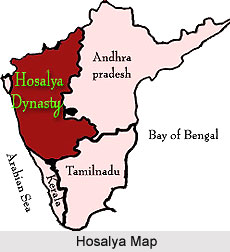
Gadyakarnamrita is a 13th-century Sanskrit literary work written mainly in prose. It describes the ninety-day battle at Srirangam between the Hoysala...
Women Writers in Malayalam Literature
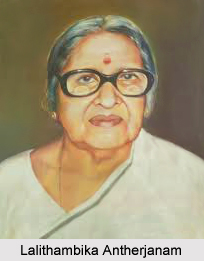
Women writers in Malayalam literature have worked incessantly to make a place for their literary works. In the earlier periods, they were completely o...
Comrade Kirillov, Novel by Raja Rao
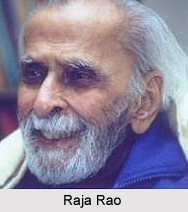
Comrade Kirillov, a distinctive creation of Raja Rao, is presented as a brief yet incisive novelette that offers an ironic portrayal of the self-contr...
The Foreigner, Novel by Arun Joshi
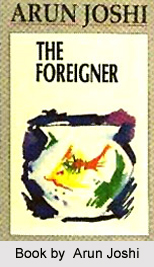
“The Foreigner” is a book authored by Arun Joshi and published by Vision. It is an illustrious creation in the entire career of Arun Joshi, the famous...
Short Story in Telugu Literature
Short Story in twentieth century Telugu Literature was extremely popular and growing in and developing in a major way. Their popularity was greatly fa...
Related articles in Indian Literature
Mythological Themes in Indian Literature
Mythological themes in Indian literature have been integral to every ancient and contemporary writer and their path to f
Literature During Gupta Age
It is during the Gupta Age literature in the form of poetry, epos and drama gained a colossal importance.
Literature of Aravidu Dynasty
Sanskrit and Telugu were the popular literary medium of communication during Aravidu dynasty.
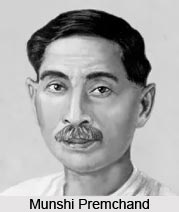
Munshi Premchand
Munshi Premchand was a legendary Indian writer notable for his modern Hindustani literature. A writer of a very high caliber, Premchand`s writings hav...
Sanskrit Poets
The names of some of the Sanskrit Poets are Bharavi, Devarshi Ramanath Shastri, Jayadeva and Srinivas Rath.