
Qissa is a narrative tradition in Urdu literature, most famous in the nineteenth century. Long narrative traditions, such as the Qissa and Fasana have been written in Urdu since about 1750. Such stories in the traditional mould appeared in increasing numbers in the course of the nineteenth century, not only within individual editions but also in collections of three to five stories. From the advent of mass printing in the 1880s onwards, Qissas were published in huge numbers along with the longer Dastans and the modern genre, the novel.
Qissas defied sharp distinctions of religion, region and language, oral and written and carried cross-regional repertoires. By the late nineteenth century, the term Qissa came to cover fairly varied narratives in northern India. The Punjabi verse Qissa, like its Persian forbearer the Masnavi, dealt with Sufi mysticism and awe-inspiring romance. It was continuously re-composed from the sixteenth century till the end of the nineteenth. With the advent of mass publishing in the Hindustani belt, the Hindi/Urdu Qissa became more voluminous. It mixed and transformed various repertoires oral, written, Persian, Arabic and Sanskrit. It contained multiple dialects and several narrative traditions- folktale, theatrical forms like Sangeet, and even reformist prescription.
The Qissa in the 19th century thus went on to become extremely popular, going from Persian and Dakhani Urdu in Royal courts to Bazaars and Fort William College publications. It was popular in the sense of being preferred listening, watching or reading, and as a label often attached by publishers to a story to signal its `popularity`. Qissas also moved from verse to largely prose, from oral narratives to written or printed ones, and in the late nineteenth century circulated back and forth between oral narration, print, and performance. Oral narration continued till the 1920s.
The importance and popularity of the Qissa can be traced to the blend between oral narration, performance, print, the old bazaar and the new market economy. The simplicity of its form has to be counter posed to its complex relation to listeners, watchers, readers, for the way the different people received the same may have been quite different.
Qissa
Qissa is one of the most popular prose forms and narrative tradition of Urdu literature prevalent in the 19th century.
Recently updated articles in Indian Literature
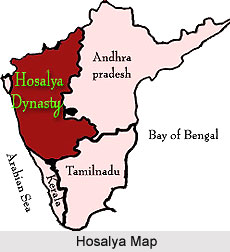
Gadyakarnamrita
Gadyakarnamrita is a 13th-century Sanskrit literary work written mainly in prose. It describes the ninety-day battle at Srirangam between the Hoysala...
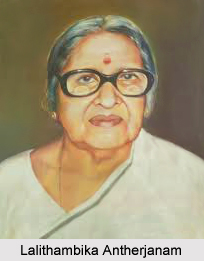
Women Writers in Malayalam Literature
Women writers in Malayalam literature have worked incessantly to make a place for their literary works. In the earlier periods, they were completely o...
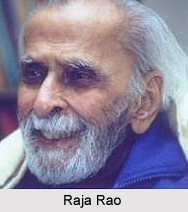
Comrade Kirillov, Novel by Raja Rao
Comrade Kirillov, a distinctive creation of Raja Rao, is presented as a brief yet incisive novelette that offers an ironic portrayal of the self-contr...
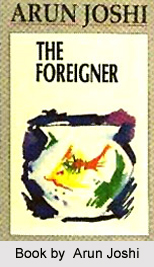
The Foreigner, Novel by Arun Joshi
“The Foreigner” is a book authored by Arun Joshi and published by Vision. It is an illustrious creation in the entire career of Arun Joshi, the famous...
Short Story in Telugu Literature
Short Story in twentieth century Telugu Literature was extremely popular and growing in and developing in a major way. Their popularity was greatly fa...
Related articles in Indian Literature
Mythological Themes in Indian Literature
Mythological themes in Indian literature have been integral to every ancient and contemporary writer and their path to f
Literature During Gupta Age
It is during the Gupta Age literature in the form of poetry, epos and drama gained a colossal importance.
Literature of Aravidu Dynasty
Sanskrit and Telugu were the popular literary medium of communication during Aravidu dynasty.
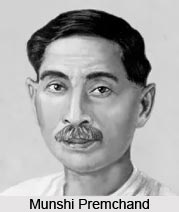
Munshi Premchand
Munshi Premchand was a legendary Indian writer notable for his modern Hindustani literature. A writer of a very high caliber, Premchand`s writings hav...
Sanskrit Poets
The names of some of the Sanskrit Poets are Bharavi, Devarshi Ramanath Shastri, Jayadeva and Srinivas Rath.