
The Pure Tamil Movement, also known as Thanittamil Iyakkam or Independent Tamil Movement, is a movement of linguistic purism that insisted on traditional correctness in Tamil literature by avoiding Sanskrit, English and Persian loan-words and attempting to imitate the unmodified Tamil language of the Sangam age. It was particularly started by the literary works of G. Devaneya Pavanar and Pavalareru Perunchitthiranaar, Maraimalai Adigal and Paventhar Bharathidasan. The Pure Tamil Movement was promulgated by the Thenmozhi literary magazine, established by Pavalareru Perunchithiranar. V. G. Suryanarayana Sastri, also known as Parithimar Kalaignar, was a prominent 20th century figure of the movement and demanded classical language status for Tamil during 1902.
Influence of Sanskrit on Tamil
Several centuries earlier, Sanskrit scholars tried to modify Tamil by the moderate use of Sanskrit words. The scholars believed that the liberal combination improved the appeal of the Tamil language. The hybrid language was called Manippravala style and the Sanskrit erudite attempted to propagate the new style through out the country. Jain and Vaisnava Sanskrit scholars utilised the hybrid style using grantha scripts. But the attempts were unsuccessful as it could not match up to the naturally pregnant vocabulary and literary wealth of the Tamil language. Still Sanskrit scholars refused to accept the actual worth of Tamil literary works.
The scholars considered Tamil as the language of the humans and praised Sanskrit as the language of gods and deities. The numerous praiseworthy and creditable ideas in Tamil works were deliberately demeaned by the Sanskritists and accused that those ideas were inspired from Sanskrit literary works. The scholars even tried to underrate the significance of Tirukkural by Tiruvalluvar and accused that it was a compilation of various concepts and ideas that were translated from Sanskrit literature. Similarly it was also said that the first Tamil grammatical work known as Tolkappiyam was based on Sanskrit.
The Sanskrit scholars attempted to conceal the existence of great literary works in Tamil such as the classics in Sangam literature, didactic, ethical and devotional literature. Eventually, with the emergence of scholars like Maraimalaiyatikal and V.K. Curiyanarayana Sastriar, the efforts of the Sanskritists were put to halt, as the concentration of the people was focused on the great literatures of the Tamil language.
Government Intervention on Pure Tamil Movement
Tamil had been preferred by language policy since the independence of India. Tamil was taught in high schools from the year 1938 and in university education since the year 1960. Tamil was instituted as the official language of the state by the Indian National Congress party government, by passing a law in 1956. Further more the government established the Tamil Development and Research Council which was delegated with constructing Tamil school and college textbooks in mathematics, accounting, natural and human sciences etc. Children`s encyclopedias in Tamil based on poetry of Sangam age was also released, but these attempts were considered futile by the leaders of the Pure Tamil Movement.
The Congress government also rejected several demands, like use of pure Tamil instead of Sanskrit influenced Tamil in schoolbooks and opposing the change of name from Madras to Tamil Nadu, in order to deprive and neglect separatist movements. These actions produced bitterness and anger amongst the Tamil purists. In the next elections, the Congress party was defeated and was replaced by the Dravida Munnetra Kazhagam (DMK) government led by C. N. Annadurai.
Pure Tamil Movement
Pure Tamil Movement or Thanittamil Iyakkam is a movement of linguistic purism which insisted on avoiding Sanskrit, English and Persian loan-words and attempting to imitate the original Tamil language.
Recently updated articles in Languages in India
Linguistic History of India
Linguistic history of India traces down two basic kinds of literary styles still prevalent in the country.
Ancient Sanskrit Grammarians
Ancient Sanskrit grammarians were pioneering scholars who considered factors like pronunciation and euphonic combination and the discrimination of par...
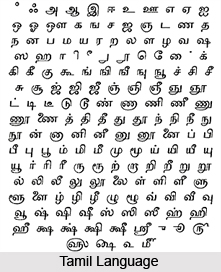
Tamil Language
Tamil is a Dravidian language spoken primarily in India and other countries of South Asia. It is one of the official languages of Tamil Nadu. With a r...
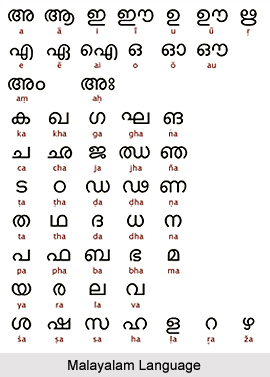
Malayalam Language
Malayalam language, one of 22 scheduled languages of India, is mostly concentrated in Kerala, Lakhswadeep and Puducherry. A Dravidian language, Malaya...
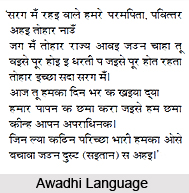
Awadhi Language
Awadhi is one of the enriched languages of India, Hindi too originated from it. Awadhi, an Indo-Aryan language from the Indo-European family, originat...
Related articles in Languages in India
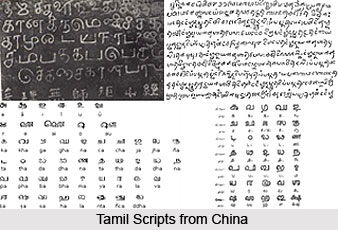
Development of Tamil Scripts
Development of Tamil scripts can be traced to the period just after the reign of Asoka. The Tamil script is believed to have developed from the Brahmi...
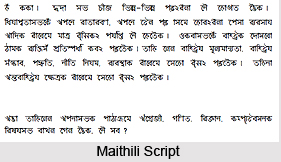
History of Maithili Language
History of Maithili Language can be dated back to the early fourteenth century. Maithili is now one of the national languages of India.
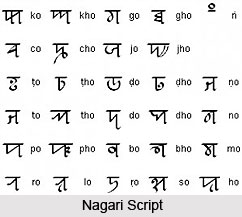
Nagari Script
Nagari script today is classified as Devanagari, believed to have served as the ancestor of various modern-day writing.
Pali Language
Pali Language owes its origination to Gautama Buddha and his disciples, who were chief to propagate it.
Origin of Prakrit Language
Origin of Prakrit language can be attributed to Sanskrit according to some historians. Some consider it as nature’s gift which is easily comprehensibl...