
Chapter 8 of the Mahanirvana Tantra marks a distinct shift in tone for the text, where Parvati asks questions more about the structure of society according to Tantra. Her questions pertain to the Varnashrama dharma or the caste system and stages of life in Tantrism. Although replete with mantras, the bulk of the discussion centers on the Varnashrama Dharma rather than the individual devotee, and lays out duties for living life on a quotidian basis rather than the pursuit of moksha.
Shiva immediately declares that whereas in the early ages, there were only four castes, the Kali Yuga is unique in having a fifth caste called the Samanya. Each caste and stage of life comes with its own duties and observances, and the KaliYuga is no different.
There is also a change from the four stages of life, Brahmacharya, Grihastha, Bhikshuka and Vanaprastha to merely two, those of the Grihastha and Bhikshuka. This is in part a concession to the depravity of the Kali yuga, where the frailty of the human spirit precludes taxing stages like those of the Brahmacharya and the Vanaprastha.
Shiva also clarifies that in the Kali age, all castes including the Vipras (Brahmans) are free to adopt either lifestyle (of the householder of the mendicant) and the purificatory rites for both are laid down by himself.
Shiva argues with great insight that everyone is born into the life of a householder, since they are born into some sort of domestic unit, if not a conventional family. Given this, he enjoins all to be first householders, until such a time when the Real has been apprehended and the devotee is freed from worldly desire. However, the Tantra possesses the unique distinction of prohibiting the devotee from adopting the itinerary mendicant`s lifestyle if he has a dependent like an aged parent or any such familial responsibilities still to be executed.
Shiva then expounds upon a householder`s duties and purificatory rituals. It is an extended harangue on the ideal householder, who should be always honourable and free of deceit or pride. There are some rules laid down for the behaviour of the householder`s wife and offspring also, and suitable ritual ablutions to follow at each stage of the day.
Shiva also gives the Shudras and Samanyas freedom to follow any of the rituals and Sandhyas prescribed in the Agamas, Tantrik texts that provide guidance on such rituals. He however restricts the Brahmans to perform the Sandhyavandanam strictly according to Vaidik tradition thrice daily.
Parvati is quick to challenge him on this, asking how he may restrict the Brahmanas to a ritual that he himself as declared important in the degraded Kali age. However, Shiva clarifies that the Rig Vedic Gayatri mantra is also tantrik and the Brahmanas may still avail of all its Tantrik potency by reciting it as they have done for ages past.
Then follow several more directions on leading the ideal life according to Tantra, and yields many unique insights. Shiva proclaims that in the Kali age, life is dependent mostly on the food that is consumed, and hence, fasting and related austerities are discouraged and to be substituted with charity.
Shiva also observes that for those who neglect their duties and religious observances while going to places of pilgrimage, the pilgrimage is but a journey to hell and that women have no need to observe any sort of penance, austerity or pilgrimage since their husbands are their greatest penance, and someone to whom they must always faithful.
The chapter is one of the most detailed in its description of duties, moving from the common householder to the king, and deals with a plethora of subjects, including the rites and obligations of a king.
There is also an involved discussion on two Tantrik Chakras, the Bhairavi chakra and the Tattva chakra. These are not internal to the body but to be drawn on the ground with appropriate piety. Much ritual surrounds the two circles, though caste distinctions are said to disappear once devotees formally induct themselves into either circle.
Parvati then asks for the rituals for drawing and entering both circles, which Shiva explains in great detail. Of the two, the Bhairavi chakra has no restrictions regarding place and time and may be formed at one`s own convenience, while the Tattva chakra does have some restrictions. Shiva calls the Tattva circle the king of all circles. It is also called the celestial circle. Only worshippers who have attained to a knowledge of Brahman may take part in it . Only those who have attained to knowledge of Brahman, and who are devoted to Brahman, pure of heart, tranquil, devoted to the good of all things, who are unaffected by the external world may take part in it.
Then follows the rites for adopting the life of the mendicant ascetic and the duties and taxing restrictions of an ascetic`s lifestyle. Much is to be renounced in the ascetic lifestyle, as Shiva says.
`The ascetic should not accept any metal, and should avoid calumny, untruth, jealousy, all play with woman, and all discharge of seed. He should regard with an equal eye worms, men, and Devas. The religious mendicant should know that there is Brahman in everything he does.
The chapter ends with more on the duties and rites relating to ascetics.
Placing of the Shri-Patra
In chapter 8, Parvathi asks about the castes and the stages of life as pertaining to the Kali yuga, which Shiva answers, adding a distinct fifth caste, Samanya
Recently updated articles in Indian Literature
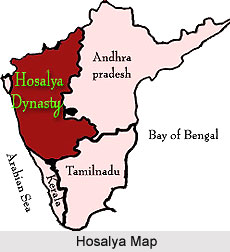
Gadyakarnamrita
Gadyakarnamrita is a 13th-century Sanskrit literary work written mainly in prose. It describes the ninety-day battle at Srirangam between the Hoysala...
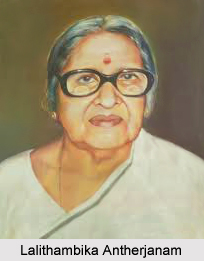
Women Writers in Malayalam Literature
Women writers in Malayalam literature have worked incessantly to make a place for their literary works. In the earlier periods, they were completely o...
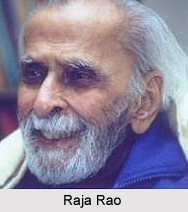
Comrade Kirillov, Novel by Raja Rao
Comrade Kirillov, a distinctive creation of Raja Rao, is presented as a brief yet incisive novelette that offers an ironic portrayal of the self-contr...
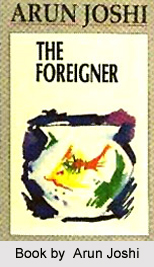
The Foreigner, Novel by Arun Joshi
“The Foreigner” is a book authored by Arun Joshi and published by Vision. It is an illustrious creation in the entire career of Arun Joshi, the famous...
Short Story in Telugu Literature
Short Story in twentieth century Telugu Literature was extremely popular and growing in and developing in a major way. Their popularity was greatly fa...
Related articles in Indian Literature
Mythological Themes in Indian Literature
Mythological themes in Indian literature have been integral to every ancient and contemporary writer and their path to f
Literature During Gupta Age
It is during the Gupta Age literature in the form of poetry, epos and drama gained a colossal importance.
Literature of Aravidu Dynasty
Sanskrit and Telugu were the popular literary medium of communication during Aravidu dynasty.
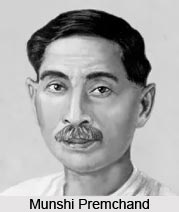
Munshi Premchand
Munshi Premchand was a legendary Indian writer notable for his modern Hindustani literature. A writer of a very high caliber, Premchand`s writings hav...
Sanskrit Poets
The names of some of the Sanskrit Poets are Bharavi, Devarshi Ramanath Shastri, Jayadeva and Srinivas Rath.