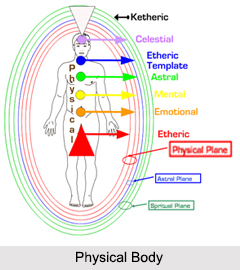
 Physical Body is the thickest of the seven bodies, the only one which can be seen without psychic vision. Through the physical body, one can articulate, receive and become conscious. The chakra of the physical body is the Mooladhara. This is the first chakra and it has an integral connection with the physical body.
The Mooladhara Chakra has two possibilities. Its first potentiality is a natural one that is given to one with birth; its other possibility is obtainable by meditation. Lovemaking is the natural possibility and Brahmacharya is its transformation. The more the mind is focused upon and gripped by sexual desire, the more difficult it will be to reach its ultimate potential of Brahmacharya.
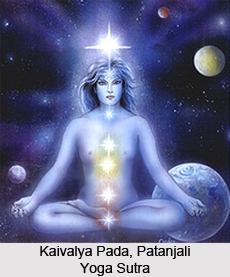
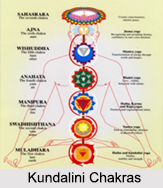
The following illustrations portray the locations of the seven chakra levels of the Physical Body:
1. Physical Level
Four locations: heels of the feet and hands. Function: energy outlet for self declaration and for liberating physical fierceness; power spots. Too open: very challenging. Blocked: predisposition to walk more on the toes; not to communicate the self or no yearning to be noticed; a sensation of walking on egg shells; Hands might seem cold and pulled back; complexity in reaching out, shaking hands or affecting others.
2. Emotional Level
Location: spleen. Function: peace on the emotional level. Too open: unnecessary fury articulated, sometimes in detrimental processes. Blocked: holding too much fury which may be liberated in subconscious manners.
3. Mental Level
Four Locations: top of shoulders above the arm sockets and at the pelvic bone on both sides (sit bones). Function: manifestation of mental attitudes toward the body and its functioning in the physical world. Too open: unwarranted consciousness and obsession with the body. Blocked: no consciousness of debilitation, fatigue or pain; not in touch with the physical body and powerless to work with its troubles.
4. Intuitional/ Compassionate Level
Two locations: cheekbones, slightly below them and inside the jawbone. Function: liberates energy for deeper understanding or compassion toward the body. Too Open: obsession with the body. Blocked: disregarding needs of the body, pretty comparable to the former chakra.
5. Will/ Spirit Level
Location: between the breasts on the breastbone. Function: enthusiasm to really live life renders will power for physical activities and for survival. Too open: lack of vigilance when it is needed. Blocked: fear of actually living or putting one"s heart into actions; sometimes absolutely no will to love.
6. Soul Level
Two locations: adrenal glands (on top of kidneys). Function: self-preservation; consciousness of need for fight or flight; action on an I Amness level; marshalling forces for a sound body. Too open: too concerned with fight or flight or with getting one"s own way. Blocked: needing to validate one"s existence; feeling detached from soul level; introverted fury; open to illness and feelings of rejection.
7. Divine Level
Location: root chakra- coccyx bone (tail bone). Function: purifies and harmonises lower level energies; sense of security through groundedness with earth and higher level energy. Too open: extravagant risk taking. Blocked: lack of safety and incapability to handle lower level energies well.