
Patirruppattu, also known as Pathirruppaththu, is a classical poetic work in Tamil language and comprises one of the books of the Ettuttokai or Ethuttokkai anthology in Tamil literature from the Sangam age. Ettuttokai, also known as the Eight Anthologies, is a classical poetic work in Tamil and is part of the Pathinenmaelkanakku anthology of Sangam Literature. The work dates back to the period between BCE and 200 CE. Patirruppattu comprises one hundred verses which are composed by various Tamil poets and authors. Patirruppattu or Pathirruppaththu is the fourth book in the Ettuttokai anthology. The term Patirruppattu literally means "ten tens" which refers to the 10 sets of 10 poems that the Tamil literary book contains. The initial and the final poems in the Tamil poetic work of Patirruppattu are unavailable and cannot be revived. The several verses in the work praise and laud the magnificence and the affluence of the Chera kingdom.
Content of Patirruppattu
The literary work of Patirruppattu is segregated into ten different segments where each segment contains ten poems.
First Ten Poems in Patirruppattu
The poems that were comprised in the set of first ten poems of Patirruppattu were lost beyond recovery and no information about this particular set is available. It has been inferred by scholars that the initial set also contains ten Tamil poetic works, similar to the other nine sets.
Second Ten Poems in Patirruppattu
The second set of ten poems known as the Second Ten, were composed by the Tamil poet Kumattur Kannan (Kummathur Kanan). The verses were written in honour of Imayavaramban Nedunceralaathan, the Chera king and the poems were eulogizes the imperial ruler. The Chera king was much pleased with the poetic work and thus he rewarded the poet Kumattur Kannan with the honour of obtaining the revenue rights from a particular area of the central land under the royal crown, for a period of more that thirty-eight years.
Third Ten Poems in Patirruppattu
The ten poems included in the third set of the Patirruppattu collection were written by Paalai Gauthamanaar and all the verses were composed in the praise of the noble king Celkezhu Kkuttuvan (Chelkezhu Kuthuvan). According to various comments, remarks and notes in the ten poems, it is surmised that the king wanted to present the poet with any gift that the poet desired as a reward for his poetic compositions. Paalai Gauthamanaar requested the king for information about the way to go to heaven and unite with the divine powers. It is believed that the King conducted a sequence of ten Vedic sacrifices in order to meet the poet`s request and at the conclusion of the final ritualistic sacrifice, the poet and his spouse disappeared from existence.
Fourth Ten Poems in Patirruppattu
The fourth set of ten poems in the Patirruppattu anthology is called the Fourth Ten, and the verses were written by the Tamil poet Kappiyatru Kaapiyanaar. The verses praise and extol the king Nanmudi Cheral. According to the annotations and notes in the poetic work, it has been inferred that the king, being impressed by Kappiyatru Kaapiyanaar`s work, offered the poet forty thousand gold coins and a portion of his kingdom.
Fifth Ten Poems in Patirruppattu
The ten poems in the fifth set were written by Baranar and these 10 poems narrate the greatness of Cenguttuvan (Chenguthuvan) the Chera king. According to the comments and notes in the poetic work, the poet received the prince Kuttuvan Ceral (Kuthuvan Cheral) as his reward.
Sixth Ten Poems in Patirruppattu
The ten poems included in the Sixth Ten set were composed by Kakkaipatiniyar Nacchellayar and was about the king Aadukotpattu Cheralathan. The king presented the poet with gold and land and Kakkaipatiniyar Nacchellayar was appointed as the court poet.
Seventh Ten Poems in Patirruppattu
Kapilar, the renowned Tamil poet wrote the ten poems comprised in the seventh set that were dedicated to the king Cheran Celvakkadungo Vazhi Aathan. The poet received generous rewards from the king and received a town called Sirupuram. Moreover the poet also received all the land he could view from the top of a hill.
Eighth Ten Poems in Patirruppattu
The ten poems in the eighth set were composed in praise of Perunceral Irumporai, the Chera king, by the poet Arasikizhar. According to annotations and remarks in the poems, the poet received a large amount land and the administrative rights of several temples as a reward for his eulogizing poetic compositions.
Ninth Ten Poems in Patirruppattu
The verses in this penultimate set were written by Perunkunrurkizhar. The poems extol and laud Perunceral Irumporai, the Chera king.
Tenth Ten Poems in Patirruppattu
The final set of poems of Patirruppattu was unavailable and could not be recovered. No definite information about this set was available.
Patirruppattu
Patirruppattu is a classical poetic work in Tamil and is included in the Ettuttokai anthology of Sangam literature. The work contains 10 sets of 10 poems.
Recently updated articles in Indian Literature
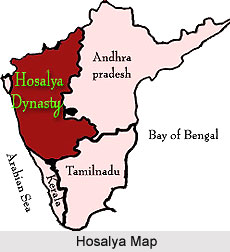
Gadyakarnamrita
Gadyakarnamrita is a 13th-century Sanskrit literary work written mainly in prose. It describes the ninety-day battle at Srirangam between the Hoysala...
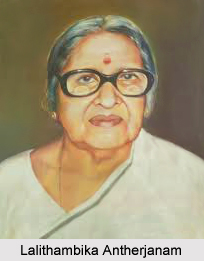
Women Writers in Malayalam Literature
Women writers in Malayalam literature have worked incessantly to make a place for their literary works. In the earlier periods, they were completely o...
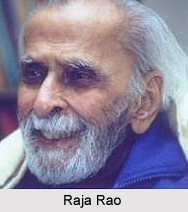
Comrade Kirillov, Novel by Raja Rao
Comrade Kirillov, a distinctive creation of Raja Rao, is presented as a brief yet incisive novelette that offers an ironic portrayal of the self-contr...
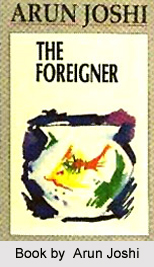
The Foreigner, Novel by Arun Joshi
“The Foreigner” is a book authored by Arun Joshi and published by Vision. It is an illustrious creation in the entire career of Arun Joshi, the famous...
Short Story in Telugu Literature
Short Story in twentieth century Telugu Literature was extremely popular and growing in and developing in a major way. Their popularity was greatly fa...
Related articles in Indian Literature
Mythological Themes in Indian Literature
Mythological themes in Indian literature have been integral to every ancient and contemporary writer and their path to f
Literature During Gupta Age
It is during the Gupta Age literature in the form of poetry, epos and drama gained a colossal importance.
Literature of Aravidu Dynasty
Sanskrit and Telugu were the popular literary medium of communication during Aravidu dynasty.
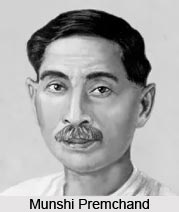
Munshi Premchand
Munshi Premchand was a legendary Indian writer notable for his modern Hindustani literature. A writer of a very high caliber, Premchand`s writings hav...
Sanskrit Poets
The names of some of the Sanskrit Poets are Bharavi, Devarshi Ramanath Shastri, Jayadeva and Srinivas Rath.