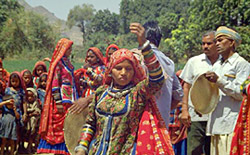
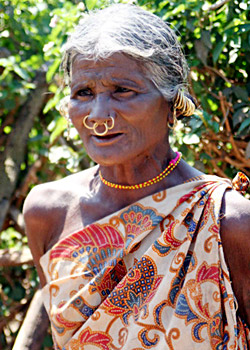
 Parja tribes are a small community and considered as an offshoot of Gond tribes. They are mainly residing in the central province of the country. The name Parja has been derived from Sanskrit language, which literally means a subject. In some parts of Bastar region, these tribes are also known by the name of Dhurwa. This term means a headman. According to past records, Parja signifies class. People of Parja tribal community are considered as hard working cultivators. Parja tribes have three divisions namely Tagara or Thakara, Mudara and Peng. The first division is found in Bastar region. The term Thakara seems to be a corruption of the word Thakur meaning a lord. It suggests that the Parja class was predominant in this particular region in the past. They have a story associated with their origin.
Parja tribes have exogamous septs known as Bagh, Bokda, Kachhim, Pandki, Gohi, and others. If a person kills an animal accidentally after which his clan has been named, several rituals are followed for purification. Like for instance, all the utensils of his house are thrown away, clothes are washed and the entire house is purified with water in which bark of jamun tree or mango tree has been steeped. This is considered as a sign of mourning and people believe that if these rituals are performed then they will have misfortune. If any person kills a snake and he himself belongs to the snake sept, then he places a new yarn on his head and prays for forgiveness. Further, if a man belonging to the goat sept eats flesh of goat then it is believed that he will become blind.
Parja tribes have their indigenous religious beliefs and customs. Marriage is not allowed within the members of the same clan. But as their septs are small in number the rule is not followed and members within the same clan are allowed to get married. But they should not come from the same village. In case of marriage, the proposal for marriage is first made by the boy`s father. The girls are also consulted regarding any proposal. The Parja people dance during wedding ceremonies, this dance form is known as Surcha. Marriage ceremony takes place in the boy`s house. Widow re-marriage is allowed in their society. A widow is required to marry her late husband`s younger brother. Parja tribes bury the dead. Several funeral rites are also followed by them. The main occupation of Parja people is cultivation and they mainly grow rice. They eat pig, monkeys, fowls, and wild buffalo but interestingly they do not eat any carnivorous animal.