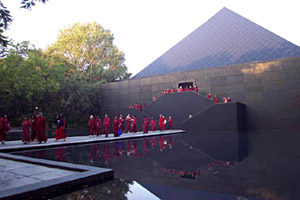
 Osho Dham or Osho Commune International is located at the Koregaon Park of Pune, Maharashtra. Pune is a metropolis that is easily accessible via rail, road or air. The large Metro Mumbai is just 180 km away. But traveling to Mumbai through road by Mumbai-Pune highway should be avoided during the monsoon that is June to August. The Private Airlines including Jet Airways and domestic carrier Indian Airlines conduct two flights from and to Mumbai daily. There is an excellent train service between Pune and Mumbai. Bus service is also very frequent and in every half an hour there is one bus to Mumbai and back.
The Osho Dham was established by the Bhagwan Shri Rajneesh. Anyone who is in quest for Indian spirituality can take refuge in Osho Dham. Even after the death of Shri Rajneesh, Osho is a place of great interest of people. Though Osho Dham was raised as a Jain Mandir, Rajneesh practiced his own spirituality. Previously the ashram was known as Rajneeshism and the Oshoism. He was a teacher of philosophy in Jabalpur for nine years where he used to preach his own faith. After that he resigned from his job and focused on his own teaching. But there was local opposition from the public about the activity of the ashram and the Mumbai ashram was closed in 1974. The Osho Ashram was then rebuilt in Koregaon Park, an isolated suburb. Most of his followers were American. Today the ashram has thousands of members.
About the Society
The society has 2,00,000 members and has 600 centers throughout the world. The commune is open to all and millions of visitors throng every year and from almost every strata of life. Spread over more than 32 acres of land Osho commune is as if an Oasis for divine health. For the greater objective of ensuring health and healthy living the commune also emphasizes on AIDS testing for the members. The disciples of Osho wear distinctive attire, which is a robe in maroon color. This they wear during meditation and a white robe for the discourses. A necklace of 108 rudraksha beads with an attached picture of Rajneesh further adorns them.