
The Nyaya theory of testimony is simple to comprehend. Nyaya Sutra states that testimony is the statement of a credible person. Nyaya theory of testimony is regarded as quite rational to be believed. In Buddhist philosophy, two epistemic models of rationality have been described. Firstly, the perceptual model, according to which rationality provides norms for the temporal and cross-modal integration of perceptual experiences; and the extrasensory model, according to which rationality provides norms for the extrapolation from the perceived to the unperceived. The Naiyayika thinks that belief in the testimony of others is really rational.
Vatsyayana adds a significant comment regarding the vocalisation of testimony in Nyaya Sutra. A credible person is a speaker who has knowledge of the object and is motivated by the desire to tell of the object as known. This definition of a credible person is equally applicable to the seer, the noble, and the outsider. This comment is considered important because it implies that the scriptures do not have any special claim but are to be believed for precisely the same reasons as any other piece of testimony, namely because the transmitter is credible. A credible person is one who is knowledgeable about the subject matter, and who has a sincere desire to communicate that knowledge, and can come from any walk of life or branch of society. Vatsyayana elaborates the point by stating that the authority of the Vedas is just like that of a medical treatise, in that it rests on the credibility of the communicator.
Nyaya theory of testimony is supported by the idea that one can monitor the competence and sincerity of the speaker without forming any beliefs about her competence or sincerity. The sub-conscious mind of a person is constantly monitoring for signs of blushing, moving, and so on. It is also believed that credible communicators, having direct knowledge of what they prescribe, show compassion for fellow beings. In this ancient text it is firmly stated that a credible communicator is a source of knowledge. Further, the worry about the reduction of testimony to inference is raised in the Nyaya Sutra. It emerges in the later idea that a precondition for testimony is the absence of knowledge of unfitness and not the knowledge of fitness. Vatsyayana says only that testimony depends on the speaker`s credibility.
Nyaya Theory of Testimony
Nyaya Theory of Testimony is considered as indeed rational but neither the perceptual nor the extraordinary model of rationality can account for it. Further, Nyaya Theory of Testimony is a single source of rational belief.
Recently updated articles in Indian Philosophy
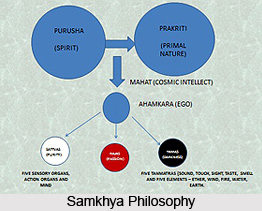
Samkhya Philosophy
Samkhya philosophy is one of India’s oldest intellectual traditions, explaining reality through the interplay of Puruṣha (pure consciousness) and Prak...
Maya, Prakriti in Hinduism
Maya or illusion is a very potent instrument of the Divine Prakriti, the Primal nature. In Hinduism one must be able to come out of Maya in order to a...

Samadhi in Hinduism
Samadhi is the result of meditation or that state of mind when there is an absence of all idea of individuality.
Samadhi in Buddhism
According to Buddhism, oen can only achieve samadhi through strict meditation and right concentration.

Abdul Rehman Jilani Dehlvi
Syed Abdul Rehman Jilani Dehlvi was a renowned Sufi saint of the Qadri Order in India.
Related articles in Indian Philosophy

Ajivika Philosophy
Ajivika philosophy is different from the mainstream religion
Indian Philosophy In The Vedic Period
Indian Philosophy in the Vedic Period was primarily based on the concepts of nature worship.
Achintya Bheda Abheda Philosophy
Achintya-Bheda-Abheda is a School of Vedanta that represents the philosophy of unimaginable one-ness and difference in relation to the power creation...
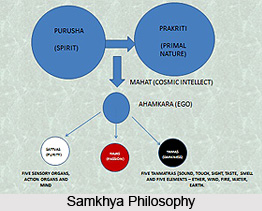
Samkhya Philosophy
Samkhya philosophy is one of India’s oldest intellectual traditions, explaining reality through the interplay of Puruṣha (pure consciousness) and Prak...
Charvaka Philosophy
The Charvaka Philosophy believes that only those things that can be perceived is the ultimate reality.