
Lord Agni has also discussed the concept of Non-Dualism in one of the adhyayas of Agni Purana. He has said that performer of religious sacrifices, ascends to the region of the gods he worships in those sacrifices. By penances an ascetic attains to the region of the Virat. It is said that the man who has renounced all actions and pursuits, is ultimately merged in the Supreme Brahma, whereas the man who is loose over all things in life (Vairagi) is finally absorbed, in the body of the inanimate Nature.
Agni Purana says that all the beings live in the body of Lord Vishnu, which is consisted of the three factors, represented by the gods of the trinity. But by usage the term Bhagavana refers to Him alone. The Being, who has complete knowledge of the birth and death of all created beings; of their elevation or degradation after death and of true knowledge and conscience, is called the Bhagavana. The term Bhagavana, signifies unbounded prosperity, infinite strength, and eternal felicity in exclusion of all that is hateful.
The contact of the mind with the external things, leads to birth and bondage, and, therefore, a man should withdraw his mind from the things of the senses, keep it merged in his faculty of intellection, and meditate upon the god Hari, the symbol of Supreme Brahma. By this the embodied Self of the Yogin will be trans-substantiated into the essence of Brahma. As magnet attracts a bar of iron, and clothes it with its own native virtue, so the Supreme Brahma, draws towards itself the mind meditating upon its self, and converts it into his own essence.
According to the Agni Purana the direction of the mind in the proper channel and ultimately to Brahma, requires self-exertion. Yoga signifies the union of the mind with Brahma. The mind, steady and unflickering in a state of Samadhi, attains to the Supreme Brahma. Having practised the rules of self-control and withheld the senses from their respective objects, and having controlled the vital winds by means of Pranayamas, a Yogin, should concentrate his mind on the ever blissful receptacle of thought. The receptacle of mind is the Supreme Brahma, and meditation is classed under two heads, according as it is accomplished with or without a mental image. The holy sages, such as Sanandana, etc., have attained to Brahma, by meditating upon the thought or idea of His eternal and all-pervading presence, while the gods and the created beings have acquired their elevated status by means of Karma.
It has been mentioned in the great Purana that the objects of spiritual meditation may be resolved into three factors, such as the universe, the Brahma, and the special tutelary god of a Yogin or a meditator. The knowledge which transcends in nature all other species of its kind, and which is confined to that supreme category and can only express itself by its own name, is called the knowledge of Brahma. A man, incapable of meditating upon the shapeless Self of Vishnu, which is composed of pure and supreme knowledge, should try his prentice hand in Yoga, by contemplating some imaged manifestation of that disembodied being. Gradually permeated by the essence of the Supreme Being, his notion of distinction would vanish, the image would disappear, and the mind would be able to dwell on that supreme and disembodied spiritual entity.
Non-Dualism
Non-Dualism according to Lord Agni in Agni Purana says that an individual loses interest in all worldly objects and gets dissolved in the inanimate Nature.
Recently updated articles in Indian Puranas
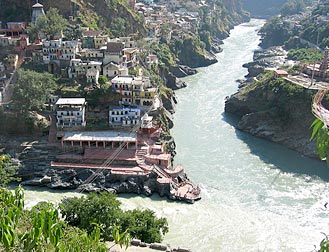
Mandakini, Holy River
Mandakini River is a significant Himalayan river in Uttarakhand, renowned for its ecological, cultural, and religious importance. Originating near the...
Kausika, Son of Vasudeva
Kausika is a minor figure in Hindu mythology and is identified in the Vishnu Purana as the only son of Vasudeva and his wife Vaishali. He is recognize...
Tandu, Attendant of Lord Shiva
Tandu is revered as the divine attendant of Lord Shiva and the foremost exponent of the Tandava dance. According to the Natya Shastra, he instructed S...
Niramitra, Mahabharata
Niramitra was a son of Nakula and Kareṇumati in the Mahabharata. A descendant of the Pandavas and the Kuru dynasty, he fought on the Pandava side duri...
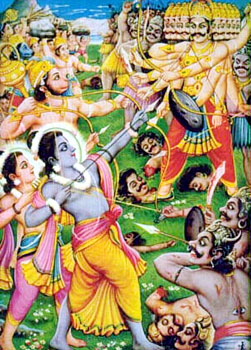
Mahodara, Ramayana
Mahodara was a prominent Rakshasa warrior, minister, and army chief who served under Rāvaṇa during the Battle of Lanka in the Ramayana. Celebrated for...
Related articles in Indian Puranas
Adhyayas in Agni Purana
Adhyayas in Agni Purana are all encompassing. The chapters have dealt with a variety of subjects related to human lives. A large number of chapters ha...
Indian Puranic Tribes
The existence of Indian Puranic tribes is often mixed with mythology and fiction that depict them as superhuman or sub.
Puranic Texts
Puranic Texts are vital according to Hindu, Jain or Buddhist religion; they describe the history of the Universe.

Puranic Shaivism
Puranic Shaivism established during the Gupta Dynasty. This puranic religion developed and expanded, and was accompanied by the development of Brahman...
Nilamata Purana
Nilamata Purana is a Kashmiri Purana that is referred by Kalhana. It is considered as one of the sources of ancient history of Kashmir.