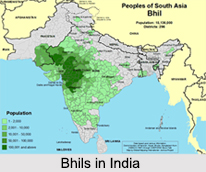
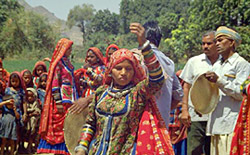
 The Nisadas are referred to for the first time in the later Samhitas and the Brahmanas. The word Nisada `seems to denote not so much a particular tribe, but to be the general term for the non-Aryan tribes who were not under Aryan control, as the Sudras were. The word Nisada means a Bhil or Bhilla, a tribe that still exists in the hills of Central India and the Vindhyan tracts. Historians have specified that the Nisadas were settled aborigines.
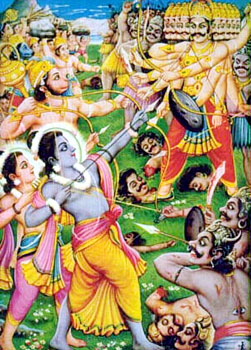
The law-giver, Manu, however has explained the origin of the Nisadas as `the offspring of a Brahmana father and a Sudra mother. In his chapter on Mixed Castes, Manu has said that the son of a Nisada by a Sudra female becomes a Pulkasa by caste, but the son of a Sudra by a Nisada female is declared to be a Kukkutaka. It has been said in history that the social duty enjoined on the Nisadas was to kill and provide fish for consumption of the people. According to the Pali texts as well, they were wild hunters and fishermen. That they were a tribe of rude culture or aboriginal stock and outside the Aryan organisation is also attested by the Ramayana story of Guha, king of the Nisadas who are described as a wild band.
During the period represented by epic and Pauranic traditions the Nisadas seem to have had their habitat among the mountains that form the boundary of Jhalwar and Khandesh in the Vindhya and Satpura ranges. This is proved by a reference in the Mahabharata to a Nisada rastra in the region of the Sarasvati and the Western Vindhyas, not very far from Pariyatra or Paripatra. The Mahabharata seems to connect the Nisadas with the Vatsas and Bhargas or Bhaggas.
The Nisadas seem also to have had a settlement in the east. The Brhatsamhita of Varahamihira seemed to have recognised a kingdom or `rastra` of the Nisadas in the south-east of the Madhyadesa. A Nisada kingdom whose capital was Sarnagaverapura has also been referred to in the Ramayana; and it is not improbable that this Nisada kingdom is identical with the one referred to in the Brihatsamhita.
Historical records state that Rudradaman has been credited with having conquered the Nisada country along with East and West Malwa, the ancient Mahismati region, t Surastra, Aparanta, Sindhu-Sauvira and others. Thus the Nisada country in the middle of the second century A.D. was under the suzerainty of the Western Kshatrapas.