
 Diarrhoea is a stomach condition when the bowel movements become loose or watery and occurs 3 or more times in a day. Diarrhoea is accompanied by the pain is due to the wounds and the swelling of the intestine. In this disorder, a person suffers from a lot of frequent loose motions, along with pain. Due to the blood or mucus coming out with the stools, a lot of twisting pain occurs in stomach.
Diarrhoea
Diarrhoea is termed as the tendency of frequent loose motions accompanied by pain. It is a bowel infection which is a common cause in both adults and children.
Introduction
Diarrhoea is a stomach condition when the bowel movements become loose or watery and occurs 3 or more times in a day. Diarrhoea is accompanied by the pain is due to the wounds and the swelling of the intestine. In this disorder, a person suffers from a lot of frequent loose motions, along with pain. Due to the blood or mucus coming out with the stools, a lot of twisting pain occurs in stomach.Types of Diarrhoea
Diarrhoea is classified as acute and chronic diarrhoea. Acute diarrhoea is considered less serious and lasts for a couple of days, while chronic diarrhoea can last for more than 2 weeks and needs serious medical care and in some cases hospitalization.
Symptoms of Diarrhoea
The main symptom of diarrhoea is loose, watery bowel motions (stools, faeces) 3 or more times a day. Accompanying signs and symptoms may include:
Urgent need to go to the toilet
Abdominal pain and cramping
Change in colour of stools
Mucous, pus, blood, or fat in stools
Vomiting
General body weakness and tiredness
Distaste in meals
Urgent need to go to the toilet
Abdominal pain and cramping
Change in colour of stools
Mucous, pus, blood, or fat in stools
Vomiting
General body weakness and tiredness
Distaste in meals
Causes of Diarrhoea
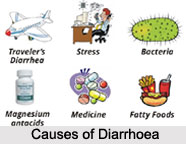
Diarrhoea occurs when the lining of the intestine is unable to absorb fluid, or it actively secretes fluid. The continuous intake of heavy, spicy food and the use of stale, polluted and adulterated substances cause problems in the digestive system and it decomposes after reaching the intestines. Thus, the intestine fills up with stool due to non-cleansing of bowels causing the contamination as well. Sometimes, the urge of consumption of alcohol, change of atmosphere, consumption of cold food substances just after walking in sunshine and too much consumption of oily foods also causes Diarrhoea.
Treatment of Diarrhoea
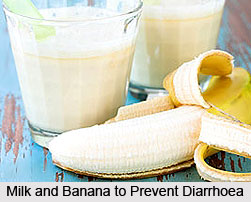
 In cases of Diarrhoea it is very important that one tries his level best to eliminate his faecal matter and the toxic substances, accumulated in the intestines rather than trying to stop the process. Diarrhoea has been the object of numerous forms of treatment for centuries. The best option for treatment of acute diarrhoea is the early use of Oral Rehydration Therapy (ORT). The BRAT (Bananas, Rice, Applesauce and Toast) diet is an effective way to treat diarrhoea. It relies on bland, low-fibre foods that help the stool become firmer.
Avoid all heavy foods, particularly fried foods, which overtax the digestive system. Simple boiled vegetables and Khichari are ideal.
Infantile Diarrhoea
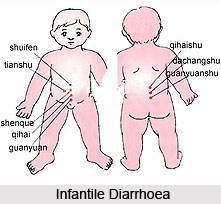 Infantile diarrhoea falls into a separate category and is a serious illness. Contaminated milk or infection in the alimentary canal may cause diarrhoea in infants. if an infant is breast fed, some of the digestive disorders of the mother may be transmitted to the child. Vomiting or griping pain in the stomach may accompany infantile diarrhoea. It is a common disorder at the time of teething. The child refuses milk, is given to crying, and also cannot sleep. Care should be taken in such a condition as continued diarrhoea may lead to dehydration.
Medicines & Prescriptions: The `gripe water` generally marketed for infants contain carminatives, which are harmful if administered for a long time. Ayurvedic treatment for infantile diarrhoea consists of administering 150 mg of a paste made out of the root of musta i.e. Cyperus rotundus plant, three to four times a day. If taken in powdered form, 75 mg of the substance, mixed with a teaspoonful of honey, should be given three to four times a day. In case the stools are watery and there is vomiting, 75 mg of the powder of the seed of jaiphal i.e. nutmeg should be given. The essential oil in the nutmeg relieves the griping pain of the infant instantly.
An Ayurvedic preparation marketed as Gorochanadi Vatika is of particular use in this condition. A 25 mg pill of this medicine is recommended four times a day till diarrhoea stops. The medicine also helps relieve fever, cough, and cold. Another preparation is Balachaturbhadra Churna, of which 200 mg should be taken daily with honey.
Diet and Other Regimen: The diet of the infant suffering from diarrhoea should consist of milk with less fat. Cow`s milk or goat`s milk should be given. In case of non-availability of cow`s or goat`s milk, any milk that is available should be diluted with water. In some cases, infantile diarrhoea starts because the child may be feeding on the milk of a woman who is pregnant. In such a case, he suffers from a disease known as Parigarhhika in Ayurveda. The first step to be taken in such a condition is to switch over to other milk. The fluid lost through diarrhoea must be replaced immediately with fluid by mouth or an intravenous drip.
Natural Remedy for Diarrhoea
 In the natural remedy for Diarrhoea it is advisable that the patient keeps a complete fast for two days. Hot water only may be taken during the period to compensate for the loss of fluids. Juices of fruits may be taken after the severe symptoms are over. After the condition improves, meals can be enlarged steadily to include cooked vegetables, whole rice and milk. Raw foods should be taken only after the patient completely recovers. A successful remedy for Diarrhoea is the use of buttermilk. It is the residual milk left after the fat has been removed from yogurt by churning. It helps overcome injurious intestinal flora and re-establish the friendly flora. The acid in the buttermilk also fights germs and bacteria. It may be taken and mixed with a pinch of salt three or four times a day controlling Diarrhoea.
Carrot soup is another effective home medication for diarrhoea. It supplies water to fight dehydration, replenishes sodium, potassium, phosphorus, calcium, and magnesium, supplies pectin and coats the intestine to allay inflammation. It checks the expansion of harmful intestinal bacteria and prevents vomiting. The pomegranate has proved beneficial in the treatment of Diarrhoea on account of its astringent properties. Mango seeds are also helpful in Diarrhoea. The seeds should be collected during the mango season, dried in the shade and powdered and kept stored for use as medicine when required. Turmeric is another effective home remedy for Diarrhoea. It is a very useful intestinal antiseptic. It is also a gastric stimulant and a tonic. Turmeric rhizome, its juice or dry powder are all very helpful in curing chronic diarrhoea.
In case of diarrhoea caused by indigestion, dry or fresh ginger is very useful. A piece of dry ginger is powdered along with a crystal or rock salt. A quarter teaspoonful of this powder should be taken with a small piece of jugglery. It will bring quick relief as ginger, being carminative, and aids digestion by stimulating the gastrointestinal tract. Starchy liquids such as arrowroot water, barley water, rice gruel and coconut water are highly beneficial in the treatment of diarrhoea. Other home remedies include bananas and garlic. Bananas contain pectin and encourage the growth of beneficial bacteria. Garlic is a powerful, effective and non-toxic antibiotic. It aids digestion and routs parasites.
Homeopathy for Diarrhoea
 Diarrhoea or loose motion can be treated by homeopathy medicine. It is the condition of having three or more loose or liquid bowel movements a day. Diarrhoea can be caused by stress, viral, bacterial or parasitic infections.
Treatment of Diarrhoea :
Arg nit 30: This medicine is useful for the symptoms like diarrhoea resulting from eating excessive sweets i.e. sugar. The stools are watery, greenish looking like chopped spinach and also slimy. The abdomen is filled up with gas, which escapes from the mouth or the anus.
Arsenic 30: This is suitable for the diarrhoea that occurs from food poisoning. Frequent small, watery, dark and offensive stools, especially at midnight with rapid loss of strength are the symptoms. There is severe pain in the abdomen and burning in the anus. An important feature of this medicine is great mental restlessness and fear.
Chamomilla 30: For diarrhoea during the period of dentition in children, this medicine named Chamomilla is important. The stools are hot, watery, greenish and offensive smelling like rotten eggs. The child is extremely irritable and angry and stops crying only when carried in the arms.
Cuprum ars 30: These are useful for copious, dark, watery stools with pain and rumbling in the abdomen. The resultant dehydration causes cramps in the calf-muscles. The urine has a garlicky odour as well. For these symptoms the medicine is very important.
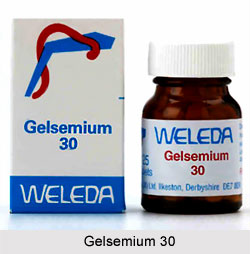
Gelsemium 30: This medicine is suitable for diarrhoea from undue mental nervousness and apprehension just before attending to any important work. Trembling, dullness, dizziness, drowsiness and thirstlessness are other features of this medicine.
Ipecac 30: For diarrhoea caused by eating indigestible or rich foods, Ipecac can be consumed. Loose stools with grass green mucous, accompanied by persistent nausea, a clean tongue and thirstlessness are some of the other symptoms.
Nux v 30: This medicine is suitable for diarrhoea of persons leading a sedentary, modern life and consuming rich foods and stimulants. Diarrhoea alternates with constipation. Between bouts of diarrhoea, arise frequent ineffectual desires to pass stools.
Phos acid 30: This is suitable for painless and non-debilitating diarrhoea, the stools being watery and whitish.
Podophyllum 30: The diarrhoea that occurs from eating too many fruits in summer, Podophyllum is important. There is loud gurgling and abdominal pain in the morning followed by profuse, painless, foul-smelling and multi-coloured loose stools. Between two bouts of diarrhoea occurs headache. All these symptoms require the use of the medicine Podophyllum.
Veratrum alb 30: For diarrhoea before and during menses and preceded by cutting pain in the abdomen. Stools, which are profuse, watery and gushing, are accompanied by cramps in hands and feet, and cold sweat on the forehead. Each bout of diarrhoea leaves the victim weak and exhausted, on the verge of a collapse. These symptoms are very much common in the diarrhoea patient, and for all these the medicine Veratrum is important.
Yoga Asanas for Diarrhoea
Yoga Asanas and Pranayama are the best means of developing and maintaining a strong digestive power and thereby eliminating diarrhoea as well as dysentery and colitis. The effective yoga asanas for diarrhoea include Pawanmuktasana, Vajrasana, Bhujangasana, Mayurasana, Shalabhasana, Paschimottanasana, Matsyendrasana, Sarvangasana and Shavasana.
Recently updated articles in Naturopathy in India

Effect of Magnets on Human Body
Magnets have a stimulating effect on various body systems such as digestive, urinary, respiratory. Magnet has its affect on blood and hence it influen...
Cancer, Disease
Cancer is a malignant in which a group of cells display uncontrolled growth.
Principles of Massage
Principles of Massage are consisted of proper intricacies and sequence.

Foot Massage
Foot Massage is an extremely healing and effective therapy in Ayurveda, which can eliminate several problems in the entire body.

Eye Massage
Eye Massage helps to make the eyes cool and calm making the muscles stronger.
Related articles in Naturopathy in India

Nature Cure Treatments
Nature Cure Treatments comprise the use of natural elements and healthy lifestyle for healing various ailments and staying fit.

Water Therapy
Water therapy is an alternative therapeutic method that cures many diseases.

Magnetized Oils
Magnetized Oils are prepared either on the North Pole or the South Pole.