
Agni Purana has described in detail the performance of the Nakshatra Vrata. Nakshatra Vratas are those Vratas which are performed under the influence of the different asterims. It has been said that the god Hari should be worshipped during the ascendancy of each of the twenty-seven asterisms, by which the worshipper would have all his objects and desires fulfilled and realised in life. The god Hari, manifest as the Nakshatra Purusha (an imaginary figure whose body is supposed to be composed of the clusters of asterisms, grouped so as to form its different parts) should be worshipped in the month of Chaitra. Like the worship of many deities in the various Vratas even in Nakshatra Vrata every body part of God Hari is worshipped with dedication.
It has been mentioned in the Agni Purana that the god should be invoked and worshipped on a pitcher, full of molasses. Gifts of beds, cows and money, should be given to the Brahmanas as remuneration for their officiating as priests at the ceremony or for attending the same as onlookers. It is said that each month, the observer of the vow, known as the Shambhavayaniya Vrata, should worship Lord Vishnu, manifest as the Nakshatra Purusha who is but an incarnation of the divine essence of Lord Shiva. The Vrata should be practised in the month of Kartika, and Magha under the auspices of the asterisms, known as the Krittika or Mrigashira, from which the months have respectively derived their epithets. God Hari was addressed by such names as "Keshava," " Achyuta" etc. or by invoking his presence as "obeisance to Keshava" and " Obeisance to the god who suffers no waste". It is believed that when the penitent recites the prayer it guarantees him a run of continuous pleasures, and grants him salvation after death.
Agni Purana states that the Naividyas, after being dedicated to the deity in the night, should be made over to the Brahmanas. The penitent should bathe in water saturated with the composition known as the Panchagavya, and live on the same substance on the day of observance of the vow.
It has been mentioned in the Agni Purana that Ananta Vrata is one of the greatest of the boon-conferring Nakshatra (astral) Vratas. The god Hari should be worshipped under the auspices of the asterism Mrighashira in the month of Margashirsha. Infinite merit is acquired by the observance of such a vow, and infinite enjoyment follows in its wake which knows no waste or satiety and the heartfelt desires of the penitent is realised hundred fold in his next existence. The Vrati should break his fast on the night after the worship, and should not take any thing containing oil, the Homa being continuously performed for four months with libations of clarified butter. By taking nothing else than clarified butter on the day of its observance, a Vrati ascends the region of the Rudra manifestation of Lord Shiva after death.
Agni Purana narrates that similarly, the man who practises the Triratra Vratas, (a Vrata or a fast of three nights) each fortnight, by taking a single meal on each day of its observance, becomes the master of unbounded wealth. Similarly by practising each month the Vrata a penitent goes to the region presided over by the god Ganapati. Thus by practising the Vrata in honour of the god Janardana, a man is enabled to live in the same region with Vishnu, in the company of the souls of all his friends and relations.
The penitent should first observe the vow (Triratra Vrata) on the day of the ninth phase of the moons increase in the month of Magha; and should repeat the Mantra, running as "Om, obeisance to the god Vasudeva". Only a single meal should be taken on the eighth day of- the moon`s increase, then a fast should be for the next three days. Lord Vishnu should be worshipped on the day of the twelfth phase of the moon`s increase in the month of Kartika, and the Vrata should be duly practised on the same day. The Homa should be performed with libations of clarified butter, containing grains of rice, while it should consist of clarified butter. It has been recorded in the Purana that by performing Homa ceremonies, Mandhata was able to perpetuate his memory as the venerable Juvanashva.
Nakshatra Vratas
Nakshatra Vratas as has been mentioned in the Agni Purana are the ones which are observed under the influence of different asterims. It is believed with the performance of such Vratas that all desired objects are attained in life.
Recently updated articles in Indian Puranas
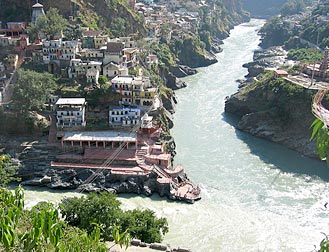
Mandakini, Holy River
Mandakini River is a significant Himalayan river in Uttarakhand, renowned for its ecological, cultural, and religious importance. Originating near the...
Kausika, Son of Vasudeva
Kausika is a minor figure in Hindu mythology and is identified in the Vishnu Purana as the only son of Vasudeva and his wife Vaishali. He is recognize...
Tandu, Attendant of Lord Shiva
Tandu is revered as the divine attendant of Lord Shiva and the foremost exponent of the Tandava dance. According to the Natya Shastra, he instructed S...
Niramitra, Mahabharata
Niramitra was a son of Nakula and Kareṇumati in the Mahabharata. A descendant of the Pandavas and the Kuru dynasty, he fought on the Pandava side duri...
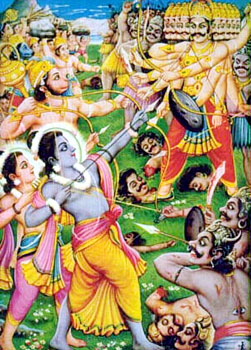
Mahodara, Ramayana
Mahodara was a prominent Rakshasa warrior, minister, and army chief who served under Rāvaṇa during the Battle of Lanka in the Ramayana. Celebrated for...
Related articles in Indian Puranas
Adhyayas in Agni Purana
Adhyayas in Agni Purana are all encompassing. The chapters have dealt with a variety of subjects related to human lives. A large number of chapters ha...
Indian Puranic Tribes
The existence of Indian Puranic tribes is often mixed with mythology and fiction that depict them as superhuman or sub.
Puranic Texts
Puranic Texts are vital according to Hindu, Jain or Buddhist religion; they describe the history of the Universe.

Puranic Shaivism
Puranic Shaivism established during the Gupta Dynasty. This puranic religion developed and expanded, and was accompanied by the development of Brahman...
Nilamata Purana
Nilamata Purana is a Kashmiri Purana that is referred by Kalhana. It is considered as one of the sources of ancient history of Kashmir.