
Nabababubilas is a satirical work in Bengali literature written by Bhabanicharan Bandyopadhyay in the 19th century. Literally translating into the `Merry-Making of the New Babus`, it indicates a new interpretation of the role-model of the Babu. The Nabababus are usually the spoilt sons of more or less established Babus, sons who do their best to get their fathers, and finally themselves, into trouble. Nabababubilas is usually counted as the first Naksha. Its prose is very Sanskritised and largely avoids punctuation; commas are very rare, and also the Daris, the vertical lines later serving as full-stops, are used in a very inconsistent way; passages up to a page length are written without any sort of phrasing. Further, the prose is interspersed with verse, mostly Tripadu.
Nabababubilas consists of four parts, `seed part`, `bud part`, `flower part`, `fruit part`. It starts with several Vandanas, adorations, the last one dedicated to the `righteous Dharmavatara (title used for judges), religion-founder, remover of evil, good master of its subjects, well-considerate Company Bahadur who has disclosed many new ways of getting rich. It then elaborates the picture of the Babu. New attributes, apart from the ones given in other texts like Babur Upkhyan, are added in the form of four Pa-karas and four Kha-karas.
Nabababubilas contains a full-fledged plot, the Charita or life-story of an unnamed Babu, and other than Babur Upakhyan, it does not spare us the sad turn things take in the end. The Babu is the child of the new class, wealthy thanks to the Company Bahadur. Brahmins flock in from the villages to be employed as his teacher, and teach him without success. He is violent, always surrounded by flatterers, and does not learn Bengali, English or Persian writing. He finally gets an utterly ill-mannered Englishman as his teacher, picking up curses and learning how to pronounce Bengali with an English accent. His next teacher teaches him Babugiri, the `art of being a Babu`. The Babu runs deep into debt and is finally cast into jail. His wife, who has hardly ever seen him, weeps; his father frees him, but his favourite Veshya abandons him and ruins his reputation. He loses his house by further mismanagement and ends up in a miserable condition, somehow keeping up his family and repenting for his former Babugiri.
Bhabanicharan used several existent literary conventions in his texts- shastric style, charita, premodern Bengali Bhakti poetry in verse passages, etc. Further, he relied on primary speech genres existing at his time, i.e. common perceptions of and ways of speaking about these figures.
Nabababubilas
Nabababubilas is a satire on the Bengali Babu culture of colonial India. It was written by Bhabanicharan Bandyopadhyay in the 19th century.
Recently updated articles in Indian Literature
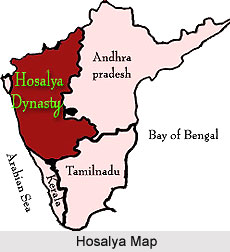
Gadyakarnamrita
Gadyakarnamrita is a 13th-century Sanskrit literary work written mainly in prose. It describes the ninety-day battle at Srirangam between the Hoysala...
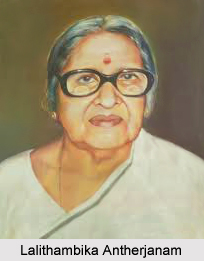
Women Writers in Malayalam Literature
Women writers in Malayalam literature have worked incessantly to make a place for their literary works. In the earlier periods, they were completely o...
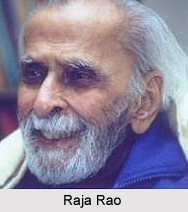
Comrade Kirillov, Novel by Raja Rao
Comrade Kirillov, a distinctive creation of Raja Rao, is presented as a brief yet incisive novelette that offers an ironic portrayal of the self-contr...
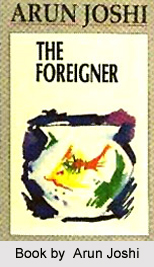
The Foreigner, Novel by Arun Joshi
“The Foreigner” is a book authored by Arun Joshi and published by Vision. It is an illustrious creation in the entire career of Arun Joshi, the famous...
Short Story in Telugu Literature
Short Story in twentieth century Telugu Literature was extremely popular and growing in and developing in a major way. Their popularity was greatly fa...
Related articles in Indian Literature
Mythological Themes in Indian Literature
Mythological themes in Indian literature have been integral to every ancient and contemporary writer and their path to f
Literature During Gupta Age
It is during the Gupta Age literature in the form of poetry, epos and drama gained a colossal importance.
Literature of Aravidu Dynasty
Sanskrit and Telugu were the popular literary medium of communication during Aravidu dynasty.
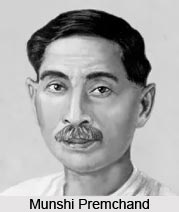
Munshi Premchand
Munshi Premchand was a legendary Indian writer notable for his modern Hindustani literature. A writer of a very high caliber, Premchand`s writings hav...
Sanskrit Poets
The names of some of the Sanskrit Poets are Bharavi, Devarshi Ramanath Shastri, Jayadeva and Srinivas Rath.