
Mumbai Marathi Sahitya Sangh society for Marathi literature was founded by Amrut Narayan Bhalerao in 1932. In 1944, it held a festival of old and new drama to mark the centenary of Marathi theatre. Audiences of thousands attended every show, at an open-air stage erected on Chowpatty Beach. It further revived flagging interest in theatre with annual festivals which presented well-known plays including Sangitnatak in casts which featured the legendary Bal Gandharva, Ganesh Bodas, `Nanasaheb` Phatak, and Keshavrao Date, and masterminded the movement back to theatre for audiences influenced by the advent of films.
The Sangh established a repertory ensemble to take the place of actor-manager-owned companies that had suffered a decline due to actors migrating to cinema. While reviving works by masters like Kirloskar, Khadilkar, Deval, Gadkari, Rangnekar, Atre, and Warerkar, Sahitya Sangh encouraged new playwrights like V. V. Shirwadkar, P. L. Deshpande, Vijay Tendulkar, and directors like Damu Kenkre, Vijaya Mehta, Arvind Deshpande, and Madhav Watve. By producing Shakespeare, Moliere, and Ibsen, it introduced Western classics to Marathi audiences. Its revival of Khadilkar s Bhanbandaki i.e. `Filial Feud` in 1944, which was a historical play about the Peshwa period with contemporary overtones of the British Raj, featuring actors like Phatak, Date, Durgabai Khote, and `Master` Dattaram, was adjudged the best traditional production of 1954 at the first all-India Drama Festival in New Delhi.
The staging of Deshpande`s Ammaldar or `Officer` in 1952, Tujheahe tujapashi or `To Each His Own` in 1957, and Sundar mihonar i.e. `I Shall Be Beautiful` in 1958 raised funds for the construction of the Sangh auditorium. This became the mainstay of theatre activity in Bombay during the 1960s and 1970s. Amrut Natya Bharati, set up in 1968, was the first theatre-training institute in Maharashtra, instrumental in providing talent to the Marathi stage. Sahitya Sangh`s production which was adapted from Brecht`s `The Caucasian Chalk Circle` participated in the Brecht festival in Berlin that year. In 1975, Vijaya Mehta directed Visakhadatta`s classic Mudra-Rakshasa following the Natyashastra, with sets by D. G. Godse, music by Bhaskar Chandavarkar, and choreography by Kathakali exponent Krishnan Kutty as well.
Mumbai Marathi Sahitya Sangh
Mumbai Marathi Sahitya Sangh society for Marathi literature was founded in Bombay.
Recently updated articles in Indian Literature
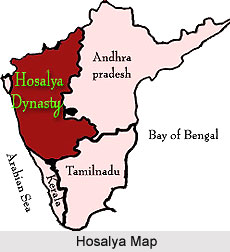
Gadyakarnamrita
Gadyakarnamrita is a 13th-century Sanskrit literary work written mainly in prose. It describes the ninety-day battle at Srirangam between the Hoysala...
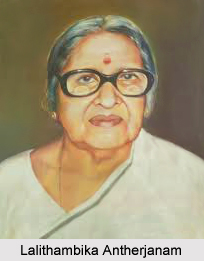
Women Writers in Malayalam Literature
Women writers in Malayalam literature have worked incessantly to make a place for their literary works. In the earlier periods, they were completely o...
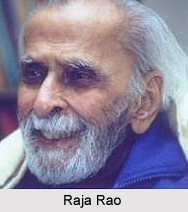
Comrade Kirillov, Novel by Raja Rao
Comrade Kirillov, a distinctive creation of Raja Rao, is presented as a brief yet incisive novelette that offers an ironic portrayal of the self-contr...
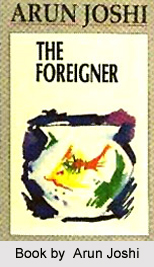
The Foreigner, Novel by Arun Joshi
“The Foreigner” is a book authored by Arun Joshi and published by Vision. It is an illustrious creation in the entire career of Arun Joshi, the famous...
Short Story in Telugu Literature
Short Story in twentieth century Telugu Literature was extremely popular and growing in and developing in a major way. Their popularity was greatly fa...
Related articles in Indian Literature
Mythological Themes in Indian Literature
Mythological themes in Indian literature have been integral to every ancient and contemporary writer and their path to f
Literature During Gupta Age
It is during the Gupta Age literature in the form of poetry, epos and drama gained a colossal importance.
Literature of Aravidu Dynasty
Sanskrit and Telugu were the popular literary medium of communication during Aravidu dynasty.
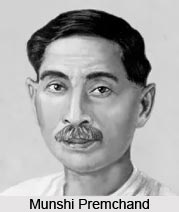
Munshi Premchand
Munshi Premchand was a legendary Indian writer notable for his modern Hindustani literature. A writer of a very high caliber, Premchand`s writings hav...
Sanskrit Poets
The names of some of the Sanskrit Poets are Bharavi, Devarshi Ramanath Shastri, Jayadeva and Srinivas Rath.