 Buddhism is the second most widely practiced religion in Darjeeling, West Bengal, after Hinduism. There has also been an influx of several Tibetan refugees into Darjeeling, most of them being Buddhists. With time several wonderful monasteries have traced their establishment in the tourist destination. Some of them, such as Samten Choling and Old Ghum gompas, are part of local sightseeing tours.
Old Ghum Monastery, Darjeeling
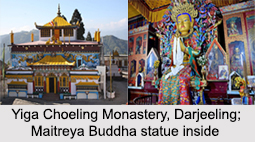
Ghum or Ghoom Monastery is the popular name of Yiga Choeling Monastery, located at the hilly locality of Ghum at an altitude of 8,000 feet, distanced 8 kilometres from Darjeeling in West Bengal. The monastery follows the Gelug school of Tibetan Buddhism. It houses a 15-feet statue of Maitreya Buddha (Coming Buddha), along with images of Buddha"s disciples Chenrezi and Chongapa. Established in 1875, it is the largest of three monasteries in Ghum. The Buddhist texts available are the Kangyur and the Tibetan Buddhist canon running into 108 volumes.
Bhutia Busty Monastery, Darjeeling
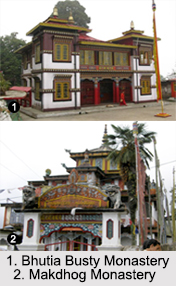
Standing against the backdrop of the mighty Kanchenjunga, Bhutia Busty Monastery is located at a distance of 1.5 kilometres downhill from the Chowrasta Mall in Darjeeling. Earlier located on the Observatory Hill originally built in 1761, it faced repeated ill fates that caused the relocation to its present location. It has a huge library housing many Tibetan and Buddhist books, along with the original copy of the "The Tibetan Book of the Dead".
Dali Monastery, Darjeeling
Drukpa Kargyud Monastery, popularly called Dali Monastery, is located 5 kilometres from main township of Darjeeling. Built in 1971, it is home to around 210 monks who came down from the Himalayan region to make Darjeeling their home. One of the biggest monasteries in Darjeeling, its walls showcase bright colours and depict the life and journey of Lord Buddha. There is a small library housing books on Buddhism. Prayers and chanting are done every morning and evening.
Makdhog Monastery, Darjeeling
Makdhog Monastery, commonly known as Aloobari Gompha, is located at Aloobari, 3 kilometres from Darjeeling town. "Makdhog" literally means "warding off war". The monastery derives its name from its time of construction which was somewhere around World War I. Its objective is to safeguard the distinct social, cultural and ethnic identity of Yolmowa community, a small cultural group native to northeast and later settled in Darjeeling.
Tamang Buddhist Monastery, Darjeeling
Tamang Buddhist Monastery is an important centre of worship for followers of Nyingmapa Buddhism. It stands a few kilometres from Sumendu Lake near Mirik town"s main bus stand, equidistant from Siliguri and Darjeeling. Tamang Monastery is visited by many Tamangs, a part of Gorkha tribe, who have a sizable concentration in Darjeeling district. The intricate artworks on inside and outside walls of the monastery are eye-catchy.