 Middle Assamese literature period had begun to take its initial steps during the 17th century A.D., terminating in 19th century A.D. This period in Assamese literature was that of the reign of prose chronicles (Buranji) of the Ahom court. The Ahoms had brought with them a natural impulse and inclination for historical writings. Historical chronicles in the Ahom court were at first compiled in their aboriginal Tibeto-Chinese language, but when the Ahom rulers embraced Assamese as the court language, historical chronicles began to be scripted in Assamese. From the beginning of 17th century onwards, court accounts began to be penned in an overwhelming number. These chronicles, accounts or buranjis, as they were referred to by the Ahoms, broke away drastically from the technique of the religious writers. The Assamese language is essentially modern in concept and content, leaving out the slight adjustments in grammar and spelling.
A mass of technical literature on astrology, medicine, mathematics, music, dancing and so on based on Sanskrit works were also penned by the Ahoms during the Middle Assamese literature period. Assamese buranji literature is unique in the whole of India not only because they contain invaluable historical material, but also because they represent an unmatched literary style.
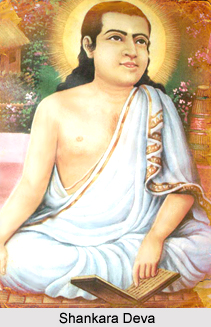
During the height of the Bhakti Movement in Assam during the 15th century, the poet Shankara Deva (1449-1568) had catapulted on the scene and furnished a host of devotional songs and translations from the Sanskrit canon, further enriching the path of the definitive evolution of Assamese literature. Sankara Deva`s chefs-d`oeuvre comprise: Kirtana-ghosa, Bhakti-pradipa, Rukmini-harana, Harischandra-upakhyana and Bali-chalana. Rama Saraswati`s logical and extremely eloquent translation of the Mahabharata and Vadha Kavyas (lores from the Puranas) and Madhavadeva`s Rajasuya Yagna and Vara-Gita were the other popular works of the middle period in Assamese literature.
Within the period of 16th to 19th centuries falling within the middle Assamese literature epoch, umpteen translations from the Epics and Puranas were furnished, together with the kavyas further founded on their stories. Secular and romantic poems, biographies and devotional compendiums within Assamese litrature were also produced in considerable numbers.
This article is a stub. You can enrich by adding more information to it. Send your Write Up to content@indianetzone.com