
Marsiya (Marsia) is an elegiac poem written (specially in India and Persia) to commemorate the martyrdom and valour of Marsia and his comrades of the Karbala. They are essentially religious.
Background of Marsia
`Marsiya` is a word which is derived from the Arabic word called "Risa" which means a massive tragedy or lamentation for departed soul. As the history of `Marsiya` has always been on the death of Hasan and Hussein and their families, but there are cases occasionally on the death of relatives and friends. It is mainly in the six lined stanzas with the rhyme aaaabb.
The reading of these elegies in the first ten days of Muharram is one of the greatest events in Muslim life. A fully developed Marsiya is always an epic.
This form actually established a specially affable soil in Lucknow, primarily because it was one of the centres of Shia Muslim communities in Indian sub-continent, which regarded it an act of piety and religious duty to eulogies and bemoan the martyrs of the battle of Karbala. The form reached its peak in the writing of Mir Babar Ali Anis. Marsia is a poem written to commemorate the martyrdom of Ahl al-Bayt, Imam Hussain and Battle of Karbala. It is usually a poem of mourning. And Even a short poem written to mourn the death of a friend can be called marsia. Lord Alfred Tennyson`s poem `In Memoriam can rightly be called Marsia. The sub-parts of Marsia are called Noha and soz which means lamentation and burning of (heart) respectively. The famous Marsia writers in Urdu are Mir Babar Ali Anis, Mir Moonis, Salamat Ali Dabeer and Mir Zameer.
Mir Babar Ali Anis a prominent Urdu Poet composed salams, elegies, nauhas, quatrains. While the length of elegy initially had no more than forty or fifty stanzas, it now was beyond one hundred fifty or even longer than two hundred stanzas or bunds, as each unit of Marsia in Musaddas format is known. Mir Anis has drawn upon the vocabulary of Arabic, Persian, Urdu Language/Hindi Language /Awadhi in such a good measure that he symbolizes the full spectrum of the cultural mosaic that Urdu has come to be.
Muharram and Mir Anis have become identical among the lovers of Urdu literature in India and Pakistan. The first major and still current critical articulation about Mir Anis was Muazna-e-Anis-o-Dabir in the year 1907 written by Shibli Nomani in which he said "the poetic qualities and merits of Anis are not matched by any other poet.
Marsia
Marsia originated from the India and from Persia as well to honour the martyrdom and courage of Marsia.
Recently updated articles in Indian Literature
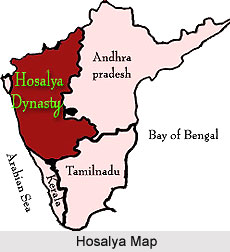
Gadyakarnamrita
Gadyakarnamrita is a 13th-century Sanskrit literary work written mainly in prose. It describes the ninety-day battle at Srirangam between the Hoysala...
Women Writers in Malayalam Literature
Women writers in Malayalam literature have worked incessantly to make a place for their literary works. In the earlier periods, they were completely o...
Comrade Kirillov, Novel by Raja Rao
Comrade Kirillov, a distinctive creation of Raja Rao, is presented as a brief yet incisive novelette that offers an ironic portrayal of the self-contr...
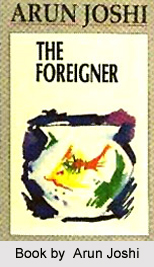
The Foreigner, Novel by Arun Joshi
“The Foreigner” is a book authored by Arun Joshi and published by Vision. It is an illustrious creation in the entire career of Arun Joshi, the famous...
Short Story in Telugu Literature
Short Story in twentieth century Telugu Literature was extremely popular and growing in and developing in a major way. Their popularity was greatly fa...
Related articles in Indian Literature
Mythological Themes in Indian Literature
Mythological themes in Indian literature have been integral to every ancient and contemporary writer and their path to f
Literature During Gupta Age
It is during the Gupta Age literature in the form of poetry, epos and drama gained a colossal importance.
Literature of Aravidu Dynasty
Sanskrit and Telugu were the popular literary medium of communication during Aravidu dynasty.
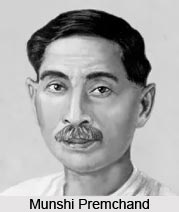
Munshi Premchand
Munshi Premchand was a legendary Indian writer notable for his modern Hindustani literature. A writer of a very high caliber, Premchand`s writings hav...
Sanskrit Poets
The names of some of the Sanskrit Poets are Bharavi, Devarshi Ramanath Shastri, Jayadeva and Srinivas Rath.