
Marriage of artisan tribes like other societies is very important eventuality. Rule of Endogamy and rule of Exogamy are followed. As per the endogamy rule the Artisan tribes arrange the marriage of their sons and daughters within the same tribe. Chik Baraik, Lohara and Karmali have no sub-divisions. However, Mahli tribe is divided into five sub tribes. They are Bansphor Mahali, Pater Mahali, Tanti Mahali and Munda Mahali. Each of these groups practises the endogamy rule to maintain its ethnic and cultural identity.
The boy or girl is not allowed to marry with a girl or boy of the same clan. This is the reason why each tribe is divided into several clans. The clan of girls`s father and boy`s father to be married also must not be the same. Intra clan marriages are strictly prohibited and inter clan marriages are practised. The marriages can be held within the village.
As cousins are not treated as blood relatives they are known as marriage relatives. Preference is given to cousins at the time of marriage. Levirate and Sororally marriages are preferred.
Mates are acquired through bride price, exchange, service, love and purchase. In every society, there is a custom of paying bride price, bridegroom price, gift, dress, ornaments, watch, radio and bicycle. On the marriage occasion, marriage rituals are performed in the house of bride and the groom.
On the occasion of marriage, the bride, the groom, and their parents observe several taboos that are related to colour of dress, visit to the place and food to be taken. Some of them are as follows:
* The bride or the groom is not allowed to visit alone at any place outside the house as it is believed that evil spirits may attack on them to destroy the marriage life.
* The bride or the groom is not allowed to visit on the bank of river alone as it is believed that evil spirits reside near the river.
* The bride and the groom are not allowed to visit alone in the forest or to climb upon a tree.
* The bride and the groom or their parents are prohibited to participate in death rituals and feast.
* The bride, the groom and their parents are not allowed to wear black dress or dress having any black designs. The bride and the groom are not allowed to wear even black shoes.
* Eating meat before performing marriage rituals is not allowed.
* The bride and groom are not served food before sindur dan ritual.
Marriage of Artisan Tribes
Marriage of artisan tribes does follow rules of Endogamy and Exogamy. Generally they marry within their tribes but should be of different clan.
Recently updated articles in Tribes of India
Arakh Tribe
Arakh Tribe is one of the ancient tribes located in several parts of central India. Their origin dates back to the Tughlaq era. Arakh tribe appears to...
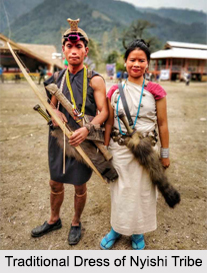
Traditional Dress of Nyishi Tribe
Traditional Dress of Nyishi Tribe is worn during festivals and social gathering. Men wear a cane helmet surmounted with the beak of the great Indian H...
Pasi Community
Pasi is an aboriginal race of India and are mainly distributed over the northern region of the country. The traditional occupation of Pasi is the extr...

Bhojas
Bhojas have been described as a very important tribe in the Aitareya Brahmana. Historical records have said that the Bhojas were settled towards the s...
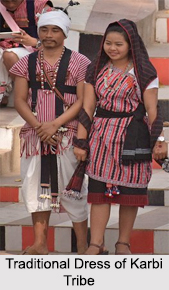
Traditional Dress of Karbi Tribe
Traditional Dress of Karbi Tribe can be easily recognized by the artistic designs inherited from their forefathers. Karbis have their own traditional...
Related articles in Tribes of India
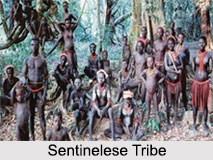
Sentinelese Tribe
Sentinelese tribal community is one of the most isolated and secluded tribes that are found in the whole world.
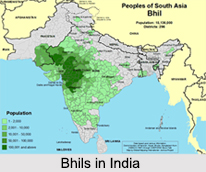
Bhil Tribe
The people of the Bhil tribe are the most widely distributed tribal groups in India.
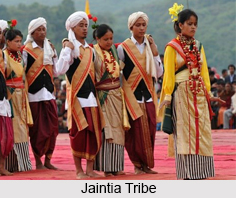
Jaintia Tribe
Jaintia Tribes are located in the Jaintia Hills of Meghalaya. They are also called the Pnars. They are famous for weaving of carpet, making of musical...
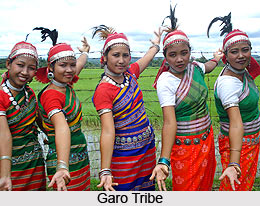
Garo Tribes
Garo Tribes are one of the matrilineal tribes of North-East India who reside in the Garo hills of Meghalaya. Historically, the tribe originated in Tib...
Garasia Tribe
The Garasia tribal community holds a significant position within Indian culture, renowned for their distinctive way of life and rich cultural heritage...