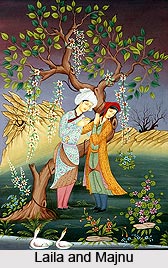
 Largely shorn of its mystical import in the Nautanki theatre, Laila Majnu nevertheless preserves one important motif associated with both the Hindu and Sufi saintly traditions, and that is the characterization of the lover as a yogi or fakir. As in the texts of Gopichand and other renunciant kings, the two terms, signifying the ascetics of the great religious traditions of Hinduism and Islam, are used interchangeably by Nautanki poets.
By the nineteenth century, the persona of yogi or fakir had become a multivalent referent employed in many narrative contexts. The figure was often conjoined with the icon of the righteous king, as discussed in the previous chapter. The disguise of the renunciant was also used in dramatic situations where deception was the intent, for example, for travelling incognito, infiltrating an enemy`s ranks, or entering the women`s quarters of a palace. The ascetic ruse played on North Indian society`s suspicion of false (and true) ascetics as well as cultural obligations to provide for their maintenance through alms. Almost universally in late medieval romance, the renunciant role additionally served to convey something of the excessive, selfless nature of romantic love. The lover is invariably compared to a yogi or fakir, and in many instances he takes on the attire of the renunciant either as a temporary expedient or, in a deeper transformation, for life. Even in the popular Indian movies of today, the unshaven gaunt visage of the hero is semiotic shorthand for the yogi or fakir, signifying "rejected or out-caste lover." Interestingly, North Indian romances at one time extended the assignation to love-crazed women as well. The Abhisarika of Sanskrit lyric poetry - the woman who ventures abroad seeking union with her lover - was converted into the Jogin - a female ascetic who makes a journey, enchanting men with her singing and playing musical instruments: an amalgam of goddess Kali-like gruesome physique with the charms of the apsara (heavenly singing girl in classical Hindu mythology). Unlike the Jogi, the Jogin appears to have fallen by the wayside with the revision of gender roles in the modern period; other less ambiguous temptresses have usurped her place in cinema and popular culture, if not entirely in folklore.