
Kalhana as Historian was influenced by contemporary national events. He admits his aim at the outset of his compositions. According to him a poet`s beauty lies in his creation. He as well admits the difficulty he has to face. The magnitude of his task forbids development of attractive variety. He could not follow Bharavi and Magha in filling up his poem with descriptions. His digressions are modest.
The influence of the epic combined with that of poetics produce the second mark of Kalhana`s chronicle, its instructive tendency. Rajatarangini is resignation and based on the impression produced on the mind by the sudden appearance of human beings. One can also see the influence of the Mahabharata in the didactic portions and its tendency to inspire morality.
However Kalhana does not assert that he is a scientific investigator. He chose to patch up a continuous narrative. This has resulted in an absurd chronology and Kalhana is unable to recognize this absurdity. His attitude to heroic legend is same as that of an average man. He accepts without hesitation the ancient legends of the epic. However his outlook was diffused by the narrow limits of his home and its isolation. Therefore one would not find any real appreciation of the relations of Kashmir to the outer world. The invasions of the Huns and Kushanas are puzzled and misinterpreted.
Another Kashmirian trait revealed in his composition is acceptance of witchcraft as legitimate cause of deaths. Its absurdity was never felt by Kalhana. Fate was considered as a cause of action but Kalhana does not take care to show that it can be reconciled with the doctrine of Karma. Possession by demons is accepted by Kalhana. He also accepts man`s power who starves himself to death to bring about terrible effects. However he hated the Brahmanical employment of this device to influence imperial policy. Kalhana seriously records and believes in the rebirth by witches of Sandhimati.
Kalhana tries to prove that evil deeds meet vengeance. He does not advance to any philosophy of history. He criticises individual action on the basis of established rules of the Shastras. Kalhana made an effort to attain his own ideal. His treatment of Emperor Harsha supports this impression. Kalhana`s description of incidents appears to achieve a high standard of accuracy and impart personal knowledge.
Kalhana as Historian
Kalhana as Historian aimed to produce a work which would conform to the demands of poets and readers.
Recently updated articles in Indian Literature
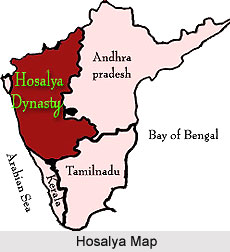
Gadyakarnamrita
Gadyakarnamrita is a 13th-century Sanskrit literary work written mainly in prose. It describes the ninety-day battle at Srirangam between the Hoysala...
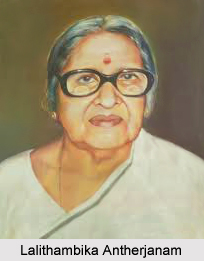
Women Writers in Malayalam Literature
Women writers in Malayalam literature have worked incessantly to make a place for their literary works. In the earlier periods, they were completely o...
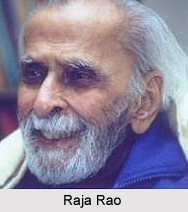
Comrade Kirillov, Novel by Raja Rao
Comrade Kirillov, a distinctive creation of Raja Rao, is presented as a brief yet incisive novelette that offers an ironic portrayal of the self-contr...
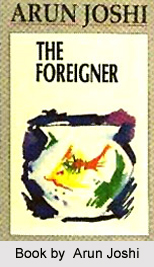
The Foreigner, Novel by Arun Joshi
“The Foreigner” is a book authored by Arun Joshi and published by Vision. It is an illustrious creation in the entire career of Arun Joshi, the famous...
Short Story in Telugu Literature
Short Story in twentieth century Telugu Literature was extremely popular and growing in and developing in a major way. Their popularity was greatly fa...
Related articles in Indian Literature
Mythological Themes in Indian Literature
Mythological themes in Indian literature have been integral to every ancient and contemporary writer and their path to f
Literature During Gupta Age
It is during the Gupta Age literature in the form of poetry, epos and drama gained a colossal importance.
Literature of Aravidu Dynasty
Sanskrit and Telugu were the popular literary medium of communication during Aravidu dynasty.
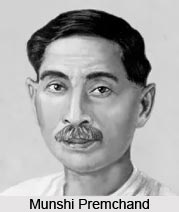
Munshi Premchand
Munshi Premchand was a legendary Indian writer notable for his modern Hindustani literature. A writer of a very high caliber, Premchand`s writings hav...
Sanskrit Poets
The names of some of the Sanskrit Poets are Bharavi, Devarshi Ramanath Shastri, Jayadeva and Srinivas Rath.