
Kakshivat is young poet and Vedic sage who composed Vedic verses. He was the son of Dirghatamas and Usij. In the Indian mythology he is renowned for composing various hymns and songs in the Rig-Veda.
He was also called Pajriya, because he was of the race of Pajra, which means strong. In one of his hymns he praises the liberality of King Swanaya.
Kakshivat, having finished his course of study, took leave of his preceptor and departed homewards. As he journeyed night came on, and he fell asleep by the roadside. In the morning he was awaken by Raja Swanaya, who, being pleased with his appearance, treated him cordially and took him home. After discovering Kakshivat`s worthiness, gave his ten daughters in marriage. The king presented Kakshivat at the same time with a hundred nishkas of gold, a hundred horses, a hundred bulls, a thousand and sixty cows, and eleven chariots, one for each of his ten wives, and one for himself, each drawn by four horses. In return Kakshivat praise King Swanaya in a Vedic hymn composed by his enthusiastic son-in-law.
Kakshivat was a worshipper of the Asvins, who bestowed on him wisdom, and caused a hundred jars of wine and honeyed liquor to flow forth from the hoof of their horse as from a sieve.
This article is a stub. You can enrich by adding more information to it. Send your Write Up to content@indianetzone.com
Kakshivat
Kakshivat is young poet and sage, to whom Raja Swanaya on the banks of the river Indus gave his ten daughters in marria.
Recently updated articles in Indian Puranas
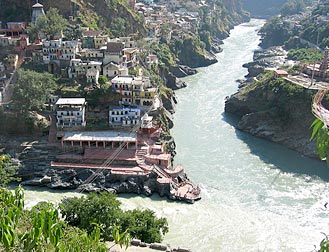
Mandakini, Holy River
Mandakini River is a significant Himalayan river in Uttarakhand, renowned for its ecological, cultural, and religious importance. Originating near the...
Kausika, Son of Vasudeva
Kausika is a minor figure in Hindu mythology and is identified in the Vishnu Purana as the only son of Vasudeva and his wife Vaishali. He is recognize...
Tandu, Attendant of Lord Shiva
Tandu is revered as the divine attendant of Lord Shiva and the foremost exponent of the Tandava dance. According to the Natya Shastra, he instructed S...
Niramitra, Mahabharata
Niramitra was a son of Nakula and Kareṇumati in the Mahabharata. A descendant of the Pandavas and the Kuru dynasty, he fought on the Pandava side duri...
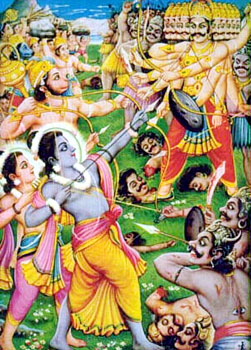
Mahodara, Ramayana
Mahodara was a prominent Rakshasa warrior, minister, and army chief who served under Rāvaṇa during the Battle of Lanka in the Ramayana. Celebrated for...
Related articles in Indian Puranas
Adhyayas in Agni Purana
Adhyayas in Agni Purana are all encompassing. The chapters have dealt with a variety of subjects related to human lives. A large number of chapters ha...
Indian Puranic Tribes
The existence of Indian Puranic tribes is often mixed with mythology and fiction that depict them as superhuman or sub.
Puranic Texts
Puranic Texts are vital according to Hindu, Jain or Buddhist religion; they describe the history of the Universe.

Puranic Shaivism
Puranic Shaivism established during the Gupta Dynasty. This puranic religion developed and expanded, and was accompanied by the development of Brahman...
Nilamata Purana
Nilamata Purana is a Kashmiri Purana that is referred by Kalhana. It is considered as one of the sources of ancient history of Kashmir.