
Kainnilai and Innilai are Tamil ethical poetic works of didactic character which belong to the Patinenkilkkanakku anthology of Ethical Tamil Literature. Patinenkilkkanakku (Pathinenkilkanakku) is a compilation of 18 poetic works in Tamil which were composed in the period after the Sangam age, between 100 CE and 500 CE. Kainnilai and Innilai were composed in the post Sangam age equivalent to between 100 CE - 500 CE. The literary work of Kainnilai contains sixty hymns and was composed by the renowned poet Pullang Kaathanaar and Innilai has forty five poems composed by the Tamil poet Poigayaar. These ethical poetic works of Tamil literature are much revered for their manner of construction and eloquence; as well as graceful and simple presentation. The literary works of Kainnilai and Innilai contain several didactic and ethical messages which were the major characteristics of that period.
The poems of Kainnilai and Innilai are prescribed as texts for several institutes and schools as well, in the state of Tamil Nadu. The poems in both the works are outstanding in the application of similes that assist to edify the moral codes with the use of simple instances from every day life.
Composition of Kainnilai and Innilai
Kainnilai and Innilai are a compliation series of ethical Tamil poems that were composed by the revered Tamil poets Pullang Kaathanaar and Poigayaar respectively. These post Sangam works are among the 18 minor literary works in Tamil which are comprised in the Patinenkilkkanakku collection. The numerous verses in Kainnilai are composed on the Agam or Akam tradition of Tamil literature of Sangam age which refers to the internal or subjective themes and concepts. The Akam tradition utilised in the Sangam literature relates to the different subject matters which are related with the intangible concepts of life such as love, human emotions and feelings, disagreement between lovers, separation, desire to meet lover etc.
The work of Kainnilai is available in a damaged state at present and most of its poems have been recovered partially. The poems in the collection describe five different Tamil landscape found in poetic works of Sangam literature, known as Thinai in Tamil that depict the general idea of the literary work. The poems of Kainnilai are categorised into twelve verses for each of the five Thinais. These elaborately narrate the situations, circumstances and emotions particular to each of the landscape. The five Thinais or landscapes found in poems of Sangam literature are Kurinji (mountains), Mullai (forest), Marutham (farmland), Neithal (seashore) and Paalai (parched land).
Where as the poems of the literary work of Innilai narrates the various ethical concepts like Aram, meaning propriety; Porul, meaning wealth; Inpam meaning love; and Veedu meaning salvation. The poetic work of Innilai, written by Poigayaar, resembles the composition of Tirukkural, which also deals with similar concepts.
Kainnilai
Kainnilai, along with Innilai, are didactic poetic works in Tamil included in the Patinenkilkkanakku collection. It was composed by the Tamil poet Poigayaar.
Recently updated articles in Indian Literature
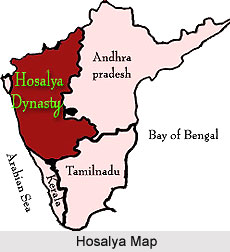
Gadyakarnamrita
Gadyakarnamrita is a 13th-century Sanskrit literary work written mainly in prose. It describes the ninety-day battle at Srirangam between the Hoysala...
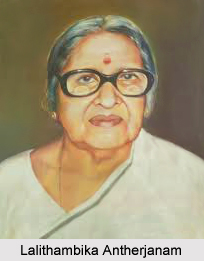
Women Writers in Malayalam Literature
Women writers in Malayalam literature have worked incessantly to make a place for their literary works. In the earlier periods, they were completely o...
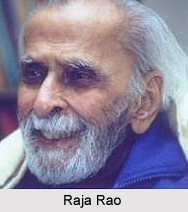
Comrade Kirillov, Novel by Raja Rao
Comrade Kirillov, a distinctive creation of Raja Rao, is presented as a brief yet incisive novelette that offers an ironic portrayal of the self-contr...
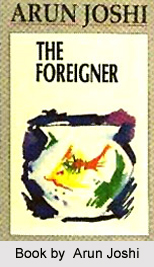
The Foreigner, Novel by Arun Joshi
“The Foreigner” is a book authored by Arun Joshi and published by Vision. It is an illustrious creation in the entire career of Arun Joshi, the famous...
Short Story in Telugu Literature
Short Story in twentieth century Telugu Literature was extremely popular and growing in and developing in a major way. Their popularity was greatly fa...
Related articles in Indian Literature
Mythological Themes in Indian Literature
Mythological themes in Indian literature have been integral to every ancient and contemporary writer and their path to f
Literature During Gupta Age
It is during the Gupta Age literature in the form of poetry, epos and drama gained a colossal importance.
Literature of Aravidu Dynasty
Sanskrit and Telugu were the popular literary medium of communication during Aravidu dynasty.
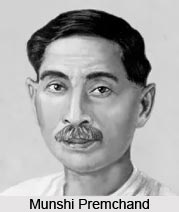
Munshi Premchand
Munshi Premchand was a legendary Indian writer notable for his modern Hindustani literature. A writer of a very high caliber, Premchand`s writings hav...
Sanskrit Poets
The names of some of the Sanskrit Poets are Bharavi, Devarshi Ramanath Shastri, Jayadeva and Srinivas Rath.