
Bhagavad Gita further explains that when subject to the logical intellect, the spirit of man tends to lose itself in nature and identify itself with its activities. To grasp the truth of existence in its source and reality within, it has to free itself from the snare of false identification. The intellectual apprehension of the details of existence is called vijnana, as distinct from jnana, or the integral knowledge of the common foundation of all existence. These two are only different sides of one pursuit. All knowledge is knowledge of God. Science and philosophy both try to realise the truth of the oneness of things in the eternal spirit. Scientific knowledge is said to be dominated by rajas, while spiritual knowledge is permeated by the quality of sattva. The truth of the soul is a hypothesis so long as we are at the level of science. The endless becoming covers up the being. Science dispels the darkness oppressing the mind, shows up the incompleteness of its own world, and prepares the mind for something beyond it. To indulge in the imaginative desire to become acquainted with the first causes of things and the destiny of mankind, science admits, is a vain pursuit. The Gita holds that pariprasna, or investigation, is to be combined with service, or seva.
Bhagavad Gita accepts the yoga system as a means of mental training that the. The yoga discipline gives the directions by which a person can lift oneself from the mere mutable personality into a super-normal attitude. The essential steps of the yogic discipline are purification of mind, body and senses, that the divine may take possession of them; concentration or withdrawal of the consciousness from the dispersed movement of thoughts running after the senses and fixing it on the Supreme; and identification with the real when we reach it.
Regarding Jnana Marga, Bhagavad Gita offers certain general principles acceptable to thinkers of all shades of opinion. It is necessary to have faith or sraddha subdue the riotous impulses and hold fast in thought to God. An atmosphere of stillness and calm is necessary for the spiritual vision. In the silence following the firm control of the mind one can hear the voice of the soul. The true yoga is that which brings about spiritual impartiality, or samatvam. Spiritual intuition is not uncritical conviction. It is supported by scientific judgment. It is a union of knowledge with austerity and passion, the most complete experience that one can possibly have, where one have no more confusion of mind, but enjoy true peace and rest of spirit.
When once the fullness of cognitive experience is reached, the other sides of consciousness, emotion and will, make themselves felt. The vision of God in the spiritual illumination is attained in an atmosphere of joy. Jnana Marga also includes knowing the truth, to lift up the hearts to the Supreme Being, and adore Him. There is also a practical influence. It is sometimes argued that knowledge or intelligence is indifferent to morality. Intelligence, it is said, is not an essential part of character. The intellect is neither good nor bad, since it can be used to promote or destroy good life. Jnana, or the wisdom of the Gita, carries a person beyond one-sided views and narrow standpoints to the comprehensive truth, where one can feel that the differences between men are not ultimate, and that no conduct which is based on false distinctions can be good.
Jnana Marga - Bhagawat Gita
Jnana Marga as described in Bhagavad Gita is a principal way towards achieving salvation. Jnana Marga literally means way of knowledge.
Recently updated articles in Indian Puranas
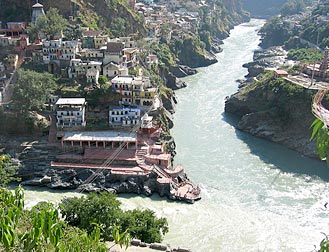
Mandakini, Holy River
Mandakini River is a significant Himalayan river in Uttarakhand, renowned for its ecological, cultural, and religious importance. Originating near the...
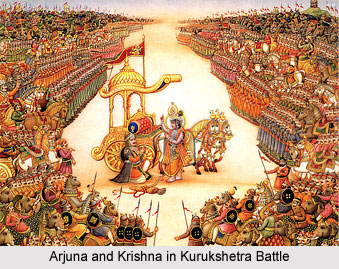
Kausika, Son of Vasudeva
Kausika is a minor figure in Hindu mythology and is identified in the Vishnu Purana as the only son of Vasudeva and his wife Vaishali. He is recognize...
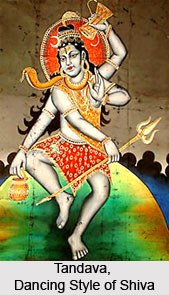
Tandu, Attendant of Lord Shiva
Tandu is revered as the divine attendant of Lord Shiva and the foremost exponent of the Tandava dance. According to the Natya Shastra, he instructed S...
Niramitra, Mahabharata
Niramitra was a son of Nakula and Kareṇumati in the Mahabharata. A descendant of the Pandavas and the Kuru dynasty, he fought on the Pandava side duri...
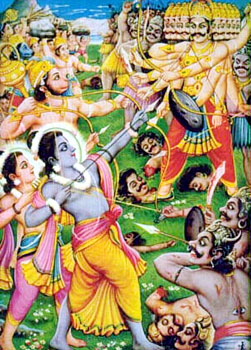
Mahodara, Ramayana
Mahodara was a prominent Rakshasa warrior, minister, and army chief who served under Rāvaṇa during the Battle of Lanka in the Ramayana. Celebrated for...
Related articles in Indian Puranas

Adhyayas in Agni Purana
Adhyayas in Agni Purana are all encompassing. The chapters have dealt with a variety of subjects related to human lives. A large number of chapters ha...
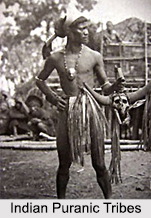
Indian Puranic Tribes
The existence of Indian Puranic tribes is often mixed with mythology and fiction that depict them as superhuman or sub.

Puranic Texts
Puranic Texts are vital according to Hindu, Jain or Buddhist religion; they describe the history of the Universe.

Puranic Shaivism
Puranic Shaivism established during the Gupta Dynasty. This puranic religion developed and expanded, and was accompanied by the development of Brahman...
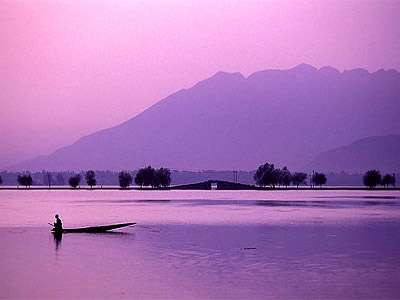
Nilamata Purana
Nilamata Purana is a Kashmiri Purana that is referred by Kalhana. It is considered as one of the sources of ancient history of Kashmir.