 Jayanti era in the realm of Assamese literature refers to the decade of the 1940`s deriving its etymological origin from the quarterly Jayanti which was first published on January 2nd, 1938, with Raghunath Chaudhari as editor during its first year. It became a monthly from its fourth year and in its decade and a half of existence experienced numerous changes in publisher and editor. From its seventh year onward, Jayanti saw the establishment of a new form of literature. If it was the role of Jonaki literature to move the focus of Assamese literature from the devotional to the Romantic, Jayanti performed the task of moving literature to Realistic realms.
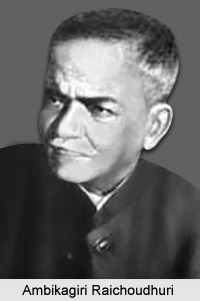
Starting with writers like Ambikagiri Raichoudhuri and Jyoti Prasad Agarwala, literature now turned away from nostalgia regarding the past to more immediate concerns of the times. The focus was now on patriotism, social causes, and the protest against injustice. In Jayanti`s sixth year, Anandeswar Sharma`s article "Aajir Ei Sandhikhyanat" warned against the dangers of taking refuge in the past while ignoring the injustices of the present. He pointed to the examples of Russia and China and the influential role of writers there in bringing about social change. Indeed, Assamese writers did try to follow these examples. Consequently it may be seen that the writing of this period as well as well beyond it is politically motivated in its tone. Though the Romantic influence is still displayed well beyond Jayanti, it would be safe to say that Assamese literature lost its innocence in the 1940s. Many of the contemporary writers are products of the Jayanti age.
It may be mentioned here that Jayanti was not the only journal to follow Jonaki Era and Baheen. There were many other journals which followed suit and among other important journals were Abahon, Surabhi, and Ramdhenu. Even in the 1940s, Assamese literature was dependent on journals. There is a certain reason why Assamese literature at this point was so dependant on the publication of journals alone. First, there has never been a strong print culture or publishing industry in Assam that could issue independent works from manuscript. The publishing concerns that did exist generally took up a writer`s works based on a well-established reputation, and reputations could be established only through journals. In fact, writers often issued their own works through small print shops. Second, World War II reached Assam in 1939 and brought inflation and shortage of goods, including paper. This shortage affected journals, too. At this juncture and given the state of affairs, mass publication of single works was not possible. The same conditions of deprivation and instability that the war brought influenced literary ideas. The 1940s brought another change to all of India: Independence from colonial rule and the establishment of a democratic state. Such upheavals, both the negative and the positive one, meant that writers could not carry on with earlier perceptions of society and the world. Thus the modern Assamese writers display the angst of modern writers everywhere.