
Influence of Bengali on Kannada Theatre is evident from the range of translation and adaptations that playwrights of Kannada theatre have indulged in for professional and amateur theatre. During the last hundred and fifty years, Bengal built up such a merited dramatic literature that it was considered the golden period. New plays were contributed by scores of playwrights, the prominent of whom were Michael Madhusudhana Dutt, Girish Ghosh, Dinbandhu Mitra, Dwijendralal Roy and of course RabindranathTagore. The plays with their amazing vitality held the stage with a glory of their own for years, and many of them were translated into other Indian languages. Unfortunately, Karnataka did not draw a justifiable number of plays from the rich Bengali literature. Rabindranath Tagore as a dramatist did of course contribute greatly to the richness of Bengali plays with the help of Bengali language.
C. K. Venkataramayya made an able rendering into Kannada of the famed Tapobala of Girish Ghosh. The tragic theme of Krishna Kumari of Michael Madhusudhana Dutt inspired Kannada writers particularly Cha Vasudevayya in his Aryakeerti and M. N. Kamath in his Ksatra Teja. Two plays of D. L. Roy - Seeta and Bhishma were rendered into Kannada language by D. K. Bharadwaj. Three other well known plays of Dwijendralal Roy - Mevad Patana, Shah Jahan and Chandragupta were translated into Kannada by G. L. Halleppannavar, B. Puttaswamiah and M. N. Choudappa respectively. Of these, Mevada Patana has been on the professional stage of Karnataka, while Shahajhan and Chandragupta on the professional stage of Mysore. Of these, again, Shahajahan held the stage with great appeal and drew crowded houses on continuous evenings when it was staged by the Chandrakala Nataka Mandali of Mohmed Peer. The great success was due both to the theatrical strength and beauty of the play, and to the outstanding histrionic abilities of Peer.
The professional theatre of Karnataka thus tried to draw its themes and plays from the Marathi language, Bengali and Telugu literatures (drama) in addition to the inevitable Sanskrit language and English literatures. The Karnataka stage is obliged more to the Marathi dramatic literature, while the Mysore stage, comparatively, has slightly more of originally written plays in Kannada. It is weird; however, that Karnataka has drawn themes from the dramatic literatures of the neighbouring regions without giving some of its own stage plays to others. This cannot imply a poverty of original Kannada plays for, there is many a play of considerable merit and theatrical strength, deserving to be translated into other languages. Sharana Basava and Ecchamanayaka of Garuda, Badatanada Bhuta of Kandgal, Shiksana Sambhrama of N. K. Huilgol, Mandodari and Nachiketa of C. K. Venkataramiah
Samsara Nauka of H. L. N. Simha, Devadasi of K. Hirannayya, Akka Mahadevi of B. Puttaswmiah and Dharma Ratnakara of Hunsur Krishnamurthi are a few among such brilliant stage plays that Karnataka could well be proud of, and which, richly deserve to be translated into other languages.
Influence of Bengali on Kannada Theatre
Influence of Bengali on Kannada Theatre has been immense. Many Bengali language plays have undergone translation for Kannada theatre.
Recently updated articles in Indian Drama & Theatre
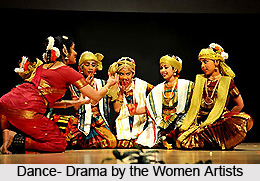
Amateur Theatre
Development of Amateur Theatre has been responsible for useful innovations in theatre culture of Karnataka.
Surendranath Ghosh
Surendranath Ghosh or Dani Babu was a Bengali thespian active during the mid-20th century. He was mostly known for his contributions to Bengal’s moder...
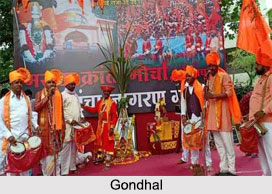
Gondhal Dance
Gondhal is a religious folk dance of Maharashtra. It is performed on special days like when there is a newborn in a family or marriage. Dedicated to g...

Pravritti in Natyashastra
Pravritti in Natyashastra refers to specific human behaviour varying from region to region. There are four types of Pravritti namely, dakshinatya, ava...
Padma Bhushan Awardees (2010-2019)
Padma Bhushan Awardees (2010-2019)
Related articles in Indian Drama & Theatre
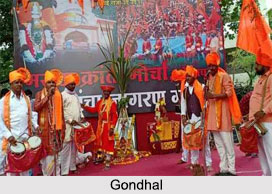
Gondhal Dance
Gondhal is a religious folk dance of Maharashtra. It is performed on special days like when there is a newborn in a family or marriage. Dedicated to g...
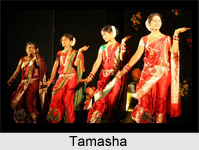
Tamasha Folk Dance
Tamasha is a folk art, which includes the love songs, which are traditional lavanis and dance along with the music.
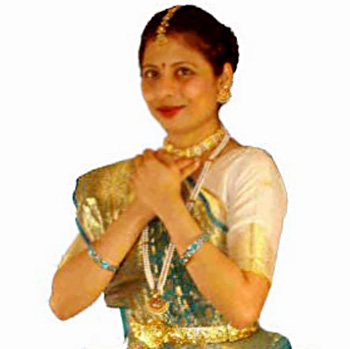
Sringara Rasa
Sringara Rasa is mentioned in Natyashastra as one of the important rasas. The Sthayi bhava in Sringara rasa is Rati or love.
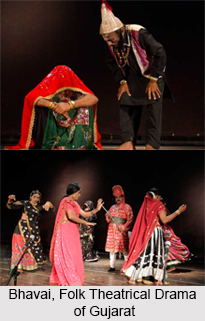
Bhavai - Folk Theatre of Gujarat
Bhavai is a popular folk theatre form of Gujarat that belongs to the tradition of theatre of entertainment.
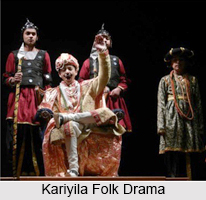
Kariyila Folk Dance
Kariyila is one of the most appealing and popular folk drama forms of Himachal Pradesh, portraying social satire with the accompaniment of folk dance...