
Indawi Deity Celebration is one of the traditions that prevails within the Kuki Tribes of Manipur. Indawi Deity Celebration begins with a story of a girl Japhal, daughter of Kimchal Hangsing who lived in the Chin Hills in a village called Muolphei, where the demons like Thilha were believed to be active and aggressive. Japhal was famous for her beauty and remained a centre of attraction for all the men including the Thilhas who wanted to get the girl by any means. As such one day after working in the Jhum field she didn`t return home. This disturbed the entire village who searched everywhere but couldn`t search her. Finally when the parents in regret cried bitterly in grief then the Thilhas, the demon of the area, came in the dreams of the parents and accepted that the girl has been stolen by them for their son. They wanted to select the girl to be his wife. Thilhas instructed the father to be happy about the relationship and when he wakes up in the morning he should look at the bushes of the tree Se. The bushes of the tree also known as Seboh shall possess certain ingredients which the father should collect and worship. He will live in prosperity till he worships these ingredients and this shall be known as the Indawi Deity Celebration. Since then it became a tradition for the Thadous or the tribal chief and his people who became prosperous after following the instructions of the Thilhas. Though this is historically not proved yet it is one of the traditions of the tribe that is celebrated with a lot of honour.
Indawi Deity Celebration as ritual includes a number of ingredients that include a female pig; horns of a he-goat, bamboo bangles with 7 rounds each double, small gourd at least 2 pieces- one for the Zu and the other for the seeds, spear, chemkol or Dao. These are bound together with a creeper called Khaoko which is a ring-like cord made up of bamboo. Worship of Idwani Deity is celebrated only once a year but in times of necessity like a family suffering from diseases may observe this more than once. When the above mentioned items are tied together it is called Idwani. During the ceremony the performer is supposed to kill a female pig. While the priest begins with his rituals since morning, in the meantime the Tucha and Becha relatives search the eligible female pig which is to be killed in the portico. This unique custom is followed with a lot of reverence within the Kuki tribes which is considered to be important for removing the difficulties and appeasing the evil spirits which can harm the people of the community. More than an agro based ritual this ritual is mainly to appease the superstition of the tribe. The meat of the pig is then dressed and cooked for the feast or Sapang which is taken by the village chief, his council of ministers, other elders and respectable people of the tribe along with the performer of Idwani and the priest.
Indawi literally means house-magic or witchcraft which also means the deity of the household. The Indawi deity is one of the most significant deities of the tribe which is not only popular among the Kuki tribes but also among the Meiteis of Manipur as well. This is considered to be the deity of the household which means that every family has a separate deity which is included among all the ritual and ceremonies of the family. This also claims that whenever the younger son the Naopa chooses to form his nuclear family then he can no longer depend on the deity of his father. As such every new family shall establish his own deity. Overall this ceremony holds a lot of relevance in the daily life of the Kuki people.
Thus Indawi Deity Celebration is amongst those celebrations which exist in the society of Kuki tribes and specifically bears the tradition of the land. Though based on the superstitions this ritual has become one of the most important parts of Kuki traditions.
Indawi Deity Celebration
Indawi Deity Celebration is a unique practice of Kuki tribes which includes worshiping the Indawi Deity according to the customs of the land.
Recently updated articles in Tribes of India
Arakh Tribe
Arakh Tribe is one of the ancient tribes located in several parts of central India. Their origin dates back to the Tughlaq era. Arakh tribe appears to...
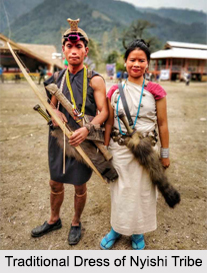
Traditional Dress of Nyishi Tribe
Traditional Dress of Nyishi Tribe is worn during festivals and social gathering. Men wear a cane helmet surmounted with the beak of the great Indian H...
Pasi Community
Pasi is an aboriginal race of India and are mainly distributed over the northern region of the country. The traditional occupation of Pasi is the extr...

Bhojas
Bhojas have been described as a very important tribe in the Aitareya Brahmana. Historical records have said that the Bhojas were settled towards the s...
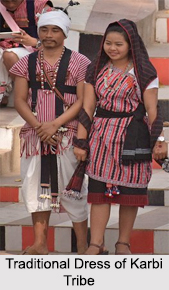
Traditional Dress of Karbi Tribe
Traditional Dress of Karbi Tribe can be easily recognized by the artistic designs inherited from their forefathers. Karbis have their own traditional...
Related articles in Tribes of India
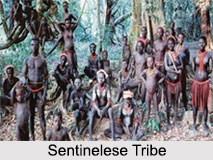
Sentinelese Tribe
Sentinelese tribal community is one of the most isolated and secluded tribes that are found in the whole world.
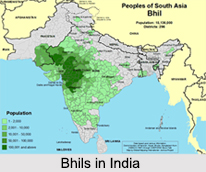
Bhil Tribe
The people of the Bhil tribe are the most widely distributed tribal groups in India.
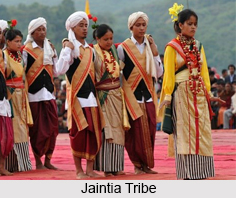
Jaintia Tribe
Jaintia Tribes are located in the Jaintia Hills of Meghalaya. They are also called the Pnars. They are famous for weaving of carpet, making of musical...
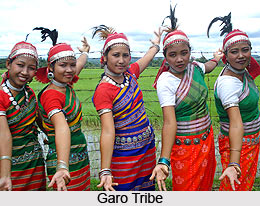
Garo Tribes
Garo Tribes are one of the matrilineal tribes of North-East India who reside in the Garo hills of Meghalaya. Historically, the tribe originated in Tib...
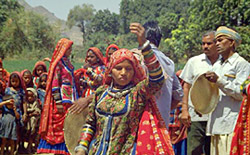
Garasia Tribe
The Garasia tribal community holds a significant position within Indian culture, renowned for their distinctive way of life and rich cultural heritage...