
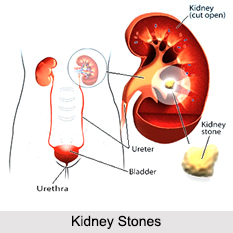
 Kidney stones are one of the common kidney disorders. They are small, solid crystals that develop when salts or minerals in urine become solid inside the kidneys or uterus. The sizes of the solid masses may vary as they can be too small as a grain of sand or as large as a lemon. Kidney stones, also called renal calculi and depending on where they are located are also known as urinary calculi, urinary tract stone disease, renal calculi, nephrolithiasis, ureterolithiasis and urolithiasis.
Kidney Stones
Kidney stones are a kidney disorder that cause acute pain. It is a solid, pebble-like material that can form in one or both the kidneys when high levels of certain minerals are present in the urine.
Introduction
Kidney stones are one of the common kidney disorders. They are small, solid crystals that develop when salts or minerals in urine become solid inside the kidneys or uterus. The sizes of the solid masses may vary as they can be too small as a grain of sand or as large as a lemon. Kidney stones, also called renal calculi and depending on where they are located are also known as urinary calculi, urinary tract stone disease, renal calculi, nephrolithiasis, ureterolithiasis and urolithiasis.Causes of kidney Stones
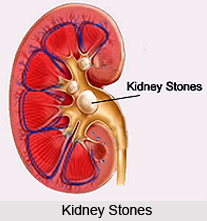 There are many reasons behind the causes of the kidney stones. The formation of these stones depends on various factors like deficiency of some vitamins and minerals, infections, improper drainage functions of some organs, Hyperparathyroidism, imbalance of some salts in urine. Even obesity and heredity are hold responsible for the formation of kidney stones.
According to the medical science, there are some etiological factors that are considered to be the causes of kidney stones. Dietetic factors can be hold responsible for the causes of kidney stones like deficiency of vitamin A causes a desquamation of epithelium. A nidus is formed by the cells around which the stone is deposited. In some cases, altered urinary solutes and colloids cause kidney stone. It is contended that an insoluble complex is formed by any reduction of the urinary colloids which absorb solutes or excess of muco-proteins which may chelate calcium. In addition to that the presence of citrate in the urine tends to maintain in solution otherwise relatively insoluble calcium phosphate and carbonate. People having excess levels of vitamin D or who have an overactive parathyroid gland are prone to form kidney stones. Even overindulgence of meat can increase the level of uric acid in blood, which is stated to be one of the reasons of kidney stone formation. Conditions such as gout and treatments like chemotherapy can also increase the risk factors of getting uric acid stones. It has been analysed by the medical research that people who have medical conditions such as cancer, some kidney diseases, or a disease called sarcoidosis are also more likely to develop kidney stones.
Among the variations of kidney stones, some stone formations are related to excess level of ammonia in the urine. This is the result of urinary tract infection (UTI) and the bacteria that cause these infections can generate ammonia.
Renal infection is one of the numerous causes of kidney stones. When the urine is infected with a urea-splitting streptococcus, staphylococcus or proteus, there is a chance of developing clinical as well as experimental stone. Often paraplegia results in skeletal decalcification and increased output of calcium in urine. In combination with this, the mechanical effect of recumbence on renal drainage favors the deposition of calcium phosphate calculi. Even inadequate urinary drainage can cause kidney stones. Though rare, hyperparathyroidism is hold one of the causes of kidney stones. Even Hyperparathyroidism results in a great increase in the elimination of calcium in the urine.
Apart from these minute concentrations (microliths) occurring normally in the renal parenchyma also leads to the formation of kidney stones. In case some of the renal lymphatic vessels are blocked by inflammatory exudates, it results in a sub-endothelial calculus. The endothelium later becomes ulcerated, leaving the calculus in contact with the urine. Metabolic conditions can also be traced as the one of the causes of kidney stones. For instance renal tubular acidosis, Dent`s disease, Crohn`s disease, Hyperparathyroidism and medullary sponge kidney are results of metabolic conditions.
Cystinuria and hyperoxaluria are two inherited metabolic disorders that often results in the formation of kidney stones. The body of the patients with hyperoxaluria, produces too much of the salt oxalate and excess oxalate in the urine form stones. Another most important reason behind the causes of kidney stones is Hypercalciuria. More than half of patients are affected by kidney stones due to this inherited disease. This high level of calcium in the urine causes crystals of calcium oxalate or calcium phosphate to form in the kidneys or urinary tract.
Water fluoridation may increase the risk of kidney stone formation in some cases. Some medical researches testify water fluoridation may increase the risk of kidney stone formation. In one study, patients with symptoms of skeletal fluorosis were 4.6 times as likely to develop kidney stones. Sometimes obesity and heredity are hold responsible for this painful disease called kidney stones. A person with a family history of kidney stones is prone to develop stones. More than 70 percent of people with a rare hereditary disease called renal tubular acidosis develop kidney stones in India. Certain diuretics which are commonly called water pills or calcium-based antacids may increase the risk of forming kidney stones. It increases the amount of calcium in the urine and develops kidney stones.
Apart from these causes of kidney stones, there are some causes which have given rise to major concern as they are responsible in the shaping up kidney stones. According to the recent researches of medical science, global warming can be a cause behind kidney stones. Moreover, diabetes and high blood pressure are also some of the major causes to give rise to kidney stones. Proper care should be taken by balanced diet intake, proper water consumption, and healthy maintenance of hygiene may reduce the risk of kidney stones to some extent.
Symptoms of Kidney Stones
The pain in kidney stone is typically colic in nature. It comes and goes in spasmodic waves. Pain in the back is felt when calculi produce an obstruction in the kidney. In addition to feeling severe pain in the back, a number of other symptoms may also occur with kidney stones. One of the most common is problem with urination. This can include: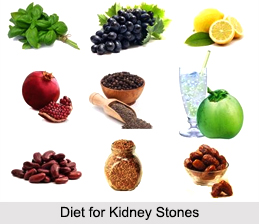
•Pain while urinating
•Urine that appears cloudy
•Urine that smells differently than it normally does
•Nausea and vomiting
•Persistent need to urinate
•Fever and chills if an infection is present
•Urinating in small amounts
•Pain while urinating
•Urine that appears cloudy
•Urine that smells differently than it normally does
•Nausea and vomiting
•Persistent need to urinate
•Fever and chills if an infection is present
•Urinating in small amounts
Diagnosis of Kidney Stones
Usually clinical diagnosis is done on the basis of the location and severity of the pain following the symptoms of the disease. Imaging is used to confirm the diagnosis and a number of other tests can be undertaken to help establish both the possible cause and consequences of the stone.
Types of Kidney Stones
The different types of kidney stones include:
• Calcium: Calcium stones are the most common. They are usually made of calcium oxalate, phosphate or maleate.
• Uric Acid: This type of kidney stone is more common in men than in women. They can occur in people with gout or those going through chemotherapy. This type of stone develops when urine is too acidic.
• Struvite: This type of stone is found mostly in women with urinary tract infections. These stones can be large and cause urinary obstruction. These stones are caused by a kidney infection.
• Cystine: Cystine stones are rare. They occur in both men and women who have the genetic disorder. Cystine is an acid that occurs naturally in the body-leaks from the kidneys into the urine.
• Calcium: Calcium stones are the most common. They are usually made of calcium oxalate, phosphate or maleate.
• Uric Acid: This type of kidney stone is more common in men than in women. They can occur in people with gout or those going through chemotherapy. This type of stone develops when urine is too acidic.
• Struvite: This type of stone is found mostly in women with urinary tract infections. These stones can be large and cause urinary obstruction. These stones are caused by a kidney infection.
• Cystine: Cystine stones are rare. They occur in both men and women who have the genetic disorder. Cystine is an acid that occurs naturally in the body-leaks from the kidneys into the urine.
Treatment of Kidney Stones
Treatment of kidney stones can be done in various ways. There are several alternative medicines that may prevent kidney stones from growing acute or developing to the extreme level of severity. In alternative medicines Diet Therapy, Hydrotherapy, Herbal medicines, Ayurveda, Naturopathic Treatment and Homeopathic Treatment are applied to lessen the acuity of the disease.
Natural Remedy for Kidney Stones
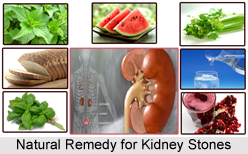 In the natural remedy of kidney stones the patient should avoid foods which irritate the kidneys, to control acidity or alkalinity of the urine and to ensure adequate intake of fluids to prevent the urine from becoming concentrated.
Diet Therapy for Kidney Stones : For controlling the formation of calcium phosphate stones, a moderately low calcium and phosphorous diet should be taken. In this diet, milk should constitute the main source of calcium and curd or cottage cheese, lentils and groundnuts should form the main sources of phosphorous.
Foods which should be avoided are whole wheat flour, bengal gram, peas, soyabeans, beets, spinach, cauliflower, turnips, carrots, almonds and coconuts. The foods considered irritants to the kidneys are alcoholic beverages, condiments, pickles, certain vegetables like cucumbers, tomatoes, spinach, rhubarb, water-cress and those with strong aroma such as asparagus, onions, beans, cabbage and cauliflower, meat, gravies and carbonated waters.
When stones are composed of calcium and magnesium phosphates and carbonates, the diet should be so regulated as to maintain acidic urine. In such a diet, only half a litre of milk, two servings of fruits and two servings of vegetables should be taken. The vegetables may consist of asparagus, fresh green peas, squash, pumpkins, turnips, cauliflower, cabbage and tomatoes. For fruits, watermelon, grapes, peaches, pears, pineapple, papayas and guavas may be taken.

When the stones contain oxalate, foods with high oxalic acid content should be avoided. These foods include almonds, beetroots, brinjal, brown bread, cabbage, cherry and chocolate, French-beans, potatoes, radish, spinach and soyabeans. Uric stones occur in patients who have an increased uric acid in the blood and increased uric acid exertion in the urine.
Home Remedies for Kidney Stones : 1. Kidney beans, also known as French beans or common beans, are regarded as a very effective remedy for kidney problems, including kidney stones.
2. In case of kidney stones, basil juice and honey should be taken for 6 months. It has been found that the stones can be expelled from the urinary tract with this treatment.
3. The celery is also a valuable food for those who are prone to stone formation in the kidneys or the gall bladder. Its regular use prevents future tone formation.
Exercise for Kidney Stones : Certain yoga asanas such as Pavana Muktasana, Uthanpadasana, Bhujangasana, Dhanurasana and Halasana are also highly beneficial as they stimulate the kidneys.
Homeopathy for Kidney Stone
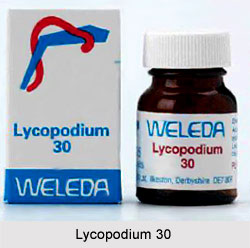 Formation of stones in kidney is mainly hereditary and it depends on geographical factors and diet as well. The kidney works as a filter in the body and it filters the blood, removing waste products from the body and helping to regulate the levels of chemicals important for body function. When the urine chemicals crystallize, they form the beginning, or a nidus, of a kidney stone. Kidney stones are also called Urolithiasis or Renal Calculi in medical terms. Kidney stones are solid concretions or crystal aggregations of dissolved minerals in urine; calculi typically formed inside the kidneys or bladder. Kidney stones can be treated in several ways and homeopathy is a major alternative therapy.
Homeopathy also decreases recurrence of kidney stones. Homeopathic medication step-ups kidney resistance and resumes kidney function and permits them to naturally keep minerals dissolved in urine.
Treatment of Kidney stone in Homeopathy : The vital Homeopathic medicines prescribed by Homeopathy for Kidney Stone include Berberis Vulgaris. Berberis Vulgaris 30 medicine is very much useful for left-sided renal colic, with severe cutting pains starting from left kidney and then descending in a wave-like manner into the left ureter, the urinary bladder and the urethra.
Other medicines recommended by homeopathy include Cantharis 30 which prevents violent, stabbing or cutting pain. The pain shoots off in different directions and is the most important symptom. Homeopathy for Kidney stone suggests the consumption of Ocimum 30 and Lycopodium 30. Both these medicines prevent the right-sided renal colic with cramps in the loins. When urine has musk-like odour and contains sand-like red sediment, Ocimum is particularly considered for stones of uric-acid salts. Pareira brava 30 cures the symptoms of ceaseless urge to urinate. The patient feels a great pain in the bladder region and the pain continues into the thighs during his or her efforts to urinate. Sarsaparilla 30 is a Homeopathic medicine for right-sided renal colic, the pain shooting downwards from the right kidney. The patient experiences an unbearable and severe pain after urination as soon as the urine stops to flow. Other medicines that are widely used in curing kidney stones are Benzoic Acid, Lycopodium clavatum, Hydrangea, Calcarea carbonicum and so on.
Homeopathic treatments for Kidney stone act as an effective, natural and alternative way, but the treatment should be continued for around 12 to 18 months, based upon the size of kidney stones. But if the size and number of stones is too much, then kidney stones should be removed surgically. Homeopathy helps in preventing the recurrence of kidney stones, which is one of the most important functions of homeopathy as there is almost 80% chance of recurrence.
Diet for Kidney Stones
Most types of kidney stones are the result of an improper diet. So to minimize the risk of kidney stones, a proper diet should be followed. A diet that is low in fibre and high in refined carbohydrates, animal proteins and alcohol should be strictly avoided as advised by the doctors. Protein can cause problems by prompting the body to lose more calcium in the urine, making it available for stone formation. High intake of vegetables, fruits, whole grains, and beans are advisable to bar kidney stones. Water should be consumed in abundance as the doctors suggest it can lessen the acuity of the stones.
Recently updated articles in Naturopathy in India

Effect of Magnets on Human Body
Magnets have a stimulating effect on various body systems such as digestive, urinary, respiratory. Magnet has its affect on blood and hence it influen...
Cancer, Disease
Cancer is a malignant in which a group of cells display uncontrolled growth.

Principles of Massage
Principles of Massage are consisted of proper intricacies and sequence.

Foot Massage
Foot Massage is an extremely healing and effective therapy in Ayurveda, which can eliminate several problems in the entire body.

Eye Massage
Eye Massage helps to make the eyes cool and calm making the muscles stronger.
Related articles in Naturopathy in India

Nature Cure Treatments
Nature Cure Treatments comprise the use of natural elements and healthy lifestyle for healing various ailments and staying fit.

Water Therapy
Water therapy is an alternative therapeutic method that cures many diseases.
Magnetized Oils
Magnetized Oils are prepared either on the North Pole or the South Pole.