
History of south Indian music dates back clearly to the period of Vijayangara Empire. By the time Purandaradasa appeared on the scene one can notice Sangita-Sara of Vidyaranya had gained circulation. By circa AD 1609, the focal centre of music activity shifted to Tanjore under the Nayaks and Marathas. By AD 1673 all the raga varieties known and heard are brought under 72 mela scheme and the Janya ragas or derivatives appear. Musical forms undergo a change and the styles of rendering also changed. Thyagaraja and contemporaries represent that change in the eighteenth century.
The inherent value of Tyagaraja`s lyrics cannot be comprehended without taking into account the historical situation and social circumstances in which he lived. Every culture has its own genealogy, its own nostalgic history, yet there is a different path of development to each one. The mere taking into account and registration of processes is not in any sense history. Knowing the direction in which the development has taken is very crucial. During the Nayaka rule there was an expanding agrarian economy shaped by a social influx. During the rule of the Marathas a stagnant economy is suggested by the records. On the religious front during the Nayaka rule a spiritual warfare between Advaitic monism and Dvaitic pluralism is propounded. This continued under the Maratha rule also. In many respects the Maratha dynasty mediated the Nayaka cultural experience. Maratha court culture assumed Nayaka political symbolism.
Social realism is the realistic depiction in the art of any contemporary life. Social reality is not an essence but a state, not a thing but a relationship, not something set and fixed but a process. Annamacharya, Kshetrajna and Tyagaraja`s contributions to music represents that process in the fifteenth, seventeenth and eighteenth centuries respectively. The result of every historical development is often mediated by the product of forces at work in the process. The function of art does not, however, consist in merely opening people`s eyes but also in preventing them from closing their eyes again. Conventions may have their roots in the social structure of the times but people become aware of them only through literary or artistic forms. The composer thinks in tunes, the painter in lines and colours, and the poet in words, tropes and rhythms.
History of South Indian Music
History of south Indian music goes back a long way during the Vijayanagara Empire, where this art form actually flourished.
Recently updated articles in Music in India
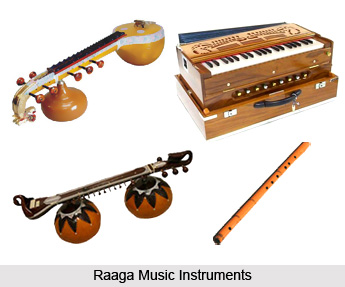
Classification of Raagas in Carnatic Music
Classification of Raagas in Carnatic music is based on scale type, devised as a system for raagas that existed as well as those that were in the proce...
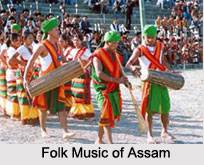
Folk Music of Assam
Folk Music of Assam reflects the outdoor and indoor life of the folk people and it does not follow any strict rule of composition and performance. Fol...
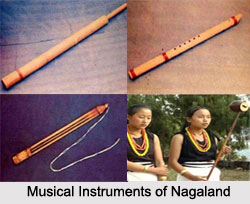
Musical Instruments of Nagaland
Musical Instruments of Nagaland reflect its rich tribal heritage and deep cultural roots. Crafted from natural materials like bamboo, wood, and animal...

Rasa, Hindustani Music
Rasa is an important part of Hindustani Music. Here the creative experience of the artist i.e. musician and the aesthetic response of the connoisseurs...
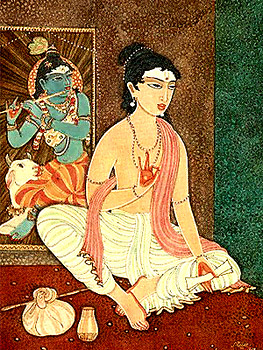
Kshetrajna, Telugu Poet and Composer
Kshetrajna (1600 - 1680) was a creative Telugu poet and composer of Carnatic music. He composed several padams and keertanas.
Related articles in Music in India
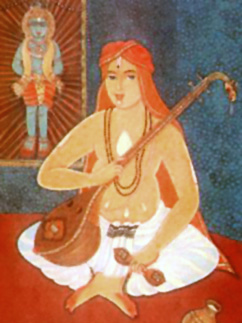
Kriti Carnatic Music
Kriti refers to one of the most widely used genres of Carnatic music. It originated from the kirtanas of the bhaktas, i.e., musicians who expressed th...
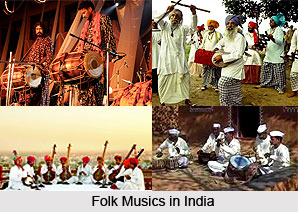
Indian Folk Music
Indian Folk Music is full of rustic charm. The appeal of Indian folk music lies in the simplicity of its style and lyrics. Most of the folk songs are...
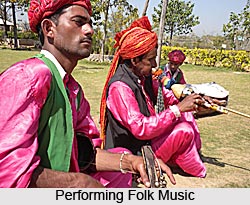
Haryanvi Music
Haryanvi music is the folk music of the state of Haryana and is sung in western Uttar Pradesh along with the neighbouring districts of Rajasthan and P...
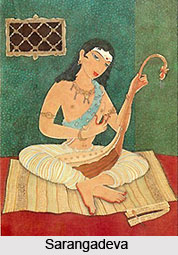
Carnatic Music
Carnatic music, also known as `Karnataka Sangitam`, is one of the two styles of Indian classical music.