
Historical theme in Punjabi novel focused on the various historical events and characters from the history of Punjab. There were a number of novelists who focused on historical themes and biographies in their works. Narinderpal Singh, who wrote along the lines of Nanak Singh, attempted some novels based on Sikh history. Khanion Tibi (Sharper than Blade, 1960) deals with the period of Sikh history when Baba Banda Bahadur rose to power, crushing the Mughul rulers in Punjab. In Walon Nikki (Thinner than Hair, 1960), he depicts the period when the Sikh Missels were fighting with one another to gain political power. Et Marg Jana (This Path to Be Followed, 1960) deals with the rule of Maharaja Ranjit Singh. Ik Sarkar Bajhon (In the Absence of the Emperor, 1961) portrays the conditions that led to the downfall of the Sikh rule and the battles fought by the Sikhs against the British during 1845-9. These are based on a good deal of historical research and provide interesting reading. His other novels, Ik Rab Ik Para (A Path and a Stage, 1953), Shakti (Power), Tria Jal (The Spell of Women, 1957), and Aman de Rab (The Paths of Peace), either are biographical or portray the effects of war on youth.
Kartar Singh Duggal started writing novels soon after independence. He gave to the Punjabi world before the beginning of the 1960s three novels, namely, Andran (Intestines, 1949), Naunh te Mas (The Nails and the Flesh, 1957), and Eh Dil Vikau Hai (This Heart is for Sale, 1959). Then, after about 10 years, in the late 1960s, he published a trilogy entitled Hal Muridan Da (The Poor Plight of the Pupil), with three novels in a series depicting in a marvelous detail and sensitivity the story of three generations of a family uprooted from West Punjab and resettled in Delhi after partition. This novel presents a vivid picture of Punjabi life and culture in a socio-cultural and historical perspective that brings out its diversity. One of his novels of the trilogy, Man Pardesi, (Mind, the Foreigner), was very well received among the Punjabi readership. Duggal primarily wrote short stories. He has contributed more than a dozen collections of short stories, among which are Saver Sar (The Morning Time, 1941), Nawan Ghar (The New Home, 1951), Karamat (The Miracle, 1957), and Pare Mere (1967). He switched over to writing novels mainly after the historical upheaval of the partition.
Historical theme as seen reflected in Punjabi novels is thus discussed above.
Historical Theme in Punjabi Novel
Historical theme in Punjabi novel focuses on episodes in Punjabi history. It includes the elucidation of events as well as certain biographies.
Recently updated articles in Indian Literature
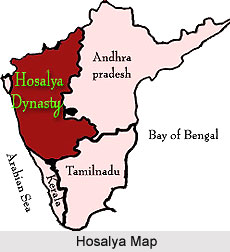
Gadyakarnamrita
Gadyakarnamrita is a 13th-century Sanskrit literary work written mainly in prose. It describes the ninety-day battle at Srirangam between the Hoysala...
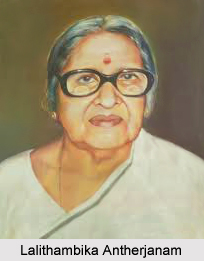
Women Writers in Malayalam Literature
Women writers in Malayalam literature have worked incessantly to make a place for their literary works. In the earlier periods, they were completely o...
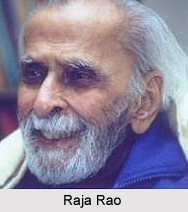
Comrade Kirillov, Novel by Raja Rao
Comrade Kirillov, a distinctive creation of Raja Rao, is presented as a brief yet incisive novelette that offers an ironic portrayal of the self-contr...
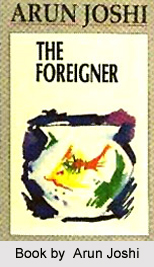
The Foreigner, Novel by Arun Joshi
“The Foreigner” is a book authored by Arun Joshi and published by Vision. It is an illustrious creation in the entire career of Arun Joshi, the famous...
Short Story in Telugu Literature
Short Story in twentieth century Telugu Literature was extremely popular and growing in and developing in a major way. Their popularity was greatly fa...
Related articles in Indian Literature
Mythological Themes in Indian Literature
Mythological themes in Indian literature have been integral to every ancient and contemporary writer and their path to f
Literature During Gupta Age
It is during the Gupta Age literature in the form of poetry, epos and drama gained a colossal importance.
Literature of Aravidu Dynasty
Sanskrit and Telugu were the popular literary medium of communication during Aravidu dynasty.
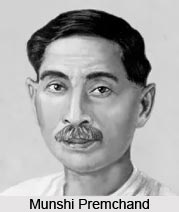
Munshi Premchand
Munshi Premchand was a legendary Indian writer notable for his modern Hindustani literature. A writer of a very high caliber, Premchand`s writings hav...
Sanskrit Poets
The names of some of the Sanskrit Poets are Bharavi, Devarshi Ramanath Shastri, Jayadeva and Srinivas Rath.