
The Kharia Tribe, concentrating in Jharkhand and in Orissa and West Bengal, practise several sacred performances on communal level to lineage, family and individual levels. Coming under the sway of Hinduism, the tribal group underwent major transformations that led adoption of several Hindu festivals. The Kharia Tribe celebrate these festivals on a grand scale that reflect their age old tradition and culture that have been passed down through generations.
Dassai
The festival, observed in the month of Ashin i.e. during September-October, is celebrated by the Kharias on a grand scale. During the occasion the Kharias dress themselves elegantly in new cloths and engage in preparing sumptuous dishes. They tribal group jointly participate in several sacred performances that consists of sacrifice of goat at the sacred centre (Devi guri) of the village.
Diwali
The festival of lights, Diwali, is celebrated by the Kharia on the dark night (Amavashya) in the month of Kartik (October-November). On this day the cow is worshipped as the incarnation of Goddess Lakshmi. On the festive day the cow is anointed with oil, decorated with vermilion on the forehead and is garlanded. Rice beer is offered to them before the family head offers worship to it for the security and prosperity of the cattle. The festival is also known by the name Bandai Pooja in several areas dominated by the Kharias.
Deouthan
Deouthan, a significant Kharia festival, is celebrated in the month of Kartik (November) on Ekadashi day by religious specialists. The presiding deities of the festival, Lord Shiva and Lord Vishnu, invoked by the Kharia head priest, are deemed to be in sleeping mode for about last four months during rainy season since Deo Saini Ekadashi in the month of September.
Before performing the sacred rituals associated with the festival, the Kharias take bath and smear a portion of their courtyard with cow dung. A diagram is drawn on the smeared portion of the ground, with rice flour. A wooden plank is placed over the diagram with the paddy placed at the four corners and at the centre of the plank. Betel leaf and a betel nut placed at the centre of the plank symbolises the deity. The plank is then jointly lifted by the Kharia and alternatively brought down for five to seven times while shouting the names of the deity.
Jitia
Jitia, observed in the month of Aswin (September-October) on the day of Krishna Ashtmi, is celebrated by those Kharia mothers. The women on the festive day assemble in the courtyard of the village kept smeared with cow dung. A small branch of Pipal (Ficus religiosa) tree is fixed for the occasion where a miniature pond is dug. The puja, addressed to Lord Jimut`s vehicle, a manifestation of Lord Vishnu, is attended by women of the community who bring along with them a basket full of Shakhia Kanda, coconut, ginger, maize fruit, betel leaf, betel-nut and three types of seasonal vegetables. Besides the fruits and articles mentioned above the Kharia women bring a cucumber along with germinated paddy (Jawa Phool), the cucumber representing a child. The puja, performed under the direction of a Brahmin priest, is initiated by first washing of cucumber and then with milk. It is followed by Ganesh Pooja, installation and worship of a small ritual-pitcher (Kalasti), ritual invitation and worship of Panch devta (five deities), ten dikpals, ritual invitation and worship of five sacred rivers of India and the worship of Lord Jimutwahan. During the puja the Brahmin priest narrates the sacred story of Jitia during which the women sitting there touch the various fruits or other articles kept in the basket that symbolises different parts of the human body. After the puja the Pipal branch is uprooted and disposed off in a neighbouring water source.
The festivals thus, celebrated by the Kharias expresses their devotion towards ritualistic practices and highlight the varied cultures interwoven in their every day lives.
Hindu Festivals of Kharia Tribe
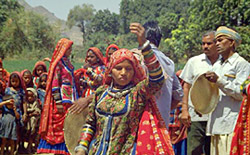
Hindu Festivals of Kharia Tribe that have evolved with the close association of the tribal group with the Hindus are celebrated on a grand scale observing several rituals and customs.
Recently updated articles in Tribes of India
Arakh Tribe
Arakh Tribe is one of the ancient tribes located in several parts of central India. Their origin dates back to the Tughlaq era. Arakh tribe appears to...
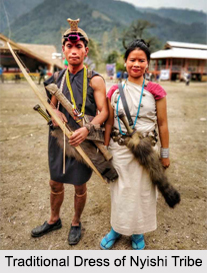
Traditional Dress of Nyishi Tribe
Traditional Dress of Nyishi Tribe is worn during festivals and social gathering. Men wear a cane helmet surmounted with the beak of the great Indian H...
Pasi Community
Pasi is an aboriginal race of India and are mainly distributed over the northern region of the country. The traditional occupation of Pasi is the extr...

Bhojas
Bhojas have been described as a very important tribe in the Aitareya Brahmana. Historical records have said that the Bhojas were settled towards the s...
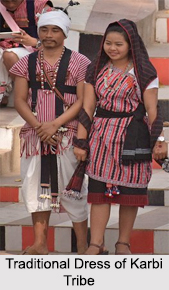
Traditional Dress of Karbi Tribe
Traditional Dress of Karbi Tribe can be easily recognized by the artistic designs inherited from their forefathers. Karbis have their own traditional...
Related articles in Tribes of India
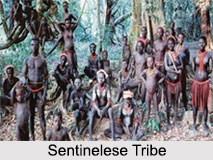
Sentinelese Tribe
Sentinelese tribal community is one of the most isolated and secluded tribes that are found in the whole world.
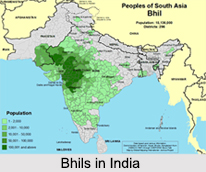
Bhil Tribe
The people of the Bhil tribe are the most widely distributed tribal groups in India.
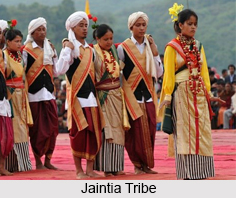
Jaintia Tribe
Jaintia Tribes are located in the Jaintia Hills of Meghalaya. They are also called the Pnars. They are famous for weaving of carpet, making of musical...
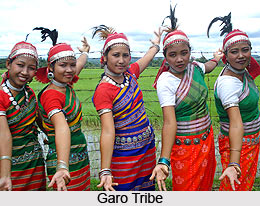
Garo Tribes
Garo Tribes are one of the matrilineal tribes of North-East India who reside in the Garo hills of Meghalaya. Historically, the tribe originated in Tib...
Garasia Tribe
The Garasia tribal community holds a significant position within Indian culture, renowned for their distinctive way of life and rich cultural heritage...